Human Impact on Ecosystems: Ecologist’s Insight
The relationship between humanity and natural ecosystems represents one of the most critical challenges of our time. Understanding what human-environment interaction means is essential for comprehending how our species has fundamentally altered planetary systems. Over the past two centuries, human activities have become the dominant ecological force, reshaping landscapes, degrading biodiversity, and destabilizing climate systems at an unprecedented scale. This transformation reflects not merely technological advancement, but a systemic shift in how humans relate to the living world.
Ecologists define human impact on ecosystems as the measurable changes in ecological structure, function, and biodiversity resulting from human activities. These impacts operate across multiple scales—from local habitat destruction to global biogeochemical cycles—and interact in complex ways that challenge our predictive capacity. The scientific consensus indicates that we have entered the Anthropocene, a geological epoch defined by human dominance over natural processes. This article explores the mechanisms of human-ecosystem interaction, quantifies major impacts, and examines pathways toward ecological restoration and sustainable coexistence.
Understanding Human-Environment Interaction Mechanisms
Human-environment interaction encompasses the dynamic processes through which societies modify ecosystems and, conversely, how environmental changes constrain or enable human activities. This reciprocal relationship operates through several primary mechanisms. First, resource extraction involves removing biological and mineral resources faster than natural regeneration can occur. Second, habitat modification transforms landscape structure through agriculture, urbanization, and infrastructure development. Third, pollution introduction adds substances that disrupt ecological processes. Fourth, species introduction brings non-native organisms that outcompete native species. Finally, atmospheric modification alters fundamental conditions like temperature and precipitation patterns.
The intensity of human impact correlates directly with population size, consumption patterns, and technological capacity. A person in a high-income country generates approximately 16 tons of carbon dioxide equivalent annually, compared to 1.5 tons in low-income nations. This disparity reflects not just individual choices but systemic economic structures that externalize environmental costs. The World Bank’s environmental data demonstrates that ecosystem services—including water purification, pollination, climate regulation, and nutrient cycling—worth trillions annually are routinely undervalued in economic accounting.
Understanding these mechanisms requires integrating insights from ecology, economics, and social sciences. Ecological economics, a heterodox field that examines fossil fuel impacts on environments, emphasizes that economies are embedded within finite ecosystems. This perspective contrasts with neoclassical economics, which treats nature as an infinite source of resources and sink for wastes. The implications are profound: current economic growth models are fundamentally incompatible with planetary boundaries.
Major Pathways of Ecosystem Degradation
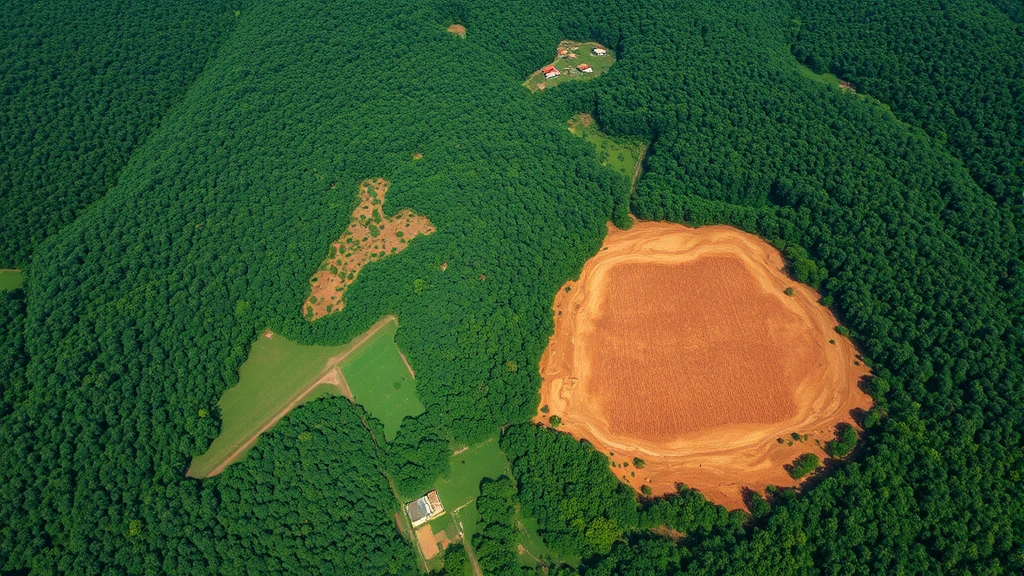
Land-use change represents the single largest driver of habitat loss globally. Approximately 40% of Earth’s land surface is now under agricultural management, with an additional 27% under forest management. This transformation has eliminated 68% of vertebrate populations since 1970, according to the Living Planet Index. Agricultural intensification, particularly in tropical regions, converts biodiverse ecosystems into monocultures that support minimal species diversity. A single hectare of primary tropical rainforest contains more tree species than exist in all of North America, yet deforestation claims 10 million hectares annually.
The Amazon rainforest exemplifies this crisis. This ecosystem, which generates approximately 20% of global oxygen and stores 150-200 billion tons of carbon, is approaching a tipping point. Current deforestation rates, combined with climate change-induced drought stress, risk triggering a shift from forest to savanna. Such transitions are essentially irreversible on human timescales and would release vast carbon stores, accelerating climate change. Understanding how people adapt to environmental changes becomes critical when considering these cascading impacts.
Water system degradation constitutes another primary impact pathway. Freshwater ecosystems, covering only 0.8% of Earth’s surface, support 10% of known species and provide critical ecosystem services. Damming, pollution, and over-extraction have rendered 65% of global river discharge ecologically altered. Aquifer depletion exceeds recharge rates in many regions; the Ogallala Aquifer in North America is being drained three times faster than natural replenishment. Eutrophication from agricultural runoff creates dead zones in coastal waters—the Gulf of Mexico dead zone spans 20,000 square kilometers annually.
Chemical pollution introduces persistent organic pollutants, heavy metals, and microplastics throughout ecosystems. Approximately 350,000 synthetic chemicals have been registered globally, with only a fraction adequately tested for environmental persistence or bioaccumulation. Microplastics now appear in every ecosystem studied, from deep ocean trenches to Arctic ice. These particles, often coated with toxic compounds, enter food webs and concentrate in apex predators. Endocrine-disrupting chemicals affect reproduction and development in wildlife at parts-per-trillion concentrations.
Overexploitation of wild populations drives species toward extinction. Fishing removes 90 million tons of marine biomass annually, with 33% of commercial fish stocks overfished. Hunting and poaching threaten megafauna globally; African elephant populations declined 30% in the decade preceding 2015. The bushmeat trade, particularly in tropical regions, extracts millions of animals annually, disrupting predator-prey dynamics and facilitating zoonotic disease spillover.
Quantifying Biodiversity Loss and Species Extinction
The current extinction rate stands at approximately 100 to 1,000 times the background rate observed in the fossil record. Scientists estimate that 1 million species face extinction without intervention, representing 25% of known species. This sixth mass extinction differs fundamentally from previous events: it results from a single species’ activities rather than geological catastrophism. The extinction debt—species committed to extinction due to habitat fragmentation but not yet vanished—suggests that current biodiversity loss represents only the beginning of a prolonged collapse.
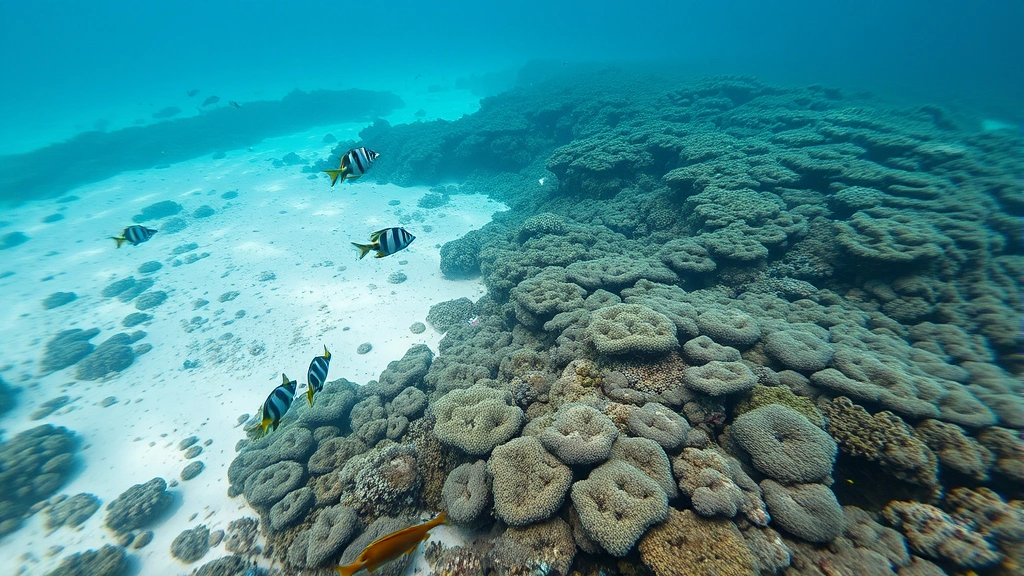
Extinction cascades through food webs with unpredictable consequences. The loss of a pollinator species affects all dependent plants; the loss of a keystone predator releases herbivore populations, causing vegetation collapse. Coral reef ecosystems, supporting 25% of marine species despite covering less than 1% of ocean area, have declined 50% since 1950. Continued warming will render 90% of remaining reefs uninhabitable by 2050. These systems support food security for 500 million people and generate $375 billion in ecosystem services annually.
Genetic diversity loss parallels species extinction. Crop genetic diversity has declined dramatically as industrial agriculture consolidates around high-yield varieties. This homogenization reduces resilience to pests, diseases, and climate variability. Similarly, livestock genetic diversity has contracted; the FAO reports that one livestock breed disappears every six days. This erosion of genetic variation reduces humanity’s adaptive capacity precisely when climate change accelerates environmental unpredictability.
Climate Change as Ecosystem Disruption
Anthropogenic climate change represents the ultimate expression of human ecosystem modification. Atmospheric carbon dioxide concentrations have increased 50% since industrialization, from 280 to 420 parts per million. This increase drives warming at rates unprecedented in geological history—approximately 0.18°C per decade, compared to 0.01°C per decade during the Holocene. The consequences for ecosystems are severe and multifaceted.
Temperature increases alter phenological timing—the synchronization of seasonal events. Spring arrives earlier, disrupting the coordination between pollinators and flowering plants, between predators and prey. Range shifts push species toward poles and higher elevations; some species cannot migrate fast enough to track suitable climate envelopes. Alpine and polar ecosystems face complete transformation. Permafrost thaw releases methane and carbon dioxide, creating positive feedback loops that accelerate warming independent of human emissions.
Ocean acidification, driven by carbon dioxide absorption, reduces shell-forming organisms’ ability to build calcium carbonate structures. Pteropods, crucial forage fish food, show 25% shell dissolution under current acidification levels. Coral bleaching events, now occurring annually, reflect thermal stress exceeding symbiotic algae tolerance. The United Nations Environment Programme projects that 99% of tropical coral reefs will bleach under 1.5°C warming scenarios.
Precipitation pattern changes disrupt hydrological cycles. Some regions experience intensified droughts, threatening agricultural systems and freshwater supplies. Others face increased flooding, with associated ecosystem disruption and human suffering. Tropical rainforests face a critical threshold; modeling suggests that 20-25% deforestation plus 2°C warming could trigger savannization across the Amazon basin. Such transitions would represent irreversible regime shifts with global consequences.
Economic Dimensions of Ecological Destruction
Conventional economic metrics fail to capture ecosystem degradation costs. GDP grows when fisheries collapse, because the catch is counted as income while the loss of future productive capacity is ignored. This accounting error systematizes short-term exploitation at the expense of long-term welfare. Natural capital accounting, which incorporates ecosystem service values, reveals that genuine economic progress has stagnated in many regions despite GDP growth.
The World Bank estimates that environmental degradation costs low and middle-income countries 4-5% of annual GDP. In some nations, this figure exceeds 10%. These costs include lost agricultural productivity from soil degradation, health impacts from air and water pollution, and reduced fisheries yields. Yet these externalities remain largely invisible in market prices, creating perverse incentives for continued degradation.
Reducing carbon footprint requires understanding these economic distortions. Carbon pricing mechanisms attempt to internalize climate costs, but current prices—typically $1-50 per ton—remain far below actual damages, estimated at $50-200 per ton. This underpricing perpetuates fossil fuel dependence despite superior renewable alternatives on a true cost basis.
Ecological restoration economics presents an alternative framework. Investing in ecosystem recovery generates multiple returns: carbon sequestration, water purification, biodiversity recovery, and enhanced human wellbeing. Studies indicate that restoration investments yield 7-15 dollars in ecosystem services per dollar invested. Yet restoration receives less than 0.5% of conservation funding globally, reflecting market failure in valuing future ecosystem services against present consumption.
Adaptation and Mitigation Strategies
Addressing human impact on ecosystems requires simultaneous action across multiple domains. Mitigation involves reducing emissions and habitat destruction. Rapid decarbonization of energy systems is technically and economically feasible; renewable energy costs have declined 90% for solar and 70% for wind over the past decade. Yet political inertia, fossil fuel subsidies ($7 trillion annually when externalities are included), and entrenched interests slow transition. The International Energy Agency projects that net-zero energy systems are achievable by 2050 with existing technologies, requiring primarily political commitment.
Protected area expansion represents a key mitigation strategy. Currently, 17% of terrestrial and 8% of marine ecosystems are protected. Expanding to 30% protection, as proposed in emerging biodiversity agreements, would prevent extinctions of 2-3% of species. However, protection effectiveness depends on enforcement and management quality; many protected areas exist only on paper. Community-based conservation, which grants local populations stewardship rights, often outperforms centralized management.
Environmental awareness drives behavioral change necessary for transformation. Education regarding ecosystem interdependence, consumption impacts, and sustainability options increases pro-environmental behavior. Yet individual actions, while necessary, prove insufficient without systemic changes. Carbon footprint reduction by wealthy populations must accompany energy system transformation and consumption pattern shifts toward sustainable levels.
Adaptation involves adjusting to unavoidable climate changes and ecosystem modifications. Agricultural systems require development of climate-resilient crop varieties and diversified farming systems. Water management infrastructure must accommodate altered precipitation patterns. Urban planning must incorporate nature-based solutions—green infrastructure, urban forests, wetland restoration—that simultaneously reduce flooding, heat stress, and air pollution while enhancing biodiversity.
Regenerative agriculture demonstrates adaptation-mitigation synergies. Practices including cover cropping, reduced tillage, and rotational grazing rebuild soil organic matter, enhancing water retention and carbon sequestration while increasing yields. These approaches contrast sharply with industrial monocultures that degrade soils, reduce resilience, and depend on chemical inputs. Scaling regenerative agriculture to 25% of global farmland would sequester equivalent carbon to current annual emissions.
Nature-based solutions leverage ecosystem resilience. Mangrove restoration provides coastal protection while sequestering carbon and supporting fisheries. Riparian forest restoration improves water quality, reduces flooding, and restores habitat. Peatland rewetting prevents emissions while restoring biodiversity. These approaches cost 5-10 times less than engineered alternatives while providing multiple co-benefits. Yet they require long-term commitment and compete against short-term economic pressures.
Systemic transformation toward circular economies reduces resource extraction pressure. Currently, only 8.6% of materials are recycled; 92% become waste. Circular design principles—products designed for disassembly, remanufacturing, or biological decomposition—could dramatically reduce extraction demands. Industrial symbiosis, where waste from one process becomes feedstock for another, demonstrates technical feasibility. Yet implementation requires regulatory frameworks and economic incentives currently absent in most jurisdictions.
International cooperation proves essential. Atmospheric carbon, migratory species, and ocean currents respect no borders. The Paris Agreement, while inadequate to prevent dangerous warming, established the principle that nations must cooperate on climate. Similar frameworks for biodiversity, ocean governance, and chemical pollution require strengthening. UNEP’s environmental governance initiatives work toward these frameworks, though implementation remains weak relative to problem magnitude.
FAQ
What does human-environment interaction mean in ecological context?
Human-environment interaction refers to the reciprocal processes through which human societies modify ecosystems through resource extraction, habitat alteration, and pollution, while simultaneously being constrained or enabled by environmental conditions. This relationship operates across scales from local communities to global biogeochemical cycles, creating complex feedback loops that determine ecosystem stability and human wellbeing.
How do fossil fuels specifically impact ecosystems?
Fossil fuel combustion releases carbon dioxide, methane, and nitrous oxide, driving climate change that disrupts ecosystems globally. Additionally, extraction processes destroy habitats; oil spills devastate marine and terrestrial ecosystems; coal mining creates acid drainage contaminating waterways; and natural gas extraction fragments habitats and releases methane during production and transport. The comprehensive analysis of fossil fuel impacts reveals that these fuels damage ecosystems at every stage from extraction through combustion.
What are the primary drivers of biodiversity loss?
Habitat destruction from land-use change represents the leading driver, followed by climate change, pollution, overexploitation, and invasive species. These drivers interact synergistically; habitat fragmentation reduces species’ capacity to adapt to climate change; pollution reduces fitness and reproduction; overexploitation reduces population sizes below viable thresholds. Addressing biodiversity loss requires simultaneously tackling all drivers rather than prioritizing single solutions.
How can ecosystems recover from human damage?
Ecosystems possess remarkable recovery capacity when pressures are removed. Forests regenerate when deforestation ceases; fisheries rebuild when fishing intensity declines; air quality improves when emissions decrease. However, recovery timescales vary dramatically—some systems recover in years, others require centuries or millennia. Degraded systems may enter alternative stable states resistant to recovery; returning them to original conditions requires active restoration. Preventing further degradation remains far more cost-effective than restoration.
What role does economic policy play in ecosystem protection?
Economic policies fundamentally shape ecosystem outcomes through price signals, subsidies, and regulatory frameworks. Fossil fuel subsidies encourage continued extraction despite climate costs; agricultural subsidies incentivize monoculture intensification; logging concessions drive deforestation. Conversely, carbon pricing, payment for ecosystem services, and conservation easements can align economic incentives with ecological protection. However, these market mechanisms remain insufficient without regulatory limits preventing irreversible ecosystem damage.


