Florida’s Economy and Its Ecosystems: A Deep Dive
Florida’s economy represents one of the most complex intersections of human economic activity and ecological vulnerability in the United States. With a gross state product exceeding $1.2 trillion and a population surpassing 22 million residents, Florida has built its prosperity on tourism, agriculture, real estate development, and increasingly, technology sectors. However, this economic engine operates within an ecosystem of extraordinary fragility—a state where 1,350 miles of coastline, the Everglades wetlands, coral reef systems, and freshwater aquifers form the biological foundation upon which all economic activity ultimately depends. Understanding Florida’s economic trajectory requires examining how business growth, labor dynamics, environmental pressures, and ecological limits interact in ways that challenge conventional economic models.
The state’s unique geographical position—a peninsula surrounded by water with average elevation of just six feet—creates both economic opportunities and existential environmental risks. Rising sea levels, saltwater intrusion, and ecosystem degradation pose unprecedented challenges to Florida’s future prosperity. Simultaneously, labor market conditions and workplace dynamics across Florida’s diverse industries reveal tensions between economic growth imperatives and worker wellbeing. This analysis explores how Florida’s economy and ecosystems are fundamentally interconnected, examining the data-driven evidence that environmental sustainability and economic resilience are not opposing forces but interdependent necessities.
Florida’s Economic Structure and Ecosystem Dependencies
Florida’s economy comprises several interconnected sectors, each with distinct ecological footprints and labor characteristics. The tourism industry alone generates approximately $112 billion annually and employs over 1.5 million workers across hospitality, entertainment, transportation, and service sectors. Agriculture contributes $7.3 billion to the state’s economy, with sugarcane, citrus, and vegetables representing major commodities. Real estate and construction account for roughly $300 billion in economic activity, while the financial services and technology sectors continue expanding. This economic diversity, while providing resilience, creates complex relationships between human activity and natural systems.
The Everglades ecosystem exemplifies these interdependencies. This unique wetland system—often called the “River of Grass”—covers approximately 1.5 million acres and functions as a critical freshwater filtration system, storm surge buffer, and habitat for thousands of species. Agricultural runoff, particularly from sugarcane operations, introduces excess nutrients (nitrogen and phosphorus) that trigger harmful algal blooms and ecosystem degradation. Yet the agricultural sector provides 40,000 direct jobs and supports rural communities throughout central and southern Florida. This tension between economic productivity and ecological health characterizes much of Florida’s development pattern.
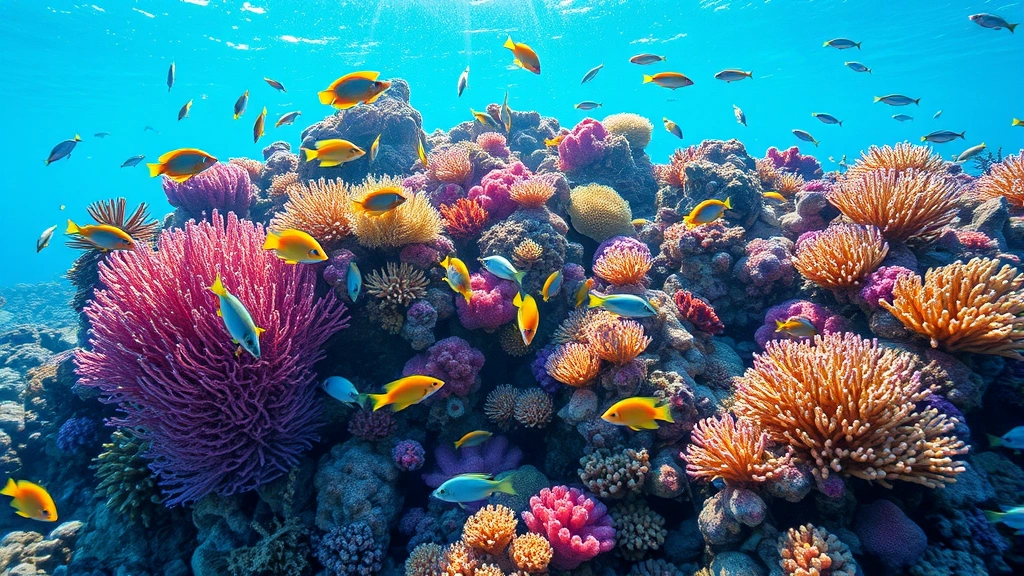
Florida’s coral reef systems represent another critical ecosystem-economy intersection. Coral reefs protect Florida’s coastline from storm damage, support commercial and recreational fisheries worth $9.5 billion annually, and drive tourism revenues through diving, snorkeling, and marine recreation. Research from the World Bank indicates that coastal ecosystems provide economic services valued at $375 billion globally, with Florida’s reefs contributing disproportionately given their geographic concentration. Yet these reefs face unprecedented stress from warming ocean temperatures, ocean acidification, pollution, and overfishing—threats directly linked to broader economic activities and consumption patterns.
Water resource management reveals how ecosystem services underpin economic functioning. Florida’s Biscayne Aquifer supplies drinking water to approximately 9 million residents and supports the $7.3 billion agricultural sector. Saltwater intrusion—driven by both sea-level rise and groundwater extraction—threatens this critical freshwater resource. Environmental awareness initiatives increasingly emphasize that water security represents an economic security issue, not merely an environmental concern. The economic cost of transitioning to alternative water supplies, implementing desalination, or managing saltwater contamination could exceed $50 billion over the next two decades.

Tourism, Hospitality, and Labor Market Pressures
Florida’s tourism sector exemplifies how ecological quality directly translates to economic value. The state’s natural attractions—beaches, springs, mangrove forests, and marine ecosystems—generate more tourism revenue than the sector’s built attractions. Yet the tourism workforce experiences conditions that economists increasingly recognize as economically inefficient. Approximately 60% of Florida’s hospitality workers earn wages below the state median, with many earning $28,000 annually or less. This creates a paradox: an industry dependent on pristine natural environments employs workers with insufficient income to maintain stable housing, healthcare, or family support.
Labor market research reveals that workplace conditions in Florida’s tourism sector often reflect structural inequities that parallel ecological exploitation patterns. Workers in hotels, restaurants, and attractions frequently experience scheduling uncertainty, limited benefits, and minimal job security. While “hostile work environment” concerns typically reference discriminatory or abusive conditions, the broader concept encompasses systematic undervaluation of workers whose labor generates enormous wealth. Tourism workers’ low compensation relative to industry revenues mirrors ecological systems’ systematic undervaluation—both represent cases where economic accounting fails to capture true value creation and distribution.
This labor-ecology connection extends to environmental justice. Tourism workers in Florida are disproportionately people of color and immigrants, concentrated in coastal and urban areas most vulnerable to climate impacts. As sea-level rise threatens coastal infrastructure, tourism workers face compounded risks: potential job losses from climate-driven economic disruption combined with existing wage and employment precarity. Green environment transitions in tourism—such as sustainable hospitality practices—could create higher-quality employment if designed with worker wellbeing as a central objective rather than an afterthought.
Economic data supports this perspective. Studies from ecological economics journals demonstrate that sustainable tourism models—incorporating living wages, worker ownership, and genuine environmental conservation—generate comparable or superior economic returns compared to conventional tourism while producing superior ecological outcomes. Florida’s tourism sector, generating over $112 billion annually, possesses sufficient economic scale to restructure employment relationships while maintaining profitability and growth.
Agricultural Systems and Water Resources
Florida’s agricultural sector illustrates how ecosystem degradation can undermine long-term economic viability even as it generates short-term profits. The sugarcane industry, concentrated in the Everglades Agricultural Area, produces approximately 16% of U.S. sugar and generates significant export revenues. However, sugarcane cultivation requires extensive water extraction and nutrient-intensive fertilization. Runoff from these operations has transformed Lake Okeechobee—historically a clear, oligotrophic system—into an eutrophic lake prone to toxic algal blooms that damage recreational opportunities, human health, and downstream ecosystems.
The economic costs of this degradation accumulate invisibly in standard GDP accounting. When Lake Okeechobee experiences toxic algal blooms, tourism revenues decline, property values in surrounding communities decrease, and public health costs increase. Yet these costs appear as separate economic activities rather than as deductions from agricultural productivity. The United Nations Environment Programme advocates for ecosystem service accounting that would capture these costs within sectoral economic analysis. If Florida implemented true-cost accounting for agriculture, incorporating water degradation, eutrophication, and ecosystem service losses, the sector’s apparent profitability would decline substantially.
Citrus production, historically Florida’s signature agricultural commodity, faces ecological pressures that threaten economic viability. Citrus greening disease, exacerbated by climate change and monoculture cultivation practices, has reduced Florida’s citrus acreage from 1.3 million acres in 2000 to approximately 400,000 acres currently. This represents a $3.5 billion loss in annual production and the elimination of thousands of agricultural jobs. The ecological drivers—disease vectors thriving in warmer temperatures, reduced genetic diversity from monoculture—demonstrate how ecosystem neglect creates economic vulnerability.
Transitioning agricultural systems toward ecological integration could restore economic resilience. Regenerative agriculture practices—crop rotation, integrated pest management, reduced chemical inputs—typically reduce short-term yields by 5-15% but increase long-term productivity, reduce input costs, enhance soil carbon sequestration, and improve ecosystem health. For Florida agriculture, this transition represents both an ecological necessity and an economic opportunity if supported by appropriate policy incentives and market mechanisms.
Real Estate Development and Coastal Vulnerability
Florida’s real estate sector generates approximately $300 billion in economic activity and employs over 800,000 workers across development, construction, real estate services, and related industries. However, approximately 2.7 million properties valued at $1.8 trillion face increasing flood risk from sea-level rise and storm surge intensification. This represents an enormous economic vulnerability masked by current market valuations that typically ignore or dramatically underestimate climate risks.
The economic logic of coastal development in Florida has historically treated sea level and storm intensity as constants. Mortgages, property insurance, and development financing all assume relatively stable coastal conditions. As sea-level rise accelerates—currently averaging 3.4 millimeters annually in Miami but accelerating—this assumption becomes increasingly untenable. Property values in flood-prone areas face potential 20-50% declines as climate risks become salient to market participants. This creates a potential financial crisis distinct from but potentially comparable to the 2008 housing collapse.
Labor market implications extend throughout the construction and real estate sectors. As development patterns shift away from vulnerable coastal areas toward inland regions, employment geography will change. Workers in coastal construction trades face potential displacement as development declines. Simultaneously, inland development will create new opportunities, but geographic and skill mismatches will produce transitional unemployment and wage pressure. Strategies to reduce carbon footprint in construction and real estate—such as green building standards, urban densification, and transit-oriented development—could create higher-quality employment while reducing climate vulnerability.
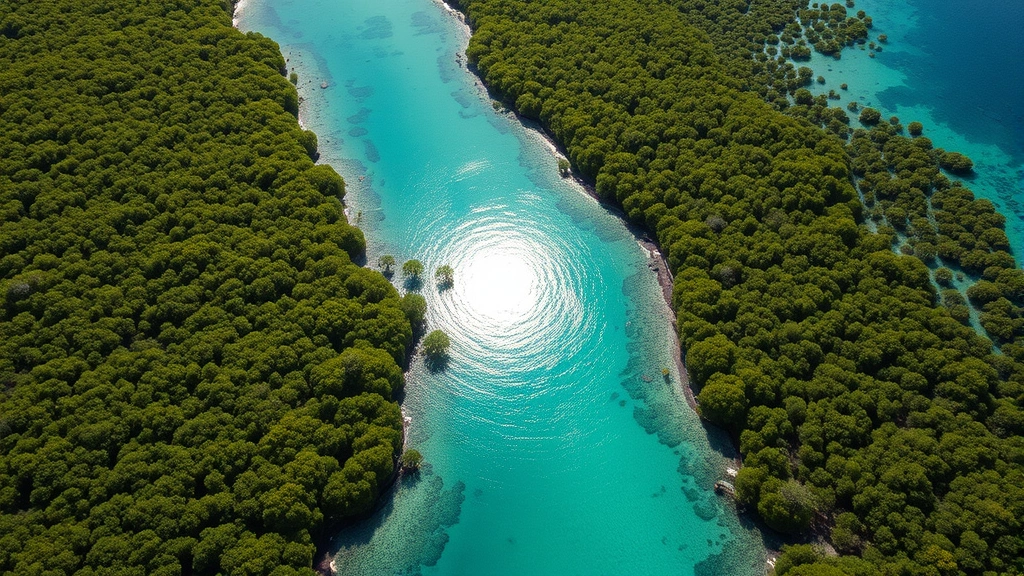
Mangrove ecosystems provide critical infrastructure for coastal resilience, functioning as natural storm barriers and nurseries for commercial fish species. Yet approximately 24% of Florida’s mangrove forests have been destroyed or degraded through coastal development. Restoring mangrove ecosystems would simultaneously enhance coastal resilience, support fisheries, and provide carbon sequestration benefits. The economic case for mangrove restoration—preventing storm damage, supporting fisheries, and enabling sustainable tourism—exceeds the costs of restoration by estimated ratios of 10:1 to 15:1.
Climate Change Economics and Future Projections
Climate change represents Florida’s most significant long-term economic threat, with economic impacts potentially exceeding $400 billion by 2050 under moderate warming scenarios. Sea-level rise, intensified hurricanes, saltwater intrusion, and ecosystem collapse create cascading economic damages across virtually every sector. Yet most economic planning and business decision-making continues operating under assumptions of climate stability.
The economic analysis of climate impacts reveals fundamental failures in conventional cost-benefit analysis. Impacts on future generations—ecosystem collapse, saltwater-contaminated aquifers, uninhabitable coastal regions—receive minimal weight in discounted present-value calculations. Intergovernmental Panel on Climate Change research demonstrates that discount rates of 3-5% (conventional in economic analysis) effectively assign near-zero value to impacts occurring beyond 30-50 years. For Florida, this means that catastrophic impacts in 2070-2100 receive negligible weight in current economic decisions, despite their certainty and magnitude.
Ecological economics approaches this problem differently, incorporating concepts of biophysical limits, irreversibility, and critical thresholds. Florida’s coral reefs, freshwater aquifers, and mangrove ecosystems represent critical natural capital assets. Once degraded beyond recovery points, they cannot be replaced through economic substitution. The economic value of preserving these systems—measured through option value (preserving future choices), existence value (value from knowing ecosystems persist), and bequest value (passing healthy ecosystems to future generations)—far exceeds the short-term extraction or development value.
Economic modeling incorporating these ecological perspectives suggests that Florida’s optimal economic strategy involves rapid decarbonization, ecosystem restoration, and economic diversification away from climate-vulnerable sectors. This represents not economic sacrifice but recognition that current growth trajectories are unsustainable and economically irrational when true costs are calculated. Analysis from ecological economics research increasingly demonstrates that sustainable economic models generate superior long-term returns compared to extraction-focused approaches.
Policy Pathways Toward Ecological Economic Integration
Transforming Florida’s economy toward genuine sustainability requires integrated policy approaches addressing both ecological restoration and economic restructuring. Carbon pricing mechanisms—either through taxation or cap-and-trade systems—could internalize climate costs into economic decision-making. Current carbon emissions from Florida’s economy (approximately 350 million metric tons CO2-equivalent annually) generate damages estimated at $35-70 billion annually when social costs are calculated. Pricing carbon at $100-200 per metric ton would dramatically alter investment decisions, redirecting capital toward low-carbon alternatives.
Natural capital accounting represents another critical policy mechanism. Florida could implement ecosystem service valuation, calculating the economic contribution of mangrove forests, coral reefs, wetlands, and freshwater aquifers. This would reveal that environmental protection generates economic returns comparable to or exceeding extraction activities. Water resource pricing reforms could reflect true scarcity values, encouraging conservation and sustainable use patterns. Agricultural subsidy restructuring could redirect support toward regenerative practices rather than input-intensive monocultures.
Labor market policies must accompany ecological transitions. Just transition frameworks could ensure that workers in declining sectors receive income support, retraining, and priority access to emerging opportunities in renewable energy, ecological restoration, and sustainable tourism. Florida’s investment in renewable energy infrastructure could create 200,000+ quality jobs while reducing carbon emissions 80% by 2050. Renewable energy for homes represents one component of broader systemic transition toward clean energy systems.
Ecosystem restoration programs—mangrove replanting, coral reef restoration, wetland reconstruction, and invasive species management—could employ tens of thousands of workers while generating ecological and economic returns. These restoration activities should be structured as quality employment with union wages, benefits, and career pathways rather than low-wage temporary programs. The economic multiplier effects of restoration employment—workers spending wages in local economies, purchasing goods and services—would generate additional economic activity and tax revenues.
Policy integration across sectors represents a final critical element. Tourism promotion should incorporate environmental quality as a central marketing theme, supporting pricing premiums for sustainable hospitality. Agricultural policy should incentivize transition toward regenerative practices through subsidy restructuring and market development for sustainably produced products. Real estate policy should incorporate climate risk disclosure requirements, ensuring that property values reflect actual environmental hazards. Financial regulation should require climate risk assessment and stress-testing for institutions with significant Florida exposure.
The economic case for Florida’s ecological transition is compelling. Maintaining current trajectories leads toward inevitable economic collapse through ecosystem degradation, climate impacts, and financial instability. Transitioning toward sustainable, ecologically integrated economic models requires substantial policy changes and investment but generates superior long-term returns, more resilient employment, and preserved natural capital for future generations. Florida’s economic future depends not on maximizing extraction from its ecosystems but on recognizing that ecological health and economic prosperity are fundamentally inseparable.
FAQ
How does sea-level rise specifically threaten Florida’s economy?
Sea-level rise creates multiple economic threats: direct property damage to $1.8 trillion in at-risk real estate, saltwater intrusion into freshwater aquifers affecting agriculture and drinking water, increased hurricane storm surge damages, and deterioration of coastal tourism infrastructure. Annual economic losses could reach $75+ billion by 2050 without adaptation measures.
What percentage of Florida’s economy depends on healthy ecosystems?
Approximately 40-50% of Florida’s economic activity directly depends on ecosystem services: tourism ($112 billion), agriculture ($7.3 billion), fisheries ($9.5 billion), and real estate values dependent on coastal amenities. Indirect dependencies through water provision, climate regulation, and storm protection extend this percentage higher.
Can Florida’s economy transition to renewable energy without job losses?
Yes, with proper policy support. Renewable energy sector employment typically exceeds fossil fuel employment at equivalent investment levels. Solar installation, wind development, energy efficiency retrofitting, and grid modernization create more jobs than coal or natural gas generation. Transition policies ensuring retraining and income support for displaced workers are essential.
How does agricultural reform affect Florida’s economy?
Transitioning toward regenerative agriculture reduces short-term yields 5-15% but increases long-term productivity, reduces input costs, improves ecosystem health, and enhances soil carbon sequestration. Market premiums for sustainably produced agricultural products can offset yield reductions. The agricultural sector would become economically and ecologically more resilient.
What role should tourism play in Florida’s future economy?
Tourism will remain economically significant but should transition toward sustainable models emphasizing authentic environmental experiences, worker wellbeing, and genuine ecological conservation. This transformation increases long-term economic returns while improving employment quality and environmental outcomes.


