
How External Factors Shape Economies: Study Insights
The external environment profoundly influences economic performance, yet many policymakers and business leaders operate as though economies function in isolation. Recent research demonstrates that climate volatility, geopolitical shifts, supply chain disruptions, and ecological degradation create cascading effects throughout entire economic systems. Understanding these interconnections is essential for building resilient economies that can withstand shocks while maintaining sustainable growth trajectories.
External environmental factors—encompassing natural systems, regulatory frameworks, technological changes, and global market dynamics—act as powerful determinants of economic outcomes. From commodity price fluctuations driven by weather patterns to labor market disruptions caused by environmental migration, the external environment shapes everything from inflation rates to employment levels. This comprehensive analysis examines how contemporary research reveals these complex relationships and what they mean for economic policy and business strategy.
Understanding the External Environment in Economics
The external environment encompasses all factors outside an organization or economy’s direct control that influence its performance. Traditional economic models often treated these factors as exogenous variables—external shocks to be managed rather than integrated into core economic analysis. However, contemporary research increasingly recognizes that the external environment is not merely a constraint but a fundamental driver of economic structure and outcomes.
Environmental economists and ecological economists have developed frameworks demonstrating that natural systems provide essential services—from pollination and water purification to climate regulation—that have quantifiable economic value. When these systems degrade, economic costs accumulate rapidly. A study by the World Bank estimated that natural capital depletion costs developing nations approximately 4-6% of annual GDP, yet remains largely invisible in traditional accounting systems.
The relationship between external environmental factors and economic performance manifests through multiple channels. Resource availability directly constrains production capacity. Environmental regulations establish operating parameters for businesses. Climate patterns influence agricultural yields and energy demand. These factors interact in complex ways, creating feedback loops that amplify or dampen economic fluctuations. Understanding these mechanisms requires interdisciplinary analysis combining economics, ecology, climate science, and systems thinking.
Consider how examples of human-environment interaction reveal economic dependencies. A drought affecting water availability simultaneously impacts agricultural production, hydroelectric power generation, and industrial manufacturing. These cascading effects ripple through supply chains, labor markets, and consumer prices. What appears as separate economic shocks are actually manifestations of underlying environmental constraints.
Climate and Natural Resource Constraints
Climate change represents perhaps the most consequential external environmental factor shaping contemporary economies. Physical climate risks—including extreme weather events, changing precipitation patterns, and temperature shifts—directly affect productive capacity across agriculture, energy, and infrastructure sectors. Transition risks emerge as economies shift away from fossil fuels, creating winners and losers across different industries and regions.
Agricultural economics demonstrates climate sensitivity most clearly. Global crop yields depend critically on precipitation timing, temperature ranges, and soil moisture conditions. Climate variability increases production uncertainty, raising costs for farmers and food producers. A 1°C temperature increase above historical norms reduces wheat yields by approximately 6%, barley by 3.6%, and corn by 7.4%, according to research published in the Journal of Environmental Economics and Management. These impacts cascade through food supply chains, affecting prices for consumers worldwide and creating macroeconomic volatility.
Water scarcity represents another critical constraint. Approximately 2 billion people face high water stress, and this number increases as aquifers deplete and precipitation patterns shift. Water-intensive industries—including agriculture (70% of global freshwater use), energy production (thermoelectric plants), and manufacturing—face increasing operational costs and production constraints. The external environment of water availability directly determines economic feasibility for entire sectors in water-stressed regions.
Natural resource depletion creates additional economic pressures. Fisheries collapse when harvesting exceeds regeneration rates, destroying livelihoods and food security. Deforestation reduces carbon sequestration capacity, increases flooding risks, and eliminates pharmaceutical and industrial resources. Soil degradation reduces agricultural productivity, requiring increased chemical inputs that raise production costs and environmental externalities. These resource constraints represent hard limits that external economic factors cannot overcome through market mechanisms alone.
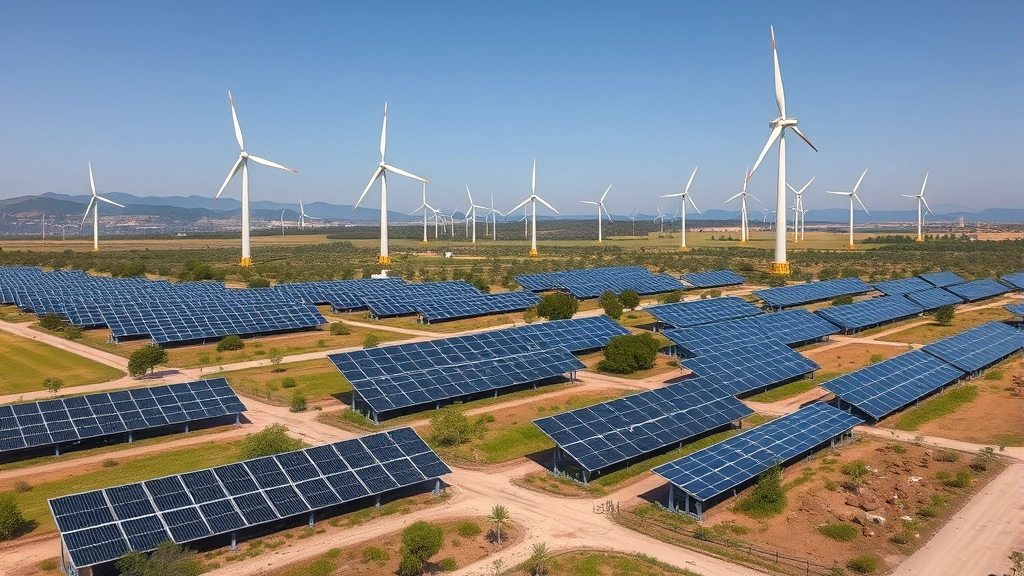
The relationship between renewable energy systems and external environmental conditions illustrates climate-economy interactions. Solar generation depends on cloud cover and seasonal sunlight variation. Wind power requires consistent wind resources. Hydroelectric capacity depends on precipitation and water availability. As economies transition toward renewable energy, their productive capacity becomes increasingly tied to external environmental conditions, requiring sophisticated forecasting, storage, and grid management systems.
Geopolitical and Regulatory Influences
Beyond natural systems, the external environment includes geopolitical structures and regulatory frameworks that shape economic behavior. Trade policies, tariffs, sanctions, and international agreements create external constraints that redirect economic activity. Environmental regulations establish minimum standards for emissions, waste management, and resource extraction, fundamentally altering cost structures and competitive dynamics.
Geopolitical fragmentation creates external pressures on global supply chains. Regional conflicts disrupt transportation routes, increase insurance costs, and create uncertainty that depresses investment. Export controls on critical materials—such as rare earth elements for renewable energy technologies or semiconductors for advanced manufacturing—create bottlenecks that constrain economic activity in dependent regions. The external geopolitical environment thus directly influences which economies can access essential inputs.
Environmental regulations represent intentional external constraints designed to internalize ecological costs into economic decision-making. Carbon pricing mechanisms, emission standards, and pollution regulations increase operational costs for firms, but simultaneously create markets for clean technologies and efficiency improvements. The external environment of regulatory requirements thus reshapes competitive advantage, rewarding companies with strong environmental performance while penalizing those with high ecological impact.
International environmental agreements establish external parameters that shape economic policies. The Paris Climate Agreement commits signatories to emission reduction targets, creating external pressure for energy transition and economic restructuring. The Basel Convention restricts hazardous waste trade, affecting waste management economics globally. These regulatory frameworks represent external environmental factors that governments must navigate, creating both constraints and opportunities for economic development.
Supply Chain Vulnerabilities
Modern economies depend on intricate global supply chains that concentrate production in specific regions based on comparative advantage in labor costs, resource availability, and infrastructure. This concentration creates vulnerability to external shocks affecting particular locations or sectors. When external environmental factors disrupt production in critical nodes, entire supply chains experience cascading failures affecting economies worldwide.
The COVID-19 pandemic revealed supply chain fragility when lockdowns disrupted manufacturing and transportation simultaneously across multiple regions. Subsequent analysis identified how external environmental factors—including climate disasters, geopolitical tensions, and resource constraints—create similar disruption risks. A semiconductor shortage following environmental disasters in Taiwan threatened production across automotive, computing, and renewable energy industries globally.
Climate-related supply chain disruptions are accelerating. Flooding in Pakistan destroyed textile production capacity affecting global apparel markets. Droughts in Brazil reduced coffee and sugar supplies, raising commodity prices worldwide. Extreme heat in Taiwan disrupted semiconductor manufacturing. These external environmental shocks demonstrate how geographically concentrated production creates systemic economic vulnerability despite global supply chain benefits.
Supply chain resilience requires diversification and redundancy, increasing operational costs but reducing external environmental vulnerability. Companies increasingly recognize that just-in-time manufacturing optimized for efficiency creates fragility when external shocks occur. Building supply chain resilience means accepting higher costs during normal periods to maintain economic stability when external environmental disruptions occur. This represents a fundamental reorientation of economic optimization from pure efficiency toward resilience.
Ecosystem Services and Economic Valuation
Ecosystem services—the benefits humans derive from natural systems—generate enormous economic value that remains largely invisible in traditional economic accounting. Pollination services, water filtration, flood protection, carbon sequestration, and nutrient cycling create trillions of dollars in annual economic value. When ecosystem degradation reduces these services, economic costs accumulate rapidly despite remaining unmeasured in GDP.
The external environment of ecosystem health directly determines economic productivity in agriculture, fisheries, and water-dependent industries. Bee population declines reduce crop pollination, increasing production costs and reducing yields. Wetland destruction eliminates natural flood protection, increasing disaster recovery costs and property damage. Coral reef degradation reduces fishery productivity and coastal protection from storms. These ecosystem service losses represent real economic costs imposed by environmental degradation.
Valuing ecosystem services requires interdisciplinary analysis combining ecological science with economic methods. Researchers use replacement cost methods (determining what it would cost to replace ecosystem functions artificially), contingent valuation (surveying willingness to pay for environmental protection), and hedonic pricing (analyzing how environmental quality affects property values). These methods reveal that ecosystem service values often exceed direct market values of resource extraction, suggesting that conservation frequently represents economically optimal strategy when ecosystem services are properly valued.
The relationship between ethics and environment intersects with economic valuation when determining how to account for ecosystem services across time horizons and generations. Discount rates used in cost-benefit analysis determine whether future environmental benefits justify current costs. High discount rates favor immediate extraction over long-term ecosystem preservation, while low discount rates value future environmental services more highly. This ethical question about intergenerational equity directly shapes economic policy regarding resource use and environmental protection.
Technology and Innovation as External Drivers
The external environment includes technological possibilities and constraints that shape economic performance. Breakthroughs in renewable energy, battery storage, carbon capture, and agricultural technology create new economic opportunities. Conversely, technological obsolescence can render entire industries economically unviable, as occurred with fossil fuel demand destruction when renewable energy costs declined below coal and natural gas.
Innovation in renewable energy demonstrates how external technological change reshapes economies. Solar photovoltaic costs declined 90% over the past decade, making solar-generated electricity cheaper than coal-generated electricity in most markets. This external technological shift transformed energy economics, making fossil fuel infrastructure economically stranded and renewable energy economically dominant. Economies that adapted quickly captured benefits; those clinging to fossil fuel infrastructure face costly transition challenges.
Agricultural technology innovations reshape relationships between economies and their external environmental constraints. Precision agriculture using sensors, drones, and data analytics reduces water use, fertilizer inputs, and pesticide applications while increasing yields. Vertical farming systems produce food with minimal water and land requirements. Lab-grown meat technology potentially reduces land use and emissions from livestock production. These innovations represent external technological developments that can reduce resource constraints and environmental impacts simultaneously.
However, technology cannot eliminate fundamental ecological constraints. Technology can increase efficiency and reduce resource intensity, but cannot create resources from nothing or eliminate physical laws governing energy and matter. External environmental constraints remain binding even with technological advancement. Technology can shift when constraints become binding and how severely they constrain economic activity, but cannot eliminate limits entirely.
The intersection of environmental and economic research increasingly focuses on how technology can reduce external environmental constraints while maintaining or improving living standards. This research recognizes that decoupling economic growth from resource consumption and environmental impact requires simultaneous progress in multiple technological domains—energy, agriculture, manufacturing, transportation, and materials science.

Policy Implications and Strategic Responses
Understanding how external factors shape economies generates clear policy implications. First, environmental protection represents economic necessity rather than luxury. Degrading ecosystems imposes costs that eventually constrain economic activity. Protecting ecosystem services maintains the natural capital stocks upon which economies depend. From strict economic perspective, environmental protection represents investment in productive capacity, not consumption of resources.
Second, economic policies must incorporate environmental constraints explicitly. Traditional macroeconomic models treating environmental factors as exogenous variables miss critical feedback loops and tipping points. Climate-adjusted economic models, natural capital accounting systems, and ecological economics frameworks provide more accurate representations of how external environmental factors influence economic outcomes. Policymakers using incomplete models make decisions that appear economically rational but generate long-term economic damage.
Third, building economic resilience requires reducing vulnerability to external environmental shocks. This means diversifying energy sources, strengthening local food production capacity, developing water security strategies, and creating supply chain redundancy. While these measures increase short-term costs, they reduce long-term vulnerability when external shocks occur. Economic resilience represents rational insurance against external environmental disruptions.
Fourth, transitioning to sustainable economies requires intentional policy support rather than waiting for market forces. While renewable energy became cost-competitive with fossil fuels, this transition accelerated through research subsidies, deployment incentives, and carbon pricing policies that reflected true environmental costs. Similarly, sustainable agriculture, circular economy approaches, and low-carbon manufacturing require policy support to overcome incumbent advantages and initial cost barriers. External environmental constraints make sustainable transitions economically necessary; policy determines implementation speed and distributional consequences.
Fifth, international cooperation becomes essential when external environmental factors create shared constraints. Climate change, water scarcity, biodiversity loss, and ocean acidification are global problems requiring coordinated responses. Trade agreements, technology transfer mechanisms, and climate finance support help distribute transition costs equitably while ensuring that all economies can adapt to external environmental constraints. The United Nations Environment Programme coordinates global environmental policy recognizing these interdependencies.
Sixth, business strategy must explicitly incorporate external environmental factors into long-term planning. Companies that recognize how climate change, resource constraints, and ecosystem degradation affect their industries can adapt proactively. Those ignoring external environmental trends face sudden competitive disruption when constraints become binding or regulations change. Strategic foresight incorporating external environmental analysis provides competitive advantage and reduces stranded asset risk.
The relationship between reducing carbon footprints and economic strategy illustrates this principle. Companies implementing comprehensive carbon reduction strategies often discover that efficiency improvements reduce operating costs while lowering emissions. Energy efficiency, waste reduction, and process optimization simultaneously improve environmental performance and economic efficiency. The external environmental constraint of climate change thus becomes driver of business innovation and cost reduction.
Research from ecological economics institutes demonstrates that economies incorporating environmental factors outperform those ignoring them over medium and long time horizons. Ecological Economics journal publishes research showing how integrated environmental-economic analysis generates superior policy outcomes. The Living Planet Report tracks ecosystem health alongside economic metrics, revealing correlations between environmental degradation and economic vulnerability. These research traditions provide evidence-based frameworks for incorporating external environmental factors into economic decision-making.
FAQ
How do external environmental factors differ from other economic constraints?
External environmental factors represent biophysical constraints rooted in natural systems, distinct from market constraints or institutional limitations. While markets can adjust prices and institutions can change rules, natural systems operate according to physical laws. A depleted aquifer cannot be refilled by market forces; ecosystem services cannot be infinitely substituted. This fundamental difference means environmental constraints eventually become binding regardless of economic responses.
Can technology overcome external environmental constraints?
Technology can improve efficiency, reduce resource intensity, and shift when constraints become binding, but cannot eliminate fundamental physical limits. Innovation can increase how many people renewable energy supports, but cannot create energy from nothing. Technology represents essential tool for adapting to external environmental constraints, but not substitute for addressing them directly through conservation and sustainable practices.
Why do traditional economic models ignore external environmental factors?
Historical economic models developed when environmental constraints appeared non-binding—natural resources seemed abundant, pollution seemed localized, and climate appeared stable. These assumptions enabled simplified models treating environment as exogenous. Contemporary evidence reveals these assumptions false; environmental constraints now directly influence economic outcomes. Modern economic analysis must integrate environmental factors explicitly.
How should businesses respond to external environmental uncertainties?
Businesses should conduct scenario analysis examining how climate change, resource constraints, and environmental regulations might affect operations under different futures. This reveals vulnerabilities and opportunities. Companies should diversify supply chains, invest in efficiency and resilience, develop sustainable product lines, and engage in policy advocacy supporting environmental protection. These strategies reduce vulnerability while positioning companies for success as external environmental factors increasingly constrain business-as-usual approaches.
What role should government play in addressing external environmental constraints?
Governments should establish regulatory frameworks ensuring environmental costs are reflected in prices, invest in research and infrastructure supporting sustainable transitions, protect common-pool resources from overexploitation, and coordinate international responses to global environmental challenges. Markets alone cannot address environmental externalities; government intervention corrects market failures and ensures that external environmental constraints are reflected in economic decision-making.


