
How Do Ecosystems Boost Economies? Research Insight
Ecosystems and economies are not opposing forces—they are deeply interconnected systems where natural capital directly fuels economic prosperity. For decades, conventional economic models treated the environment as an externality, a peripheral concern separate from core business operations. However, cutting-edge research in ecological economics reveals a fundamental truth: healthy ecosystems generate trillions in economic value annually through services we often take for granted. From pollination supporting agriculture to carbon sequestration mitigating climate costs, nature’s economic contribution far exceeds traditional GDP measurements.
This research-driven perspective challenges the assumption that economic growth requires environmental degradation. Instead, mounting evidence demonstrates that protecting and restoring ecosystems represents one of the highest-return investments available to governments and businesses. Understanding these mechanisms is not merely an academic exercise—it directly influences policy decisions, corporate strategy, and individual choices that shape our economic future.

Ecosystem Services and Economic Value
Ecosystem services represent the direct and indirect contributions that natural systems provide to human wellbeing and economic activity. The Millennium Ecosystem Assessment, a comprehensive global study, categorized these services into four types: provisioning services (food, water, raw materials), regulating services (climate regulation, water purification, disease control), supporting services (nutrient cycling, soil formation), and cultural services (recreation, spiritual value, aesthetic enjoyment).
Research quantifying these services reveals staggering economic implications. A landmark study published by environmental economists estimated that global ecosystem services are worth approximately $125 trillion annually—nearly 1.5 times global GDP. This valuation encompasses everything from the pollination services provided by insects to the storm protection offered by coastal wetlands. When we examine specific ecosystems, the numbers become even more striking. Tropical rainforests alone provide an estimated $2-5 trillion in annual services through carbon storage, water cycle regulation, and pharmaceutical compound provision.
These calculations employ various methodologies including contingent valuation (asking what people would pay for ecosystem services), hedonic pricing (measuring how ecosystem proximity affects property values), and benefit transfer (applying valuations from studied ecosystems to similar unstudied areas). While economists debate the precision of these figures, the directional conclusion remains robust: nature’s economic contribution is enormous and systematically undervalued in traditional accounting systems.
The concept of environment awareness extends beyond conservation sentiment to recognizing ecosystems as critical economic infrastructure. When a mangrove forest is cleared for aquaculture, we gain short-term agricultural output but lose storm surge protection, fish nursery habitat, and carbon sequestration worth far more over time. This temporal mismatch—immediate gains versus delayed costs—represents a fundamental market failure that ecological economics seeks to correct.
Natural Capital Accounting
Traditional GDP measurements treat resource extraction as pure economic gain, ignoring the depletion of natural capital. If a country harvests all its forests in a single year, GDP increases substantially, yet the nation has actually become poorer by losing a productive asset. This accounting fiction has driven centuries of environmental degradation disguised as economic progress.
Natural capital accounting, also called environmental accounting or green accounting, integrates ecosystem valuation into national economic statistics. The System of Environmental-Economic Accounting (SEEA), developed by the United Nations, provides standardized methodology for measuring natural capital alongside human-made capital. Countries implementing SEEA—including the Philippines, South Africa, and several EU nations—discover that true economic growth rates are substantially lower than conventional GDP suggests once resource depletion is factored in.
Research from the World Bank demonstrates that for many developing nations, natural capital comprises 20-50% of total wealth. When these assets decline due to deforestation, soil degradation, or fishery collapse, genuine national wealth decreases regardless of short-term GDP gains. This insight fundamentally reframes environmental protection from a cost to the economy into an essential investment in economic sustainability.
Implementing natural capital accounting requires measuring stocks (how much forest, wetland, or mineral exists) and flows (how much is being extracted or regenerated annually). Satellite technology, ecological surveys, and economic modeling enable increasingly precise measurements. Countries adopting comprehensive natural capital accounts make fundamentally different policy decisions—prioritizing ecosystem restoration and sustainable harvest rates over maximum extraction.
Biodiversity and Economic Resilience
Biodiversity represents nature’s insurance policy against economic shocks. Diverse ecosystems demonstrate greater stability, productivity, and capacity to recover from disturbances. These ecological properties translate directly into economic resilience through multiple mechanisms.
Agricultural systems exemplify this relationship. Monoculture farming maximizes short-term yields but creates vulnerability to pests, diseases, and climate variability. Farms incorporating crop diversity, native pollinator habitat, and varied livestock demonstrate lower input costs (reduced pesticide and fertilizer requirements), more stable yields across variable weather conditions, and lower disease pressure. Research on traditional and indigenous agricultural systems reveals that biodiversity-rich approaches often outperform industrial monocultures when accounting for all costs, including ecosystem service provision and resilience benefits.
Fisheries provide another critical example. Diverse fish communities support more stable catches than single-species fisheries. When one species declines due to environmental change, diverse portfolios provide alternative income streams. Conversely, industrial fishing targeting single high-value species creates economic fragility—when stock crashes occur (as they repeatedly do), entire communities face economic collapse.
Genetic diversity within species carries enormous economic value. Crop varieties developed over centuries in diverse growing conditions contain genes for drought tolerance, disease resistance, and nutritional density. The loss of agricultural biodiversity eliminates options for adapting to climate change. Similarly, wild species represent untapped sources of pharmaceutical compounds—approximately 25% of modern medicines derive from tropical plants, yet we’ve tested less than 1% of tropical species for medicinal properties.
Ecosystem diversity creates economic opportunities through renewable energy development, bioprospecting, and nature-based tourism. Regions protecting diverse ecosystems position themselves for sustainable economic development as global demand for natural products and experiences increases.
Carbon Markets and Climate Economics
Ecosystems function as massive carbon storage systems, with forests, wetlands, and soils sequestering billions of tons of atmospheric carbon. The economic value of this climate regulation service has become tangible through carbon markets, where companies and governments purchase carbon credits representing verified emissions reductions or removals.
Forest conservation generates direct economic value through carbon markets. A hectare of tropical forest sequesters approximately 100-300 tons of carbon over a century. At carbon prices ranging from $5-50 per ton (with prices rising toward $100+ for compliance markets), a single hectare represents $500-15,000 in carbon value. Scaled globally, forest carbon represents hundreds of billions in economic value—value that accrues entirely through preservation rather than extraction.
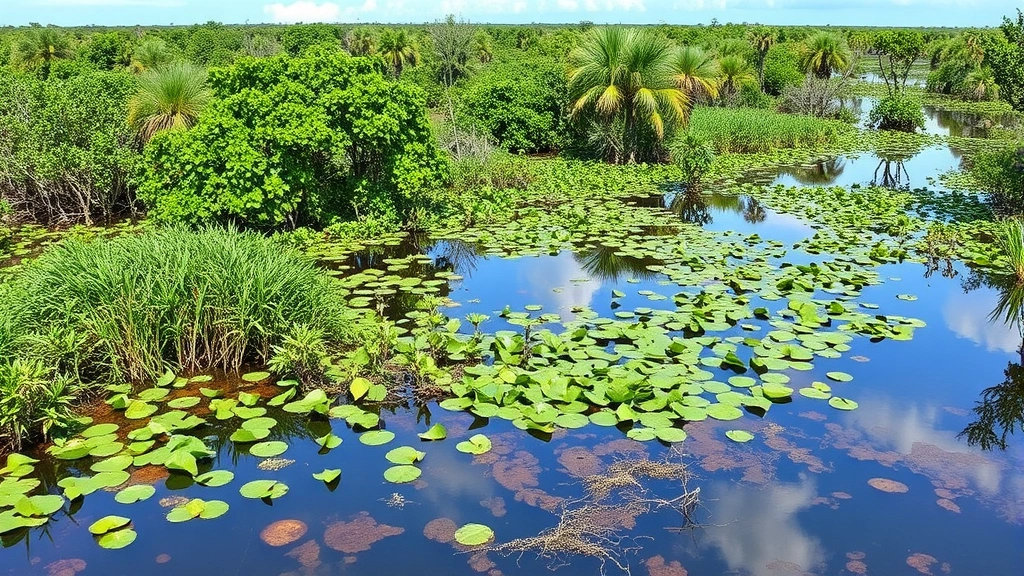
Wetlands and mangroves sequester carbon at rates exceeding terrestrial forests, storing carbon in waterlogged soils where decomposition slows dramatically. These “blue carbon” ecosystems provide dual economic benefits: carbon sequestration value plus fishery productivity. Research indicates that mangrove conservation generates $37,000-4.7 million in net present value per hectare when accounting for fisheries, carbon storage, and storm protection.
The climate economics research community, documented in journals like Ecological Economics and Environmental Science & Policy, consistently finds that investing in ecosystem preservation costs far less than managing climate impacts. The Stern Review on the Economics of Climate Change concluded that the benefits of strong climate action exceed costs by a factor of 5 to 1, with ecosystem protection representing a critical component of cost-effective climate strategy.
Carbon market expansion creates economic incentives for ecosystem restoration. Reforestation projects, peatland rewetting, and grassland conservation generate revenue streams that make preservation economically competitive with extractive land uses. As carbon prices increase—reflecting true climate damage costs—ecosystem protection becomes increasingly profitable.
Agricultural Productivity and Pollination
Pollination services, provided primarily by bees, butterflies, and other insects, underpin approximately 75% of global food crops to some degree. The economic value of pollination services is staggering: estimates range from $15 billion to $577 billion annually depending on methodology, with most peer-reviewed studies clustering around $200-300 billion.
This value derives from pollinator-dependent crops including almonds, apples, blueberries, cucumbers, almonds, and countless others. In the United States alone, pollinator-dependent crops contribute over $15 billion annually to agricultural output. Globally, approximately one-third of human food calories depend on animal pollination, making pollinator decline an existential economic threat.
The economic mechanism is straightforward: wild pollinator populations provide free ecosystem services, eliminating the need for expensive managed pollination. When wild populations decline—due to pesticide exposure, habitat loss, and monoculture agriculture—farmers must employ increasingly expensive alternatives including managed honeybee hives, hand pollination, and pollination-promoting habitat restoration. Some almond orchards in California now require expensive commercial pollination services due to wild pollinator decline.
Research demonstrates that protecting pollinator habitat generates exceptional returns on investment. Creating native flowering plant corridors costs $100-500 per hectare annually but increases crop yields by 20-40% while reducing pesticide requirements. These habitat investments pay for themselves within 1-3 years through enhanced productivity. Scaling this approach globally would cost a fraction of agricultural subsidies while increasing food security and ecosystem health simultaneously.
The economics of reducing carbon footprint in agriculture includes optimizing pollinator habitat, as this reduces reliance on input-intensive production methods that generate substantial emissions.
Water Systems and Economic Security
Freshwater ecosystems—rivers, wetlands, aquifers, and forests that regulate water cycles—provide economic value through water purification, flood regulation, drought mitigation, and hydroelectric generation. The economic importance of water systems extends beyond direct use to encompassing virtually every economic sector.
Watershed protection demonstrates clear economic returns. Forests regulate water flow, reducing flood peaks and maintaining baseflow during droughts. A watershed providing drinking water to millions has enormous economic value. New York City invested $1.5 billion in Catskill watershed protection rather than building water treatment infrastructure, saving an estimated $6-8 billion in construction and operational costs while providing superior water quality.
Wetlands provide analogous flood regulation services. Coastal wetlands and floodplain forests reduce storm surge damage, with economic protection values reaching $50,000+ per hectare in high-population areas. When wetlands are drained for development, flood damage costs increase proportionally. Louisiana’s coastal wetland loss—driven by agricultural and industrial development—has eliminated natural hurricane protection, increasing disaster costs by billions annually.
Water purification by natural systems represents another substantial economic service. Wetlands filter agricultural runoff, removing nitrogen and phosphorus before they reach drinking water supplies or create hypoxic zones in coastal areas. The cost of removing these contaminants artificially runs $1,000-10,000 per hectare annually, while wetland provision of the same service costs $0-100 annually.
Groundwater recharge through forest and wetland ecosystems maintains water supplies during dry periods. In arid and semi-arid regions, ecosystem-based water management—protecting forests and wetlands that recharge aquifers—provides more reliable and cheaper water than alternative sources. Research from UNEP demonstrates that nature-based water solutions cost 50% less than infrastructure-based alternatives while providing co-benefits including biodiversity conservation and carbon sequestration.
Tourism and Recreation Economics
Natural ecosystems generate substantial economic value through recreation and tourism. Global nature-based tourism generates approximately $600 billion annually, supporting millions of jobs in hospitality, guiding, equipment rental, and related services. This represents one of the fastest-growing tourism segments, with annual growth rates exceeding 10% in many regions.
The economic mechanism operates through consumer demand for natural experiences. People travel to experience pristine forests, coral reefs, wildlife viewing, and scenic landscapes. This willingness to pay translates into direct revenue for communities hosting these ecosystems. Costa Rica, protecting 25% of its territory in national parks and reserves, has built a tourism industry generating $4+ billion annually—exceeding revenues from traditional agricultural exports like bananas and coffee.
Research on ecosystem-based tourism reveals that nature preservation generates substantially more long-term economic value than extractive alternatives. Logging a rainforest generates one-time revenue; ecotourism generates perpetual revenue streams. Studies comparing economic returns show that protected ecosystems generate 5-10 times more economic value through tourism than through timber extraction when accounting for ecosystem service provision.
Recreation value extends beyond international tourism to encompassing local and regional recreation. Forests, parks, and waterways support hunting, fishing, hiking, and other recreational activities generating substantial economic activity. Property values near natural amenities command premiums of 5-20% compared to similar properties in developed areas, reflecting consumer valuation of ecosystem proximity.
The psychological and health benefits of nature access—documented in public health research—generate economic value through reduced healthcare costs and improved worker productivity. Studies show that access to natural areas reduces stress, depression, and anxiety while improving cognitive function. Companies investing in workplace nature access report improved employee retention and productivity exceeding investment costs.
Explore our blog for additional insights on ecosystem economics and sustainable development.
FAQ
How much economic value do ecosystems provide globally?
Research estimates global ecosystem services at approximately $125 trillion annually, with estimates ranging from $100-145 trillion depending on methodology. This exceeds global GDP and represents the economic value of functions including pollination, water purification, carbon sequestration, and countless others.
Can we accurately measure ecosystem service value?
Economists employ multiple methodologies—contingent valuation, hedonic pricing, benefit transfer, and production function approaches—each with strengths and limitations. While perfect precision is impossible, these methods provide directional accuracy sufficient for policy decisions. The key insight is that ecosystem services have enormous value even using conservative measurement approaches.
Which ecosystems provide the greatest economic value?
Tropical forests, coral reefs, wetlands, and mangroves consistently rank highest in per-hectare ecosystem service value. However, all ecosystems provide valuable services—temperate forests, grasslands, and freshwater systems generate trillions in cumulative value.
How does ecosystem protection compare economically to extraction?
Across diverse ecosystems and services, protection generates 5-20 times greater long-term economic value than extraction. Carbon sequestration, tourism, water purification, and pollination services provide perpetual benefits, while extraction is one-time or rapidly declining.
What role do ecosystems play in climate economics?
Ecosystems sequester carbon, regulate climate patterns, and reduce climate impact vulnerability. Ecosystem-based climate solutions cost 50-75% less than technological alternatives while providing co-benefits including biodiversity conservation and livelihood support.
How can governments incorporate ecosystem value into economic planning?
Natural capital accounting, payment for ecosystem services programs, and ecosystem-based adaptation strategies enable governments to integrate ecosystem value into policy. Countries implementing comprehensive natural capital accounting make fundamentally different development decisions prioritizing ecosystem protection.
What is the connection between biodiversity and economic resilience?
Diverse ecosystems demonstrate greater stability, productivity, and recovery capacity. Economically, this translates to more stable agricultural yields, fishery catches, and income streams. Biodiversity loss reduces economic resilience and increases vulnerability to climate and market shocks.
How do water ecosystems support economic development?
Forests, wetlands, and aquifer systems regulate water supply, purify water, prevent flooding, and support hydroelectric generation. These services support agriculture, industry, municipal water supply, and energy generation—virtually every economic sector depends on functioning water ecosystems.
What is the economic value of pollination services?
Global pollination services are valued at $200-300 billion annually, with some estimates reaching $577 billion. This value reflects crop productivity dependent on animal pollination including almonds, apples, cucumbers, and countless others.
How does sustainable business practice relate to ecosystem economics?
Sustainable business models internalize ecosystem service costs and benefits, recognizing that long-term profitability depends on ecosystem health. Companies protecting ecosystem services reduce input costs, build supply chain resilience, and access premium markets increasingly demanding sustainable products.


