How Economy Influences Ecosystems: A Deep Dive
The relationship between economic systems and ecological health represents one of the most pressing challenges of our time. Every transaction in the global marketplace, from the extraction of raw materials to the consumption of finished goods, leaves an indelible mark on natural systems. Understanding this intricate connection is essential for policymakers, businesses, and individuals seeking to build a sustainable future. The economy does not exist in isolation from nature—rather, it depends entirely on ecosystem services worth trillions of dollars annually, yet these dependencies remain largely invisible in traditional economic accounting.
Economic growth has historically been measured through metrics like Gross Domestic Product (GDP), which fails to account for environmental degradation or resource depletion. This fundamental accounting flaw has allowed economies to expand while ecosystems contract, creating an unsustainable trajectory. When we examine how industries extract resources, process materials, and dispose of waste, we discover that modern economic activity fundamentally reshapes landscapes, alters biogeochemical cycles, and threatens biodiversity at unprecedented scales. This comprehensive analysis explores the mechanisms through which economic decisions cascade through natural systems, the feedback loops that amplify these effects, and pathways toward more ecologically integrated economic models.
Economic Externalities and Environmental Costs
At the heart of economic-ecological conflict lies the concept of externalities—costs imposed on society and ecosystems that are not reflected in market prices. When a factory pollutes a river, the cost of water treatment, lost fisheries, and human health impacts falls on communities downstream rather than on the company’s balance sheet. This systematic underpricing of environmental damage creates perverse incentives throughout the economy. Firms profit by externalizing costs, while natural capital depletes invisibly.
The World Bank’s environmental economics research demonstrates that environmental externalities represent a hidden tax on global GDP. Studies estimate that air pollution alone costs the global economy approximately 4-6% of GDP annually through health impacts, reduced agricultural productivity, and ecosystem damage. Water pollution, soil degradation, and biodiversity loss compound these costs geometrically. Yet conventional economic models treat these as external to the system, allowing decision-makers to ignore them in cost-benefit analyses.
The relationship between pricing mechanisms and environmental outcomes becomes clear when examining carbon emissions. For decades, the atmosphere was treated as a free dumping ground for greenhouse gases because no one owned it and no price reflected its limited capacity to absorb carbon. This led to an economic system optimized for carbon-intensive production. Understanding environment and market dynamics reveals how price signals fundamentally shape ecological outcomes. When environmental costs remain externalized, markets systematically destroy natural capital.
Ecological economics, a discipline bridging economics and environmental science, argues that the economy is fundamentally a subsystem of the finite Earth ecosystem. Unlike conventional economics, which treats the environment as a sector within the economy, ecological economics recognizes that economic activity occurs within biophysical limits. This paradigm shift has profound implications: it suggests that unlimited economic growth is impossible on a finite planet with fixed stocks of resources and limited waste absorption capacity.
Resource Extraction and Ecosystem Degradation
The extraction of natural resources—minerals, fossil fuels, timber, and fish—drives some of the most visible ecosystem destruction globally. Mining operations remove overburden, contaminate groundwater with heavy metals, and create barren landscapes that take centuries to recover. A single copper mine can displace entire ecosystems and indigenous communities while generating wealth that concentrates in corporate hands. The economics are straightforward: extraction is profitable because environmental restoration costs are externalized or ignored entirely.
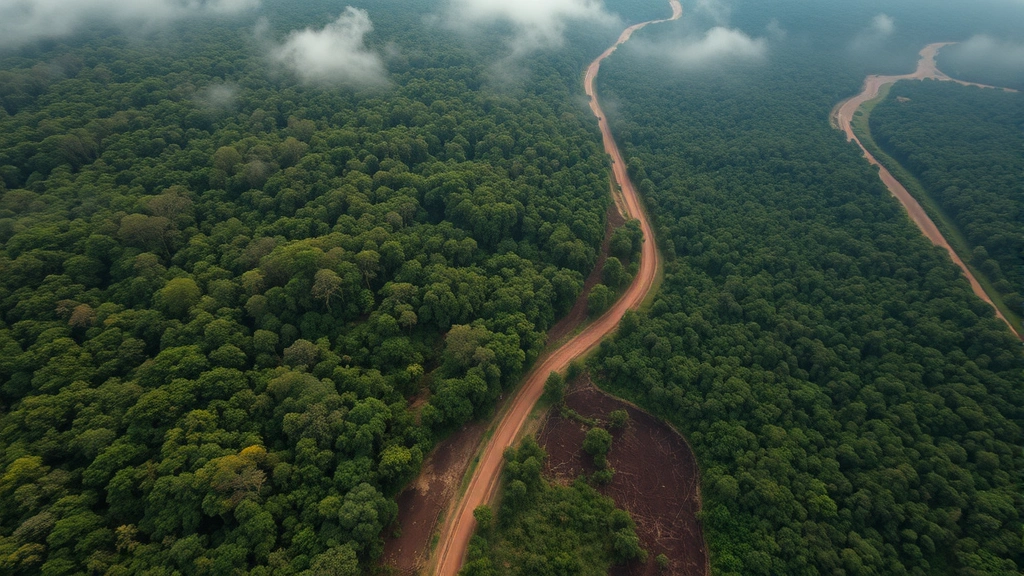
Deforestation exemplifies how economic incentives drive ecosystem collapse. Tropical rainforests, which contain approximately 50% of terrestrial species despite covering only 6% of Earth’s surface, are cleared at rates exceeding 10 million hectares annually. From a conventional economic perspective, this makes sense: a timber company harvests trees worth millions of dollars, while the ecosystem services provided by intact forest—carbon sequestration, water regulation, biodiversity habitat—remain unpriced. The company’s profit becomes society’s loss, yet markets treat this as an optimal outcome.
Fisheries demonstrate how economic systems can deplete renewable resources below sustainable thresholds. Global fishing capacity vastly exceeds sustainable harvest levels, driven by subsidies that make economically irrational overfishing financially viable. Governments spend approximately $35 billion annually subsidizing fishing, much of it supporting industrial fleets that deplete fish stocks faster than they can regenerate. This economic irrationality—subsidizing activities that destroy the resource base—persists because political interests override ecological rationality. Learning to reduce carbon footprint through sustainable consumption represents one response, but systemic change requires transforming the economic structures that incentivize overexploitation.
Water extraction for agriculture and industry represents another critical intersection of economics and ecosystem health. Aquifers that accumulated over millennia are being drained in decades to irrigate crops in arid regions. The Aral Sea, once the world’s fourth-largest lake, has largely disappeared due to water extraction for cotton irrigation. From an economic perspective, this trade-off seemed rational: short-term agricultural profits outweighed long-term ecosystem stability. Yet the consequences—desertification, collapsed fisheries, respiratory disease from dust storms—demonstrate the false economy of ignoring ecological limits.
Agricultural Economics and Land Use Change
Agriculture represents the largest land use globally, occupying approximately 38% of terrestrial surface. The economics of modern agriculture have fundamentally reshaped ecosystems at continental scales. The green revolution, driven by economic incentives to maximize yields, replaced diverse polycultures with monocultures dependent on synthetic fertilizers and pesticides. This economic model increased short-term productivity but degraded soil health, reduced biodiversity, and created environmental debts that future generations must repay.
Fertilizer runoff from agricultural lands creates dead zones in coastal ecosystems where nutrient pollution triggers algal blooms that consume oxygen, suffocating marine life. The Gulf of Mexico dead zone, fed by fertilizer runoff from the Mississippi River basin, covers an area equivalent to New Jersey. This represents an economic externality of staggering proportions: agricultural productivity increases while aquatic ecosystems collapse. The fishing industry loses billions in potential harvest, yet these costs don’t appear on farm balance sheets.
Livestock production, which occupies approximately 77% of agricultural land while providing only 18% of global calories, exemplifies economically irrational resource allocation from an ecological perspective. Cattle ranching drives deforestation in the Amazon, consuming vast quantities of water and feed while generating methane, a potent greenhouse gas. Yet beef production remains economically viable because grazing lands are underpriced, water is subsidized, and climate impacts are externalized. The benefits of eating organic food include supporting agricultural systems that internalize more environmental costs, though even organic systems operate within broader economic constraints.
Soil degradation represents a slow-moving ecological catastrophe driven by economic pressures to maximize extraction. Industrial agriculture mines soil nutrients faster than natural processes replenish them, reducing soil organic matter and productivity over time. This creates a treadmill where farmers must apply increasing quantities of synthetic fertilizers to maintain yields, further degrading soil structure and increasing dependence on chemical inputs. The economics incentivize short-term yields over long-term soil health, transferring degradation costs to future farmers and ecosystems.
Industrial Production and Pollution Cascades
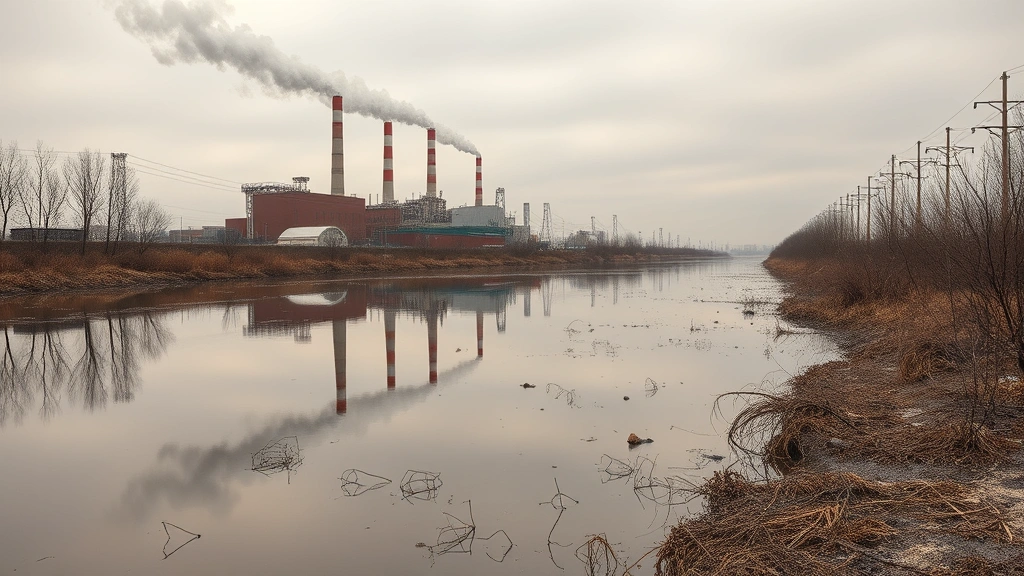
Manufacturing and industrial production generate pollution that permeates air, water, and soil. The economics of pollution reflect the principle that waste disposal is cheaper than waste prevention or treatment. A factory producing textiles can dump heavy metal dyes into rivers at minimal cost, while proper treatment would reduce profit margins. This economic calculus, repeated across millions of industrial facilities, creates cascading pollution that accumulates in ecosystems and organisms.
Plastic production exemplifies how economic incentives drive ecological harm at planetary scales. Plastic is economically cheap because petroleum is underpriced—carbon emissions and extraction impacts remain externalized. This economic advantage has driven explosive plastic production growth, from 2 million tons annually in 1950 to over 400 million tons today. The ecological consequences—ocean gyres filled with plastic debris, microplastics in every organism, persistent contamination of food webs—were not priced into the economic calculation. The industry optimized for profit while ecosystems absorbed the costs.
Electronic waste represents a growing intersection of economic and ecological crisis. The rapid obsolescence built into consumer electronics drives massive material throughput, with millions of tons of e-waste annually. Developing nations become dumping grounds for wealthy nations’ discarded electronics, where informal recycling operations extract valuable metals while exposing workers and ecosystems to toxic substances. The economics are perverse: manufacturers profit from short product lifecycles and high replacement rates, while ecological and health costs concentrate in poor communities with minimal political power.
Chemical manufacturing demonstrates how economic systems can create persistent environmental contamination. Per- and polyfluoroalkyl substances (PFAS), synthetic chemicals used in countless industrial and consumer products, now contaminate groundwater globally. These “forever chemicals” persist indefinitely in the environment and bioaccumulate in organisms. Their production was economically rational because manufacturers bore none of the costs of contamination. Only after decades of accumulation did regulators begin restricting these chemicals, demonstrating how market failures can lock in ecological damage.
Climate Economics and Systemic Risk
Climate change represents the ultimate expression of how economic systems generate unpriced environmental externalities. The global economy emits approximately 40 gigatons of CO2 annually, treating the atmosphere as an infinite waste sink. The economic cost of climate impacts—extreme weather, crop failures, infrastructure damage, mass migration—remains largely external to the companies and nations generating emissions. This disconnect between who profits from fossil fuel combustion and who bears climate impacts represents a fundamental market failure.
The UNEP Emissions Gap Report documents how current economic policies and investments are incompatible with climate stabilization. Trillions in annual subsidies support fossil fuel production and consumption, while renewable energy remains underfunded relative to its potential. This reflects how existing economic structures benefit from carbon-intensive activities, creating political barriers to necessary transitions. The climate crisis is ultimately an economic crisis—a failure to price carbon, value natural capital, and account for ecological limits.
Stranded assets represent a critical economic-ecological feedback loop. As climate impacts accelerate and carbon regulations tighten, fossil fuel reserves become economically worthless despite their geological existence. Trillions in invested capital face potential write-downs, creating financial instability. This demonstrates how ecological limits eventually impose themselves on economic systems, though often through disruptive mechanisms rather than smooth transitions. Renewable energy for homes and businesses represents part of necessary economic transformation, though individual choices cannot substitute for systemic change in energy infrastructure.
The economics of climate adaptation versus mitigation reveal how economic systems often choose expensive reactive solutions over cheaper preventive ones. Building seawalls to protect coastal cities costs far more than reducing emissions to prevent sea level rise, yet political short-termism and fragmented incentives favor adaptation. Insurance industries increasingly recognize climate risks, repricing policies to reflect elevated danger, which will eventually force economic recalculation. However, by that point, ecosystems may have crossed irreversible tipping points.
Market Mechanisms for Environmental Protection
Recognizing market failures in environmental protection, economists have designed mechanisms to internalize ecological costs. Carbon pricing through taxes or cap-and-trade systems attempts to price greenhouse gas emissions, making climate impacts visible in economic decisions. When implemented effectively, carbon pricing incentivizes emissions reductions and clean technology investment. However, most carbon prices remain far below the social cost of carbon, limiting their effectiveness. The economic theory is sound, but political implementation falls short of what ecological necessity demands.
Payment for ecosystem services represents another market-based approach, compensating landowners for maintaining forests, wetlands, or grasslands rather than converting them to agriculture or development. These programs recognize that ecosystems provide valuable services—water purification, flood control, carbon sequestration—that markets previously treated as free. By monetizing these services, payment schemes attempt to make conservation economically competitive with extraction. Yet this approach has limitations: not all ecosystem values can be monetized, and payments often remain insufficient to compete with short-term extraction profits.
Biodiversity offsets allow companies to destroy habitat in one location while funding restoration elsewhere, theoretically maintaining net ecological value. However, this approach assumes ecosystems are fungible and replaceable, which ecology rarely supports. A restored wetland cannot replace an old-growth forest, and offsetting mechanisms often become tools for legitimizing destruction rather than preventing it. The economic logic—allowing environmental damage if compensated elsewhere—conflicts with ecological reality where unique ecosystems cannot be replicated.
Extended producer responsibility shifts waste management costs from taxpayers to manufacturers, creating economic incentives for designing less wasteful products. When companies must bear disposal costs, they optimize for durability, repairability, and recyclability rather than planned obsolescence. This represents genuine economic-ecological integration, though implementation remains incomplete in most jurisdictions. Understanding how to evaluate sustainable fashion brands involves recognizing which companies have internalized environmental costs through their supply chains.
Transitioning to Ecological Economics
Transitioning from conventional to ecological economics requires fundamental reconceptualization of how societies measure progress and allocate resources. Genuine progress indicator (GPI) and similar alternatives to GDP subtract environmental degradation and resource depletion from income, providing more accurate pictures of economic welfare. When environmental costs are properly accounted for, many activities counted as economic growth appear as net losses. This reframing has profound policy implications, suggesting that wealthy nations must reduce material throughput rather than pursue perpetual expansion.
Circular economy principles attempt to redesign industrial systems to minimize resource extraction and waste generation. Rather than linear “take-make-dispose” models, circular approaches maintain materials in use through reuse, repair, remanufacturing, and recycling. This reduces both extraction pressure and waste accumulation, though truly circular systems require fundamental changes to product design, business models, and consumer behavior. The economic transition toward circularity faces barriers from incumbent industries benefiting from linear extraction, requiring policy support and cultural shifts.
Degrowth represents a more radical economic-ecological perspective, arguing that wealthy nations must deliberately reduce material and energy throughput to achieve sustainability. This conflicts with the universal assumption that economic growth is desirable, but ecological mathematics suggests that wealthy nations’ current consumption levels cannot be universalized to all people without ecological collapse. Degrowth doesn’t mean economic collapse but rather restructuring economies toward wellbeing, equity, and ecological stability rather than maximizing consumption.
The International Society for Ecological Economics promotes research and policy development integrating ecological and economic analysis. Their work demonstrates that ecological sustainability and economic stability are interdependent, not conflicting goals. When natural capital depletion is properly accounted for, activities that appear economically beneficial often prove unsustainable. This creates space for policy innovation prioritizing long-term ecological stability over short-term growth.
Regenerative economics goes beyond sustainability to actively restore ecological health while meeting human needs. Rather than simply reducing harm, regenerative approaches aim to leave ecosystems healthier than they were found. This requires fundamental shifts in how businesses measure success, how investors evaluate returns, and how communities organize production. Early examples—regenerative agriculture, restoration ecology-based enterprises, community-based resource management—demonstrate possibilities, though scaling these approaches requires transforming broader economic structures.
The transition toward ecological economics faces enormous political-economic obstacles. Incumbent industries built on extraction and linear production resist change, using their wealth and influence to shape policy. Financial systems optimized for short-term returns discourage long-term ecological investments. International trade rules prioritize corporate profits over environmental protection. Yet the alternative—continuing current trajectories—guarantees ecological and economic collapse. The question is not whether economic systems will change, but whether that change occurs through deliberate transition or catastrophic breakdown.

FAQ
How do economists measure the value of ecosystem services?
Ecosystem services are valued through methods including market pricing (for traded goods like timber), replacement cost (cost of artificial substitutes), hedonic pricing (relating property values to environmental quality), and contingent valuation (surveying willingness to pay for environmental protection). These methods have limitations but attempt to translate ecological functions into monetary terms comprehensible to economic decision-makers. The challenge lies in capturing non-market values like existence value or cultural significance.
Why don’t markets automatically correct environmental problems?
Markets fail to correct environmental problems because environmental resources often lack clear ownership (the atmosphere, oceans), have long-term impacts disconnected from immediate transactions, and impose costs on parties not involved in transactions. These characteristics—externalities, common pool resources, and intergenerational impacts—violate assumptions underlying market efficiency. Government intervention through regulation, pricing, or property rights definition is necessary to align market incentives with ecological sustainability.
Can renewable energy transition solve climate and ecological crises?
Transitioning to renewable energy is necessary but insufficient for ecological sustainability. While eliminating carbon emissions from energy generation, renewable infrastructure still requires material extraction, manufacturing, and eventual disposal. Energy transition must be coupled with reduced overall consumption, circular economy practices, and ecosystem restoration. Additionally, renewable energy expansion cannot address other ecological crises like biodiversity loss, soil degradation, and water depletion without broader economic restructuring.
What role should governments play in environmental protection?
Governments must establish and enforce environmental regulations, price environmental externalities, protect common resources, fund research and infrastructure for sustainability, and redistribute resources toward equity. Markets alone cannot achieve environmental protection because ecological systems lack property rights and market mechanisms, and because distributional impacts of environmental protection require democratic deliberation. Effective governance requires integration of ecological science, economic analysis, and democratic participation.
How can individuals contribute to economic-ecological transformation?
Individual actions including reducing consumption, supporting sustainable businesses, and political engagement contribute to systemic change. However, individual choices cannot substitute for structural transformation of economic systems. Approximately 70% of global emissions come from 100 companies, demonstrating that systemic change requires transforming corporate behavior, not just individual consumption. Consumer choices matter most when they support policy change, corporate transformation, and alternative economic institutions.


