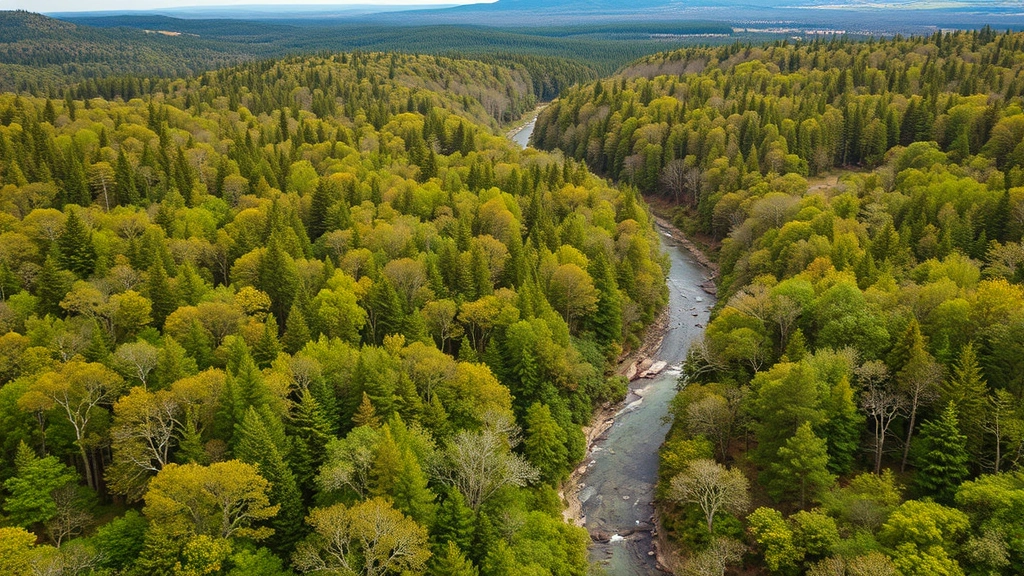
Can Green Economy Boost Ecosystems? Analyst Insight
The intersection of economic growth and environmental restoration represents one of the most pressing challenges of our time. As global ecosystems face unprecedented degradation from climate change, biodiversity loss, and resource depletion, policymakers and economists increasingly ask whether a green economy can simultaneously drive prosperity and restore natural systems. The answer is nuanced: while green economy frameworks offer powerful mechanisms for ecosystem recovery, their success depends entirely on implementation rigor, policy alignment, and genuine commitment to ecological limits rather than superficial greenwashing.
This analysis examines whether transitioning to a green economy—characterized by decoupling economic growth from environmental degradation, investing in renewable resources, and internalizing ecological costs—can meaningfully boost ecosystem health. Drawing on ecological economics principles, empirical case studies, and systems-thinking approaches, we explore the mechanisms, barriers, and conditions necessary for green economic models to deliver tangible ecosystem benefits beyond rhetorical promises.
Understanding Green Economy Frameworks
The green economy concept emerged from ecological economics as a response to the failures of traditional GDP-focused development models. According to the United Nations Environment Programme (UNEP), a green economy is one that results in improved human well-being and social equity while significantly reducing environmental risks and ecological scarcities. This framework fundamentally challenges the assumption that economic expansion must inevitably degrade natural systems.
At its core, the green economy rests on three interconnected pillars: renewable resource management, ecosystem service valuation, and circular economic principles. Unlike conventional economics, which treats environmental systems as externalities or infinite resources, green economy frameworks recognize that ecosystems provide irreplaceable services—pollination, carbon sequestration, water filtration, flood regulation—upon which all economic activity ultimately depends.
The relationship between economic systems and environmental science reveals a critical insight: traditional economics has systematically undervalued nature. A forest, for instance, generates far greater economic value through ecosystem services—carbon storage, water cycle regulation, biodiversity habitat—than through timber extraction alone. Green economy models attempt to correct this valuation failure by incorporating natural capital accounting into policy decisions.
Key green economy mechanisms include:
- Carbon pricing systems (cap-and-trade, carbon taxes) that internalize climate costs
- Payment for ecosystem services (PES) programs that compensate landowners for conservation
- Green bonds financing renewable infrastructure and ecosystem restoration
- Regenerative agriculture practices that rebuild soil health and biodiversity
- Circular economy transitions minimizing waste through reuse and recycling
Mechanisms Linking Green Economy to Ecosystem Recovery
The theoretical pathways connecting green economy investments to ecosystem improvement are substantial. When properly designed, green economic transitions can directly reduce ecosystem stressors while creating positive feedback loops that accelerate recovery.
Habitat Restoration Through Economic Incentives
Payment for ecosystem services represents a direct mechanism linking green economy activity to ecosystem recovery. Costa Rica’s pioneering PES program, launched in 1997, compensates landowners for forest conservation at rates exceeding timber harvest profits. The program has contributed to forest cover recovery from 21% in 1987 to over 50% today, demonstrating that economic incentives can reverse deforestation when properly calibrated. Similar mechanisms in environmental examples worldwide show consistent patterns: when ecosystem services are valued economically, conservation becomes competitive with extraction.
Renewable energy transitions exemplify another direct pathway. Replacing fossil fuel infrastructure with wind, solar, and hydroelectric systems eliminates the extraction damage, combustion emissions, and habitat disruption inherent in coal and oil industries. This transition simultaneously reduces atmospheric carbon loading, improves air quality, and eliminates mining-related ecosystem destruction. The economic logic is straightforward: renewable energy systems have negligible marginal environmental costs once deployed, unlike fossil fuels with perpetual extraction and combustion impacts.
Regenerative Agriculture and Soil Ecosystem Restoration
Green economy frameworks prioritize organic and regenerative food systems that rebuild rather than deplete soil ecosystems. Conventional industrial agriculture—dependent on synthetic fertilizers, pesticides, and monoculture—destroys soil biodiversity, depletes organic matter, and triggers eutrophication in waterways. Regenerative approaches including cover cropping, rotational grazing, and composting restore soil microbial communities, increase carbon sequestration, and reduce chemical runoff.
Research from the World Bank indicates that agricultural transition to regenerative practices increases yields by 20-40% while reducing input costs and restoring ecosystem function. This represents genuine decoupling: economic productivity increases while environmental degradation decreases—the fundamental objective of green economy models.
Circular Economy and Reduced Resource Extraction
Circular economy principles minimize virgin resource extraction by maximizing material reuse, remanufacturing, and recycling. Each ton of recycled material represents proportionally reduced mining, logging, or drilling—direct ecosystem preservation. The economic advantage emerges from reduced extraction costs, lower energy requirements for recycled versus virgin materials, and avoided environmental remediation expenses.
When integrated with carbon footprint reduction strategies, circular approaches compound ecosystem benefits. Recycled aluminum requires 95% less energy than primary smelting; recycled steel reduces energy by 60%. These efficiency gains translate to reduced mining impacts, lower emissions, and preserved habitat.

Empirical Evidence and Real-World Outcomes
While theoretical mechanisms are compelling, empirical evidence reveals mixed results depending on implementation quality and systemic integration.
Success Cases and Positive Outcomes
Rwanda’s economic transition toward green growth provides instructive evidence. Following severe ecosystem degradation from conflict and agricultural intensification, Rwanda adopted green economy policies including payment for ecosystem services, renewable energy development, and wetland restoration. Between 2005 and 2020, forest cover increased from 18% to 31%, while GDP per capita doubled. This case demonstrates that green economy frameworks can achieve simultaneous economic and ecological gains when sustained politically.
Bhutan’s constitutional requirement that 60% of land remain forested, coupled with carbon-negative economic policies, shows how green economy principles embedded in governance create ecosystem outcomes. Bhutan maintains 72% forest coverage while operating entirely on renewable hydropower, generating genuine ecosystem benefits beyond rhetorical commitment.
Denmark’s wind energy transition reduced carbon emissions by 42% since 1990 while growing GDP by 80%. This empirical evidence directly contradicts arguments that environmental protection requires economic sacrifice. The transition required policy consistency, technological investment, and structural change, but achieved decoupling at national scale.
Limited Results and Persistent Challenges
However, numerous green economy initiatives have failed to deliver proportionate ecosystem benefits. Many carbon offset programs—theoretically central to green economy climate strategy—show minimal environmental impact. Studies from ecological economics research institutions reveal that approximately 40% of carbon credits from forestry projects represent phantom reductions: forests would have been protected anyway, or measurement standards underestimate actual emissions.
Green bonds, while mobilizing capital for renewable infrastructure, often finance projects with modest environmental gains. A 2023 analysis found that nearly 30% of green bond proceeds went to projects with marginal sustainability improvements, suggesting that labeling alone does not guarantee ecosystem benefit.
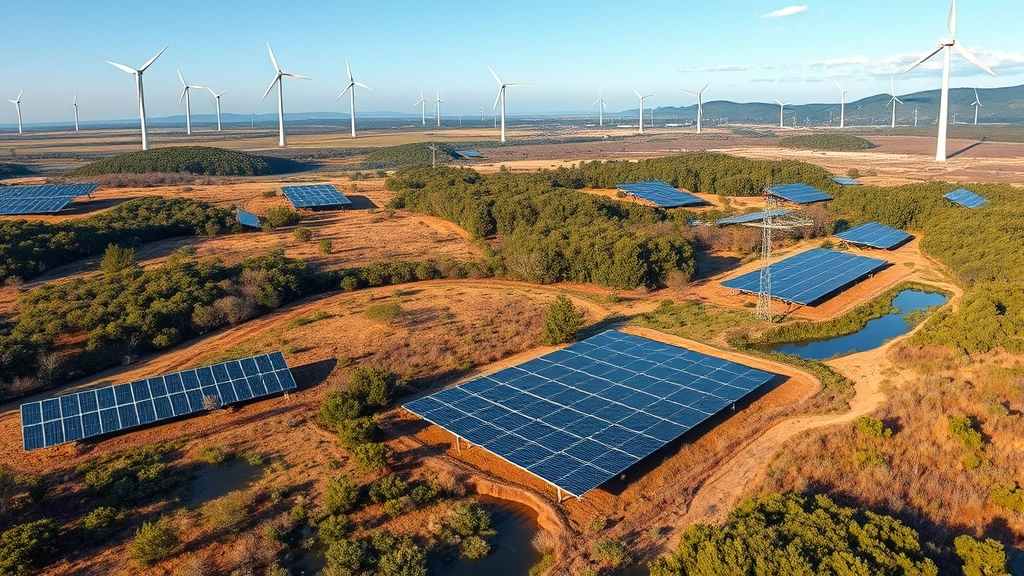
The renewable energy transition, despite genuine emissions reductions, has created new ecosystem pressures. Large-scale solar installations and wind farms require substantial land conversion and can fragment habitats. Hydroelectric expansion often destroys riverine ecosystems and blocks fish migration. These outcomes demonstrate that green economy transitions, without careful ecosystem integration, can substitute one set of environmental harms for another.
Critical Limitations and Systemic Barriers
Rebound Effects and Consumption Growth
A fundamental challenge to green economy effectiveness emerges from rebound effects: efficiency improvements that reduce resource consumption per unit of output often increase total consumption, offsetting environmental gains. More fuel-efficient vehicles, for instance, reduce per-mile emissions but can increase total driving miles, negating climate benefits. This pattern repeats across green economy initiatives: renewable energy expansion sometimes enables increased energy consumption rather than proportional emissions reduction.
The underlying issue reflects a systemic tension: green economy frameworks typically maintain growth-oriented economic objectives while attempting to decouple growth from environmental impact. Yet ecosystems operate within biophysical limits that no amount of efficiency improvement can overcome. A 3% annual GDP growth rate, even with green technology, eventually requires exponential resource throughput that finite ecosystems cannot sustain indefinitely.
Valuation Paradoxes and Market Failures
Monetizing ecosystem services—central to green economy mechanisms—creates perverse incentives. When wetlands are valued primarily for carbon sequestration and water filtration services, their worth in ecosystem-specific contexts becomes secondary. This can incentivize management for maximum service delivery rather than holistic ecosystem health. A wetland optimized for carbon storage may support reduced biodiversity compared to naturally functioning systems.
Market-based environmental mechanisms also struggle with uncertainty, measurement, and permanence. Carbon prices fluctuate based on market dynamics rather than climate necessity. Ecosystem service values shift with technology and preferences. These economic volatilities undermine long-term ecosystem planning and conservation commitment.
Distributional Inequity and Environmental Justice
Green economy transitions often impose costs on vulnerable populations while distributing benefits to wealthy actors. Renewable energy transitions, while environmentally necessary, can displace indigenous communities from lands designated for solar or wind development. Payment for ecosystem services sometimes reduces local access to resources that communities traditionally harvested.
Research from ecological economics journals documents that green economy policies frequently increase inequality without addressing underlying power structures determining resource access and environmental burden distribution. This limitation suggests that genuine ecosystem recovery requires integration with environmental justice frameworks ensuring equitable benefit distribution and affected community participation in decision-making.
Insufficient Scope and Scale
Current green economy investments, while growing, remain marginal relative to total economic activity and environmental challenges. Global renewable energy investment reaches approximately $300 billion annually, yet fossil fuel subsidies exceed $7 trillion when environmental costs are included. This disparity means that green economy initiatives operate within a broader economic system actively subsidizing ecosystem destruction.
Similarly, ecosystem restoration investments require $300+ billion annually to address current degradation, yet funding reaches only $10 billion. Without reorienting the entire economic system toward ecological sustainability rather than marginal green additions, ecosystem recovery at necessary scales remains unlikely.
Policy Integration for Ecosystem Success
Necessary Conditions for Green Economy Effectiveness
Evidence suggests that green economy frameworks boost ecosystems only under specific conditions. Effective integration requires:
- Regulatory Complementarity: Market mechanisms function effectively only when coupled with binding regulations preventing worst practices. Carbon pricing alone cannot protect critical ecosystems; protected area designation provides necessary regulatory foundation.
- Biophysical Limits Integration: Economic policies must incorporate planetary boundaries and ecosystem carrying capacity rather than assuming infinite substitutability. This requires ecological economics approaches valuing natural capital as non-substitutable rather than conventional economics treating all capital as interchangeable.
- Temporal Consistency: Ecosystem recovery operates on decadal to century timescales, yet economic policies shift with political cycles. Long-term ecosystem benefit requires multi-decade policy consistency and protection from short-term economic pressures.
- Systemic Decoupling: Genuine ecosystem improvement requires decoupling economic activity from material and energy throughput, not merely improving efficiency. This demands fundamental restructuring toward circular systems and reduced consumption in wealthy economies.
- Community Participation: Ecosystems embedded in landscapes managed by local communities require their participation in green economy design. Top-down economic policies frequently fail when misaligned with local ecological knowledge and livelihood systems.
Integrating Ecosystem Science with Economic Policy
The most promising green economy models integrate ecological science directly into economic decision-making. Costa Rica’s integrated landscape approach combines payment for ecosystem services with protected areas, wildlife corridors, and indigenous land recognition. This comprehensive framework addresses ecosystem needs rather than treating economic mechanisms as sufficient.
The UNEP Natural Capital Accounting initiative demonstrates that incorporating ecosystem asset depletion into national accounting systems fundamentally alters economic priorities. When countries measure genuine progress by ecosystem health alongside GDP, policy priorities shift toward conservation and restoration.
Scaling Successful Models
Effective green economy policies must scale from pilot projects to systemic integration. This requires:
- Replicating successful payment for ecosystem services programs across bioregions with appropriate calibration to local conditions
- Establishing protected area networks at ecosystem-appropriate scales rather than fragmented reserves
- Transitioning agricultural systems to regenerative practices across supply chains through procurement policies and farmer support
- Phasing out fossil fuel subsidies and redirecting resources toward renewable infrastructure and ecosystem restoration
- Implementing true-cost accounting incorporating environmental and social externalities in all economic decisions
Future Pathways and Recommendations
The evidence suggests a nuanced conclusion: green economy frameworks can significantly boost ecosystem recovery, but only when implemented comprehensively, consistently, and with genuine commitment to ecological limits rather than continued growth at any cost.
Toward Regenerative Economics
The future of ecosystem-positive economics likely lies beyond current green economy models toward regenerative economics that actively restore ecosystem health as primary objective rather than secondary consideration. This paradigm shift requires:
Redefining prosperity metrics beyond GDP to include ecosystem health, biodiversity, and equitable well-being. Nations including New Zealand and Finland have adopted well-being frameworks recognizing that genuine progress requires environmental stability alongside human flourishing.
Establishing planetary boundaries as economic constraints rather than aspirational targets. Ecological economics frameworks recognize that economies operate within biophysical limits; exceeding these limits creates cascading ecosystem collapse regardless of technological innovation.
Prioritizing ecosystem restoration as foundational economic activity. Just as conventional economies invest in infrastructure and human capital, regenerative systems invest proportionally in ecosystem restoration, recognizing natural capital as prerequisite for all other economic activity.
Technology and Systemic Change
Technology alone cannot solve ecosystem challenges; however, combined with systemic economic restructuring, emerging technologies enhance green economy effectiveness. Advanced materials reducing extraction demands, precision agriculture minimizing input waste, and renewable energy systems enabling decarbonization all support ecosystem recovery when embedded within frameworks genuinely limiting overall resource throughput.
The critical imperative is preventing technological efficiency from enabling consumption expansion. This requires complementary policies limiting overall material and energy use, protecting remaining natural ecosystems from conversion, and ensuring equitable distribution of both environmental burdens and economic benefits.
Integration with Climate and Biodiversity Goals
Green economy frameworks must explicitly integrate climate action and biodiversity protection as primary objectives rather than hoped-for co-benefits. Nature-based climate solutions—forest protection, wetland restoration, regenerative agriculture—simultaneously address climate change and ecosystem degradation when designed with ecosystem integrity as primary goal.
The convergence of climate, biodiversity, and economic transitions suggests that comprehensive green economy approaches addressing all three domains simultaneously achieve greater ecosystem benefits than sector-specific interventions.
FAQ
Can green economy actually reverse ecosystem degradation?
Green economy frameworks can contribute significantly to ecosystem recovery when comprehensively implemented with genuine commitment to ecological limits. However, they represent necessary but insufficient solutions. Reversing degradation also requires protected areas, reduced consumption in wealthy nations, and restoration investments at scales currently underfunded. Green economy mechanisms work best as part of integrated environmental policy rather than standalone solutions.
Does green economy require economic sacrifice?
Evidence from renewable energy transitions, regenerative agriculture, and circular economy implementations demonstrates that green economic restructuring can maintain or increase prosperity while reducing environmental impact. However, this requires accepting different definitions of prosperity emphasizing well-being, equity, and ecological stability rather than GDP growth alone. Wealthy economies may experience reduced material consumption but increased overall well-being through environmental restoration and community resilience.
How does green economy differ from greenwashing?
Genuine green economy transitions demonstrate measurable ecosystem improvements—forest cover recovery, biodiversity increase, emissions reduction—sustained over decades. Greenwashing involves superficial environmental claims without systemic change. The distinction emerges through rigorous monitoring of ecosystem indicators, transparent accounting of environmental impacts, and demonstrated commitment despite short-term economic costs.
What role do indigenous communities play in green economy effectiveness?
Indigenous lands demonstrate superior ecosystem health compared to conventionally managed areas. Green economy frameworks that recognize indigenous land rights, incorporate traditional ecological knowledge, and ensure community benefit distribution consistently outperform top-down approaches. This suggests that genuine ecosystem recovery requires partnership with indigenous stewards rather than imposing external economic mechanisms.
Can green economy address inequality?
Green economy mechanisms can either exacerbate or reduce inequality depending on design and implementation. Payment for ecosystem services programs that benefit wealthy landowners while restricting local resource access increase inequality. Conversely, frameworks ensuring equitable benefit distribution, community participation, and just transitions for workers in declining industries can reduce inequality while improving ecosystems. Intentional design toward equity is necessary; it does not emerge automatically from green economic mechanisms.
What timeline should we expect for ecosystem recovery?
Ecosystem recovery operates on ecological timescales—typically decades to centuries—not economic cycles. Some ecosystem changes (pollinator recovery, water quality improvement) appear within 5-10 years of intervention. Forest ecosystem recovery requires 50+ years; soil restoration 20-40 years; large predator population recovery 50+ years. This temporal mismatch between economic cycles and ecological recovery requires sustained policy commitment across generations, not quarterly profit optimization.


