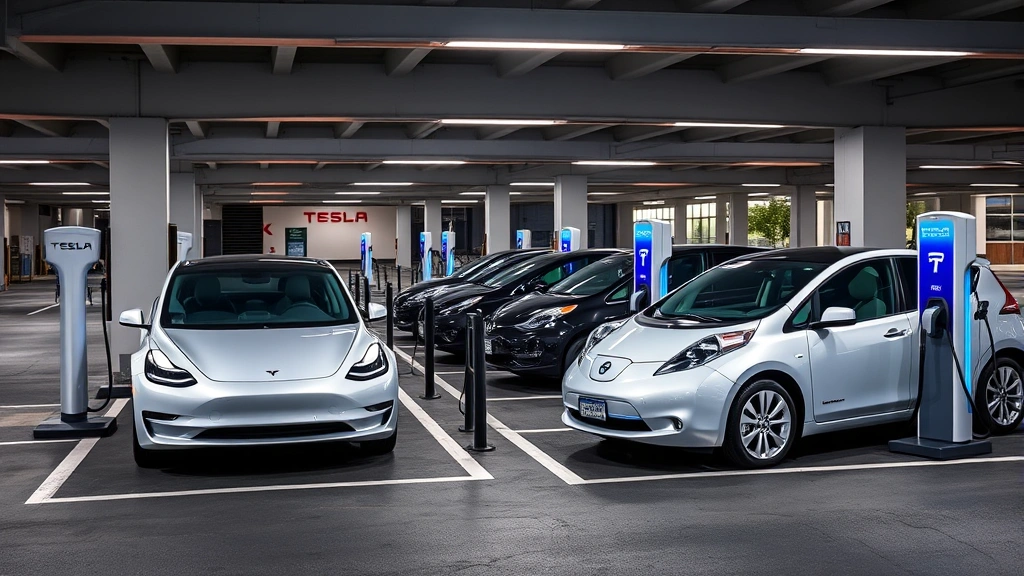
Eco-Friendly Car Rentals: Industry Insights and Economic Implications
The global car rental industry stands at a critical inflection point, where environmental imperatives intersect with economic pressures to reshape business models fundamentally. Eco-friendly car rentals represent more than a consumer trend—they constitute a systemic shift in how transportation services integrate ecological sustainability with financial viability. As carbon emissions from the transportation sector continue to account for approximately 27% of global greenhouse gas emissions, the rental car industry’s transition toward electric vehicles (EVs) and sustainable practices has become economically rational rather than merely philanthropic.
This transformation reveals complex interdependencies between corporate profitability, environmental outcomes, and macroeconomic factors. Understanding the economics of eco-friendly car rentals requires examining fleet composition decisions, total cost of ownership calculations, carbon pricing mechanisms, and consumer willingness-to-pay premiums for sustainable options. The industry’s evolution demonstrates how environmental constraints can catalyze innovation and create competitive advantages for early adopters.
The Economic Case for EV Fleet Transitions
Major car rental companies including Enterprise, Hertz, and Avis have committed to substantial EV fleet expansions, driven by calculations that demonstrate long-term cost advantages despite higher upfront capital expenditures. The economic rationale centers on fuel cost differentials: electric vehicles operating costs approximate $0.03-0.04 per mile, compared to $0.10-0.12 for conventional internal combustion engines. Over a vehicle’s typical rental fleet lifecycle of 150,000-200,000 miles, this translates to operational savings of $12,000-18,000 per vehicle.
Battery technology improvements have fundamentally altered the economics equation. Lithium-ion battery costs declined from $1,100 per kilowatt-hour in 2010 to approximately $130-150 in 2023, reducing EV purchase premiums from 40-50% above comparable gasoline vehicles to 15-25%. This convergence point accelerates fleet transition decisions. Rental companies operate under unique economic conditions compared to private ownership: high-mileage utilization rates amplify fuel savings, while shorter vehicle lifecycles reduce technology obsolescence risks.
The relationship between carbon footprint reduction strategies and rental economics creates positive feedback loops. Government incentives—including purchase tax credits, depreciation allowances, and fleet composition mandates—effectively subsidize EV acquisition. European Union regulations mandating 55% CO2 emission reductions by 2030 create regulatory certainty that justifies capital allocation toward electric fleets. These policy frameworks transform environmental compliance from cost center to competitive advantage.
Financial modeling by rental operators demonstrates that EV fleets achieve positive return on investment within 4-6 years under current cost structures, compared to 7-10 years for traditional vehicles. This acceleration reflects not merely lower operating costs but also improved residual values for EVs as second-hand markets mature and battery degradation data accumulate. The World Bank’s research on sustainable transportation economics confirms that vehicle electrification represents economically optimal pathways in mature rental markets.
Total Cost of Ownership Analysis
Comprehensive total cost of ownership (TCO) analysis reveals why rental companies increasingly prioritize EV fleet composition. Traditional automotive TCO calculations encompassed purchase price, fuel, maintenance, insurance, and residual value. EV economics introduce additional complexity through battery replacement costs, charging infrastructure access, and grid electricity pricing variations.
Maintenance cost differentials prove particularly significant for rental fleets. Electric vehicles contain approximately 20 moving parts in their drivetrains compared to 2,000 in internal combustion engines, reducing scheduled maintenance expenses by 40-60%. Brake wear decreases substantially due to regenerative braking systems, while transmission fluid, spark plugs, and engine oil changes disappear entirely. For rental companies operating thousands of vehicles, cumulative maintenance savings exceed tens of millions annually.
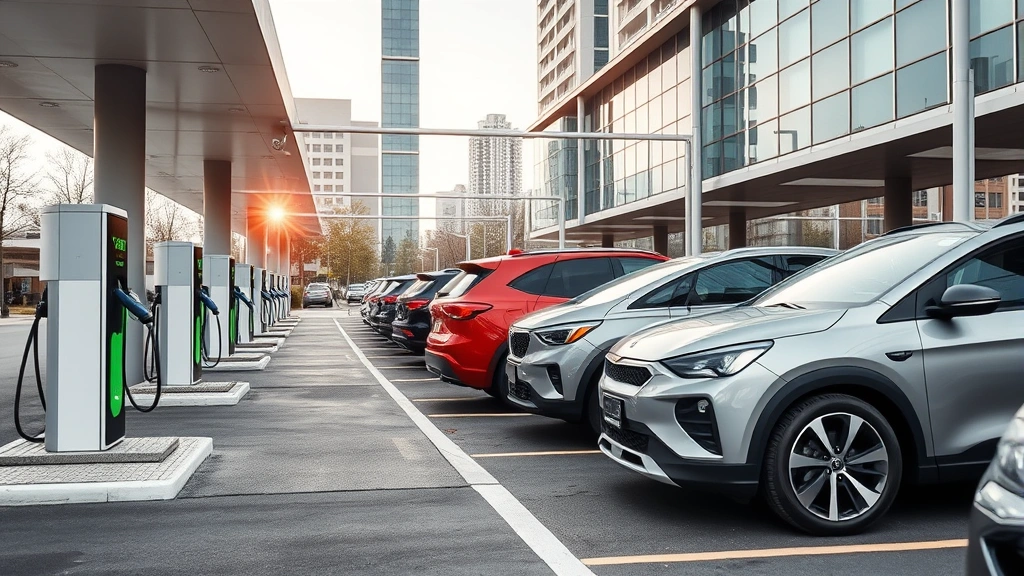
Charging infrastructure represents both capital investment and operational cost consideration. Rental companies increasingly develop proprietary charging networks at airport terminals, city centers, and off-airport locations. These investments—typically $5,000-8,000 per charging station—create customer convenience advantages while reducing dependence on public charging networks. The economic calculus favors in-house infrastructure development when fleet sizes exceed 5,000-10,000 vehicles, as utilization rates justify capital expenditure.
Insurance and risk management factors create additional economic considerations. EV collision repairs involve specialized technicians and battery diagnostic procedures, potentially increasing per-incident costs by 15-25%. However, lower accident rates among EV renters (attributed to quieter cabins reducing driver fatigue and advanced driver assistance systems) offset higher repair costs, resulting in net insurance savings of 5-10% compared to gasoline vehicle fleets.
Battery replacement costs, historically cited as major TCO concerns, have become manageable within rental fleet economics. Battery warranties typically extend 8-10 years or 100,000-150,000 miles, covering most rental fleet lifecycles. Residual value analysis indicates that EV batteries retain 70-80% capacity after 150,000 miles, enabling second-life applications in stationary energy storage systems. This emerging circular economy dimension creates revenue streams previously unavailable in traditional automotive rental models.
” alt=”Electric vehicle charging network at modern car rental facility with multiple vehicles queued for charging during peak hours”/>
Market Segmentation and Consumer Behavior
Eco-friendly car rental adoption demonstrates pronounced market segmentation patterns reflecting demographic, geographic, and psychographic consumer characteristics. Business travelers and corporate fleet managers increasingly mandate sustainable vehicle selection, driven by corporate environmental responsibility commitments and carbon accounting requirements. Companies like Microsoft, Google, and Unilever have established Scope 3 emissions reduction targets encompassing business travel, creating demand signals that rental companies cannot ignore.
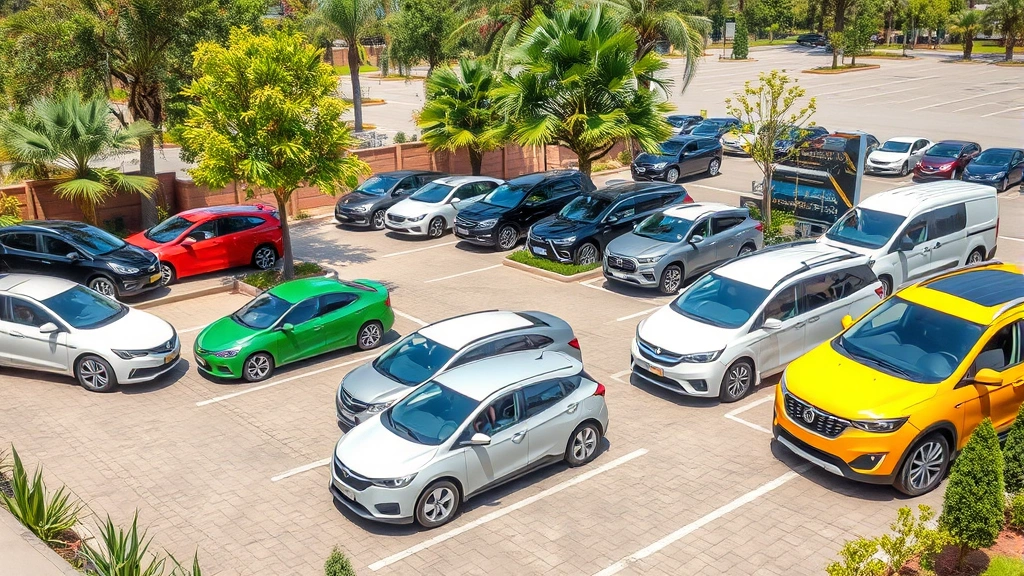
Geographic variation in EV adoption reflects charging infrastructure maturity and electricity grid composition. European markets, particularly Germany, Scandinavia, and the Netherlands, demonstrate 40-60% EV rental penetration in major metropolitan areas. North American adoption lags at 15-25%, constrained by charging network gaps outside urban corridors. This geographic heterogeneity creates operational complexity as rental companies must maintain mixed fleets optimized for regional demand patterns.
Price elasticity analysis reveals consumer willingness-to-pay premiums for sustainable options. Econometric studies indicate that 20-30% of rental customers accept 5-10% price premiums for EV vehicles, with elasticity increasing to 40-50% among environmental consciousness segments. Premium pricing strategies prove economically viable in high-demand segments, enabling rental companies to capture consumer preference heterogeneity while managing fleet economics.
Customer satisfaction metrics demonstrate that EV rental experiences generate higher net promoter scores than conventional vehicle rentals, particularly among younger demographics and urban renters. Perceived benefits—including reduced noise, smooth acceleration, and advanced infotainment systems—exceed environmental considerations as primary satisfaction drivers. This finding suggests that EV adoption succeeds not merely through environmental messaging but through superior product characteristics creating independent economic value.
The intersection of engineering and environmental considerations shapes customer experience design. Rental companies increasingly implement user education programs addressing range anxiety and charging procedures, recognizing that information asymmetries constrain EV adoption. Overcoming psychological barriers to EV rental requires not environmental advocacy but practical customer support systems that reduce perceived transaction costs.
Infrastructure Investment and Network Effects
Charging infrastructure development exhibits classic network effects where value increases disproportionately with network size. Early EV fleet adopters invested substantially in proprietary charging infrastructure, creating competitive moats around major metropolitan areas. Hertz’s bankruptcy in 2020 partially reflected inability to service $1.3 billion in debt while simultaneously investing $1+ billion in EV fleet transitions and charging infrastructure development.
Public-private partnerships increasingly characterize infrastructure development strategies. Rental companies coordinate with electricity utilities, property owners, and government agencies to optimize charging network deployment. These arrangements distribute capital requirements across multiple stakeholders while creating positive externalities that benefit broader EV adoption ecosystems. The economics of infrastructure investment improve dramatically when usage extends beyond rental fleets to include private EV owners and commercial delivery vehicles.
Battery swapping technologies represent alternative infrastructure paradigms that could reshape rental economics. Companies like NIO and Ample develop modular battery systems enabling rapid battery exchange rather than prolonged charging. For rental applications, battery swapping potentially eliminates range anxiety entirely while optimizing charging infrastructure utilization through centralized battery management. However, standardization challenges and vehicle platform incompatibilities currently limit widespread adoption.
The relationship between environmental infrastructure examples and economic efficiency demonstrates how ecological systems thinking informs business model innovation. Integrated charging networks, battery recycling facilities, and vehicle-to-grid systems create circular economy architectures that generate value through multiple pathways. Rental companies positioned at the center of these ecosystems capture disproportionate value through data analytics, demand aggregation, and infrastructure optimization.
Regulatory Frameworks and Carbon Pricing
Regulatory mandates increasingly shape rental company fleet composition decisions independent of pure economic optimization. The European Union’s Corporate Average Fuel Economy standards, California’s Advanced Clean Cars regulations, and emerging carbon border adjustment mechanisms create asymmetric competitive conditions favoring EV fleet adoption. Companies operating across multiple regulatory jurisdictions must navigate complex compliance requirements where marginal abatement costs vary substantially.
Carbon pricing mechanisms—including emissions trading systems, carbon taxes, and corporate carbon accounting standards—transform environmental externalities into explicit cost factors. European Union Emissions Trading System carbon prices have fluctuated between €20-90 per ton CO2, directly impacting rental company profitability calculations. Under carbon pricing regimes, EV fleet adoption becomes economically rational without explicit subsidies, as carbon abatement costs through vehicle electrification undercut alternative mitigation strategies.
Extended Producer Responsibility frameworks increasingly allocate battery recycling and end-of-life vehicle management costs to manufacturers and rental operators. These regulatory requirements create incentives for designing vehicles and battery systems optimized for material recovery and remanufacturing. The economics of battery recycling improve dramatically at scale, enabling rental companies with thousands of vehicles to achieve material recovery rates exceeding 90%, generating secondary revenue streams while meeting regulatory obligations.
UNEP’s environmental program assessments document how regulatory frameworks accelerate sustainable transport transitions. Comparative analysis across jurisdictions reveals that regulatory certainty—through mandates, carbon pricing, and infrastructure investment—reduces capital allocation uncertainty and accelerates EV fleet transitions compared to voluntary corporate commitment approaches. This finding carries important implications for policymakers designing effective environmental governance structures.
Competitive Dynamics and Market Consolidation
The eco-friendly car rental market exhibits increasing competitive intensity as environmental differentiation becomes table stakes rather than competitive advantage. First-mover advantages in EV fleet development have largely dissipated as battery costs decline and charging infrastructure matures. Current competitive differentiation focuses on customer experience, pricing optimization, and operational efficiency rather than merely EV availability.
Market consolidation patterns reflect economies of scale in EV fleet management and charging infrastructure development. Larger rental companies including Enterprise Holdings and Avis Budget Group possess capital resources enabling simultaneous fleet transitions and infrastructure investment that smaller competitors cannot match. This consolidation dynamic threatens mid-tier operators lacking capital to fund EV transitions, potentially resulting in market structure shifts toward duopoly or oligopoly configurations dominated by largest firms.
Emerging competitors from ride-sharing and mobility-as-a-service sectors increasingly compete for traditional rental customers. Companies like Zipcar, Turo, and regional car-sharing operators offer EV-focused fleets optimized for urban usage patterns, creating direct competition with traditional rental companies. These new entrants often feature lower cost structures, superior digital experiences, and greater EV fleet penetration, forcing incumbent rental companies to accelerate digital transformation and EV adoption strategies.
The relationship between renewable energy systems and rental operations creates emerging competitive dynamics. Rental companies investing in solar-powered charging infrastructure and grid-connected battery storage systems reduce electricity costs while enhancing sustainability credentials. These integrated energy systems create competitive advantages particularly in electricity-intensive markets where grid electricity remains carbon-intensive.
International market expansion strategies increasingly prioritize regions with mature EV ecosystems and favorable regulatory conditions. Chinese rental markets, Norwegian operations, and progressive European jurisdictions attract investment as companies pursue growth in markets where EV demand exceeds supply. This geographic expansion reflects rational capital allocation toward markets where EV fleet economics prove most favorable and regulatory tailwinds accelerate adoption.
” alt=”Diverse sustainable transportation options at modern rental facility including electric vehicles, hybrid models, and alternative fuel vehicles in organized parking arrangement”/>
Emerging Business Model Innovations
Subscription-based rental models increasingly complement traditional per-day rental offerings, creating recurring revenue streams and improved fleet utilization economics. Monthly subscription services priced at $500-800 for unlimited EV access appeal to urban consumers seeking transportation flexibility without ownership burdens. These models generate predictable demand patterns enabling optimized fleet sizing and charging infrastructure deployment.
Vehicle-to-grid (V2G) technology represents emerging value creation pathway where rental vehicles serve as mobile battery storage assets. During off-peak rental periods, vehicles connected to V2G systems inject stored energy into electricity grids, generating revenue while supporting grid stability. Aggregated across thousands of vehicles, V2G capabilities create virtual power plant functionality generating $1,000-2,000 annual revenue per vehicle. This dual-revenue model fundamentally improves EV fleet economics.
Data analytics and artificial intelligence increasingly optimize rental fleet operations through predictive demand forecasting, dynamic pricing, and customer behavior analysis. Machine learning algorithms identify optimal vehicle placement across locations, charging schedules, and maintenance timing. These optimization systems reduce operational costs by 10-15% while improving customer satisfaction through improved vehicle availability and reduced wait times.
The relationship between sustainable business practices and rental model innovation extends beyond vehicles to encompassing ecosystem-wide sustainability integration. Rental companies increasingly partner with sustainable hospitality providers, carbon offset programs, and environmental nonprofits, creating integrated sustainability experiences. These partnerships generate marketing value and customer loyalty while supporting broader environmental objectives.
Autonomous vehicle integration represents longer-term competitive consideration as self-driving technology matures. Rental companies possess operational advantages in autonomous vehicle deployment due to controlled environments, predictable usage patterns, and existing infrastructure. First-mover advantages in autonomous EV fleets could prove transformative, enabling business model innovations (robotaxis, autonomous delivery) that transcend traditional rental categories.
Environmental and Economic Externalities
The environmental benefits of eco-friendly car rentals extend beyond direct emissions reductions to encompassing systemic impacts on urban air quality, public health, and ecological integrity. Particulate matter and nitrogen oxide reductions from EV adoption generate quantifiable public health benefits estimated at $1,000-3,000 per vehicle annually through reduced respiratory disease, premature mortality, and healthcare costs. These health externalities create societal value exceeding private rental company benefits.
Economic research indicates that environmental co-benefits from vehicle electrification exceed climate change mitigation benefits. Air quality improvements in urban areas where rental vehicles concentrate generate disproportionate public health impacts. World Bank analysis of sustainable transportation demonstrates that health co-benefits justify vehicle electrification investments independent of climate considerations, creating alignment between private profitability and public welfare.
Lifecycle environmental assessment of EV rental operations reveals that upstream emissions from electricity generation and battery manufacturing significantly impact total environmental performance. In regions with carbon-intensive electricity grids, EV environmental advantages diminish substantially compared to regions with renewable energy dominance. This geographic variation creates incentives for rental companies to invest in renewable energy integration and grid decarbonization to maximize environmental benefits from EV fleets.
The circular economy dimensions of EV rental operations create additional environmental and economic value. Battery recycling, vehicle material recovery, and remanufacturing of components reduce raw material extraction and associated environmental impacts. Rental companies increasingly integrate circular economy principles into fleet management, recognizing that material efficiency generates both environmental and financial benefits.
Future Outlook and Strategic Implications
Projections indicate that EV market share in car rental fleets will reach 50-70% by 2030 in developed markets, driven by declining battery costs, regulatory mandates, and improved charging infrastructure. This transition will fundamentally reshape rental industry economics, competitive dynamics, and business model architectures. Companies successfully navigating this transition will emerge as industry leaders, while laggards face existential competitive threats.
Emerging technologies including solid-state batteries, extended-range vehicles, and ultra-fast charging systems will further improve EV rental economics. Battery energy density improvements will enable 500+ mile range vehicles, eliminating range anxiety as customer concern. Charging times declining toward 15-20 minutes for 80% state-of-charge will match refueling convenience of gasoline vehicles, removing final psychological barriers to EV adoption.
Strategic implications suggest that successful rental companies will evolve from vehicle provision toward integrated mobility service providers. This transformation requires simultaneous optimization of vehicle technology, charging infrastructure, customer experience, and data analytics capabilities. Companies failing to execute this transition comprehensively will face margin compression and market share erosion as environmental requirements combine with changing consumer preferences.
The relationship between environmental economics insights and rental strategy reveals that sustainable business models increasingly represent optimal economic strategies. Environmental constraints and economic efficiency converge rather than conflict, enabling companies to simultaneously improve profitability and environmental performance. This alignment suggests that eco-friendly car rentals represent not temporary trend but fundamental industry transformation reflecting deeper economic and ecological realities.
FAQ
What drives the economics of EV fleet adoption for rental companies?
Primary economic drivers include fuel cost savings of $12,000-18,000 per vehicle over fleet lifecycle, maintenance cost reductions of 40-60%, declining battery costs creating 15-25% purchase premiums, and positive return on investment within 4-6 years. Government incentives and regulatory mandates further improve economic viability by reducing effective capital costs and creating regulatory certainty.
How do rental companies address range anxiety and charging infrastructure challenges?
Rental companies invest in proprietary charging networks at strategic locations, develop customer education programs addressing charging procedures, and utilize dynamic fleet management optimizing vehicle placement. Battery technology improvements enabling 300+ mile ranges have substantially reduced range concerns for typical rental applications.
What percentage of rental fleets are currently electric vehicles?
EV market share varies dramatically by geography: European markets demonstrate 40-60% penetration in major cities, North American markets show 15-25% adoption, and developing markets remain below 5%. Global average approaches 20-25%, with rapid acceleration anticipated through 2030 as battery costs decline further.
How do regulatory frameworks impact rental company EV adoption decisions?
EU emissions standards, California Advanced Clean Cars regulations, and carbon pricing mechanisms create regulatory mandates and economic incentives favoring EV fleet adoption. Carbon pricing transforms environmental compliance from cost center to competitive advantage, with EV abatement costs often undercutting alternative mitigation strategies by 30-50%.
What emerging technologies will further improve EV rental economics?
Solid-state batteries promise 50% energy density improvements, enabling 500+ mile ranges. Ultra-fast charging technology approaching 80% charge in 15-20 minutes will eliminate charging time concerns. Vehicle-to-grid integration will generate $1,000-2,000 annual revenue per vehicle through grid services and energy arbitrage.
How do environmental co-benefits compare to climate mitigation benefits?
Air quality improvements and public health benefits from reduced particulate matter and nitrogen oxides exceed climate mitigation benefits in monetized terms, particularly in urban areas. Health externalities generate $1,000-3,000 annual value per vehicle, creating societal benefits exceeding private rental company profits.
What competitive advantages do early EV adopters maintain?
Early adopters possess brand differentiation, customer loyalty advantages, and established charging infrastructure networks. However, these advantages erode rapidly as technology commoditizes and infrastructure matures. Sustainable competitive advantages increasingly depend on customer experience, digital capabilities, and operational efficiency rather than merely EV availability.


