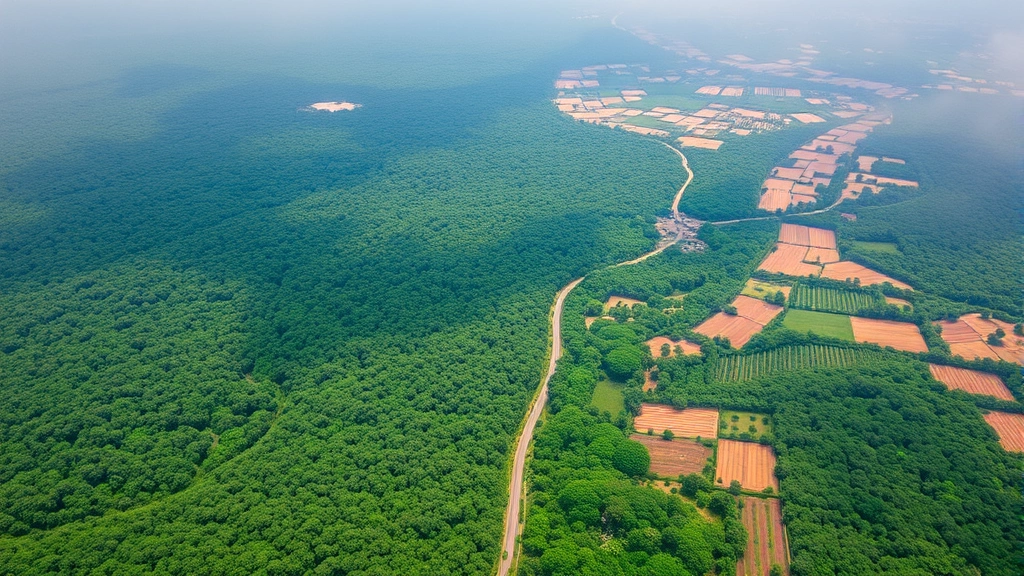
Human Environment Interaction: Key Insights Explained
Human environment interaction represents one of the most critical dynamics shaping our planet’s future. At its core, this concept describes the complex relationships between human societies and the natural systems that sustain them. Every action we take—from consuming resources to building infrastructure—fundamentally alters the ecosystems around us, creating cascading effects that ripple through both natural and economic systems. Understanding these interactions is essential for developing sustainable solutions that balance human needs with ecological preservation.
The significance of human environment interaction has grown exponentially with industrialization and globalization. Today, humans modify approximately 75% of Earth’s ice-free land surface, demonstrating the profound reach of our influence. Yet this power comes with unprecedented responsibility. As we face climate change, biodiversity loss, and resource depletion, recognizing how human activities interconnect with environmental processes becomes not merely academic but existential. This article explores the definition, mechanisms, and practical implications of human environment interaction, providing insights into how we can foster more sustainable relationships with our natural world.

Definition and Core Concepts of Human Environment Interaction
Human environment interaction encompasses the multifaceted relationships through which people modify, adapt to, and depend upon natural systems. This interaction involves both tangible exchanges—such as extracting resources like minerals, water, and timber—and intangible impacts, including pollution, habitat fragmentation, and climate alteration. The concept bridges multiple disciplines, integrating insights from environmental science, economics, sociology, and geography to create a comprehensive understanding of human-nature relationships.
To define human environment interaction precisely, we must recognize three fundamental dimensions. First, humans depend on environmental resources for survival and prosperity. Second, humans modify environments through deliberate and inadvertent actions. Third, environments respond to human modifications through complex ecological and biogeochemical processes. This circular dynamic means that human actions create environmental changes, which subsequently influence human societies, creating feedback loops that can either stabilize or destabilize social-ecological systems.
The definition of environment encompasses both physical components (atmosphere, hydrosphere, lithosphere, biosphere) and human-constructed systems (cities, agricultural landscapes, industrial zones). Understanding types of environments—from pristine wilderness to heavily urbanized areas—reveals the spectrum of human influence. Each environment type presents distinct interaction patterns and challenges, requiring tailored approaches to sustainability.

Historical Evolution of Human-Environmental Relationships
Human environment interaction has transformed dramatically throughout history, evolving from hunter-gatherer societies’ relatively low-impact subsistence patterns to today’s resource-intensive industrial economies. During the Paleolithic era, human populations remained relatively small and mobile, with environmental impacts largely confined to localized hunting and gathering areas. The agricultural revolution, beginning approximately 12,000 years ago, marked a fundamental shift. Humans transitioned from nomadic resource users to sedentary food producers, fundamentally restructuring landscapes through land clearing, water management, and soil modification.
The Industrial Revolution of the 18th and 19th centuries exponentially accelerated human environmental impacts. Mechanization, fossil fuel combustion, and mass production enabled unprecedented resource extraction and consumption rates. Manufacturing centers transformed landscapes, while coal smoke and industrial effluent contaminated air and water. This period established patterns of environmental degradation that persist today, including deforestation, soil depletion, and atmospheric carbon accumulation.
The 20th century witnessed both intensification of environmental pressures and growing awareness of environmental consequences. Population growth, technological advancement, and expanding global trade networks multiplied human demands on natural systems. Simultaneously, environmental movements emerged in response to visible pollution crises, species extinctions, and ecological degradation. Contemporary human environment interaction reflects this tension between continued resource demand and growing recognition of planetary boundaries.
Economic Dimensions and Resource Management
Economic systems fundamentally structure human environment interaction by determining how resources are extracted, valued, and distributed. Conventional economic models have historically treated environmental resources as externalities—costs imposed on nature rather than valued components of economic systems. This accounting approach creates perverse incentives, where environmental degradation appears economically beneficial because destruction costs are not internalized.
The World Bank’s environmental economics research demonstrates that incorporating environmental costs into economic calculations reveals the true expenses of resource extraction. Natural capital—including forests, fisheries, mineral deposits, and ecosystem services—constitutes genuine economic wealth. When forests are logged, economists must recognize that timber revenue represents asset liquidation, not income generation. Similarly, when agricultural practices degrade soil, economic accounting should reflect declining productivity rather than viewing soil degradation as free environmental change.
Resource management approaches increasingly recognize the need to align economic incentives with environmental sustainability. Payments for ecosystem services, carbon pricing mechanisms, and certification systems attempt to monetize environmental protection, making conservation economically competitive with extraction. Strategies to reduce carbon footprint at individual and organizational levels represent economic responses to climate-related human environment interaction.
Sustainable resource management requires understanding carrying capacity—the maximum population size and consumption level that ecosystems can support indefinitely. Current human resource consumption exceeds Earth’s regenerative capacity by approximately 75%, creating an ecological deficit that manifests in resource depletion, pollution accumulation, and ecosystem collapse. Achieving sustainability requires either reducing consumption levels in wealthy nations or improving resource efficiency through technological innovation and circular economy approaches.
Ecological Consequences and Feedback Mechanisms
Human environment interaction generates cascading ecological consequences that operate across multiple temporal and spatial scales. At local scales, land-use changes directly fragment habitats, reducing biodiversity and ecosystem resilience. At regional scales, pollution transport and climate patterns distribute impacts across watersheds and atmospheric circulation systems. At global scales, human activities alter fundamental biogeochemical cycles, affecting carbon, nitrogen, phosphorus, and water cycles that regulate planetary climate and fertility.
Climate change represents perhaps the most significant global consequence of human environment interaction. Fossil fuel combustion releases carbon dioxide accumulated over millions of years, increasing atmospheric CO₂ concentrations by 50% since industrialization. This greenhouse gas enhancement traps heat, altering temperature regimes, precipitation patterns, and sea levels. Climate feedback mechanisms amplify these changes: warming reduces ice cover, decreasing planetary albedo and causing further warming; thawing permafrost releases methane, a potent greenhouse gas; and warming reduces ocean carbon absorption capacity.
Biodiversity loss constitutes another critical consequence of human environment interaction. Habitat destruction, pollution, invasive species introduction, and climate change combine to drive extinction rates approximately 100-1,000 times above background levels. This biodiversity loss undermines ecosystem functioning, reducing the productivity, stability, and resilience of natural systems. UNEP research on environmental impacts documents accelerating species loss across terrestrial and marine ecosystems.
Water system degradation reflects intensifying human environment interaction pressures. Freshwater extraction now exceeds sustainable levels in many regions, causing aquifer depletion, river flow reduction, and lake contraction. Pollution from agricultural runoff, industrial discharge, and urban stormwater contaminates water supplies, requiring expensive treatment and limiting ecosystem functions. Ocean acidification, caused by atmospheric CO₂ absorption, threatens marine calcifying organisms and food webs.
Sustainable Interaction Models and Solutions
Developing sustainable human environment interaction requires fundamental restructuring of how societies organize production, consumption, and waste management. Circular economy models replace linear take-make-dispose approaches with systems where materials circulate continuously, minimizing extraction and waste. Sustainable fashion brands demonstrate circular economy principles by designing durable products, facilitating repair and reuse, and recovering materials at end-of-life.
Renewable energy transitions represent critical interventions for reducing human environment interaction’s climate impacts. Renewable energy for homes provides practical pathways for decarbonizing energy systems. Solar, wind, hydroelectric, and geothermal technologies generate electricity without greenhouse gas emissions or resource depletion, fundamentally altering human environment interaction patterns. Transitioning global energy systems from fossil fuels to renewables requires substantial infrastructure investment, technological innovation, and policy support.
Nature-based solutions leverage ecological processes to address human environment interaction challenges while providing multiple co-benefits. Wetland restoration improves water quality, reduces flooding, and provides wildlife habitat. Reforestation sequesters carbon while restoring biodiversity and protecting watersheds. Agricultural practices incorporating agroforestry, cover crops, and reduced tillage enhance soil health while maintaining productivity. These approaches recognize that humans cannot solve environmental problems through technology alone; instead, working with natural systems amplifies effectiveness while generating ecological benefits.
Regenerative practices go beyond sustainability by actively improving environmental conditions. Regenerative agriculture rebuilds soil organic matter, enhancing fertility and carbon sequestration. Restoration ecology actively reconstructs degraded ecosystems, recovering biodiversity and ecosystem functions. These approaches represent positive human environment interaction, where human activities enhance rather than diminish environmental quality. Ecological economics research provides theoretical frameworks supporting regenerative approaches by valuing ecosystem services and natural capital.
Case Studies in Human Environment Interaction
The Amazon rainforest illustrates complex human environment interaction dynamics at landscape scale. Indigenous peoples maintained the Amazon for millennia through low-impact resource management, demonstrating sustainable human environment interaction. However, contemporary deforestation for cattle ranching and agriculture destroys habitat, releases stored carbon, and disrupts regional precipitation patterns. Research indicates that continued deforestation could trigger ecosystem tipping points, converting rainforest to savanna—a catastrophic human environment interaction outcome with global climate implications.
The Aral Sea represents a cautionary tale of unsustainable human environment interaction. Soviet irrigation projects diverted rivers feeding the Aral Sea for cotton production, causing the sea to shrink by 90%. This environmental catastrophe destroyed fisheries, contaminated surrounding areas with salt and pesticide residues, and devastated regional economies and public health. The Aral Sea demonstrates how short-term economic gains from resource extraction create long-term environmental and economic losses through disrupted human environment interaction.
Costa Rica provides a more positive human environment interaction example. Despite being a developing nation, Costa Rica has protected over 25% of its territory in national parks and reserves while maintaining economic development. Payment for ecosystem services programs compensate landowners for forest conservation, aligning economic incentives with environmental protection. Costa Rica’s approach demonstrates that sustainable human environment interaction is economically viable when policies properly value environmental assets.
Singapore exemplifies sustainable human environment interaction within urban contexts. Despite extreme population density and limited natural resources, Singapore has invested in green infrastructure, water recycling, and renewable energy. Vertical gardens, park networks, and environmental regulations maintain livability while minimizing ecological footprint. Singapore’s model shows that dense urbanization need not require destructive human environment interaction when proper planning and investment occur.
FAQ
What is the simplest definition of human environment interaction?
Human environment interaction describes how people modify natural systems and how those systems respond, affecting human societies. It encompasses resource use, environmental modification, and the resulting ecological changes and human consequences.
How does human environment interaction affect biodiversity?
Habitat destruction from human activities directly reduces species populations and genetic diversity. Pollution, invasive species introduction, and climate change compound these impacts, driving extinction rates far above natural background levels and reducing ecosystem resilience.
Can human environment interaction ever be positive?
Yes. Regenerative agriculture, habitat restoration, and renewable energy development represent positive human environment interaction where human activities enhance environmental quality. Indigenous land management practices demonstrate that humans can sustainably interact with environments when knowledge and incentives align properly.
What role do economic systems play in human environment interaction?
Economic systems determine resource allocation and incentive structures shaping human environment interaction. Conventional economics treats environmental costs as externalities, creating incentives for degradation. Incorporating environmental values into economic accounting can align economic interests with sustainability.
How can individuals reduce their negative human environment interaction?
Individuals can reduce environmental impacts through consumption reduction, renewable energy adoption, sustainable food choices, waste minimization, and supporting policies that internalize environmental costs. Collective action amplifies individual efforts, creating systemic change in human environment interaction patterns.


