
Can Ecosystems Boost Economies? Expert Insights on Environmental Economics
The relationship between ecological health and economic prosperity has evolved from a peripheral concern to a central consideration in modern economic policy. Mounting evidence suggests that thriving ecosystems generate substantial economic value through services that underpin human civilization—from pollination and water purification to climate regulation and carbon sequestration. Yet this connection remains undervalued in traditional economic frameworks, which have historically treated nature as an infinite resource rather than a finite system requiring stewardship.
Recent research from leading environmental economists demonstrates that ecosystem degradation imposes hidden costs on economies worldwide, estimated at trillions of dollars annually in lost services. Conversely, investments in ecosystem restoration and conservation yield measurable returns through enhanced productivity, reduced disaster recovery costs, and improved public health outcomes. This paradigm shift reframes environmental protection not as an economic burden but as a strategic investment in long-term prosperity.

Ecosystem Services and Economic Value
Ecosystem services represent the multifaceted benefits that natural systems provide to human economies and societies. These services encompass provisioning services such as food, freshwater, and raw materials; regulating services including climate control, flood prevention, and disease regulation; supporting services like nutrient cycling and soil formation; and cultural services including recreation, aesthetic value, and spiritual enrichment.
The economic magnitude of these services is staggering. According to World Bank assessments, natural capital—comprising forests, wetlands, coral reefs, and grasslands—represents approximately 26% of total wealth in low-income countries and 13% in high-income nations. A comprehensive study published in Nature valued global ecosystem services at approximately $125 trillion annually, substantially exceeding global GDP.
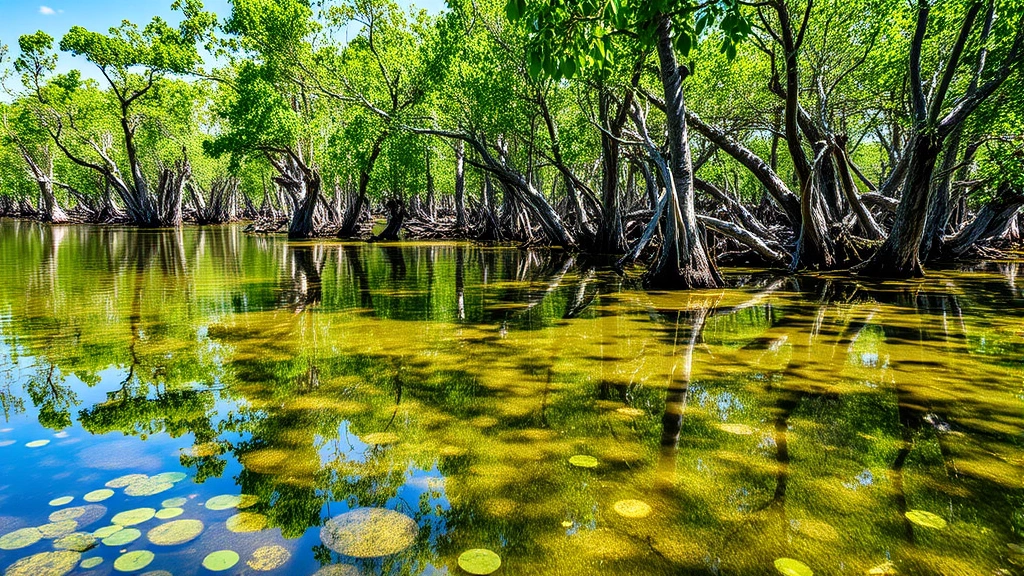
Consider pollination services alone: commercial crop pollination by wild bees and other insects generates between $15-20 billion in value annually across agricultural sectors. When honeybee populations decline due to habitat loss and pesticide exposure, farmers face reduced yields and increased costs, demonstrating how ecosystem degradation directly translates into economic losses. Similarly, mangrove forests provide coastal protection valued at $65 billion annually through storm surge reduction, while simultaneously supporting fisheries worth billions more.
The community of organisms and their abiotic environment creates complex interdependencies where disruption in one component cascades through economic systems. Understanding these relationships enables policymakers and business leaders to identify where ecosystem investments yield the highest economic returns.
Natural Capital Accounting
Traditional GDP measurements exclude environmental degradation and resource depletion, creating a distorted picture of economic performance. A nation might report robust economic growth while simultaneously depleting fisheries, degrading soils, and destroying forests—effectively converting natural capital into financial capital while impoverishing future generations.
Natural capital accounting addresses this oversight by quantifying ecosystem assets and their contributions to economic output. This methodology treats ecosystems like balance sheet items, enabling governments and corporations to measure true economic progress. Countries including Costa Rica, Indonesia, and several European nations have begun implementing natural capital accounts, revealing that conventional GDP growth masks significant environmental losses.
The United Nations Environment Programme (UNEP) has developed comprehensive guidelines for environmental economic accounting, enabling nations to integrate ecosystem valuation into national accounts. When Costa Rica adopted this approach, analyses revealed that environmental services contributed 9-14% of national income—a figure invisible in traditional accounting.
Advanced natural capital accounting incorporates several valuation approaches: market-based methods using actual prices paid for ecosystem services; replacement cost methods estimating expenses to replace lost functions; contingent valuation assessing willingness-to-pay for environmental preservation; and hedonic pricing examining how environmental quality affects property values. These techniques provide economic decision-makers with quantifiable data for comparing ecosystem protection against alternative investments.
Biodiversity and Economic Returns
Biodiversity—the variety of species, genetic diversity, and ecosystem diversity—functions as an economic insurance policy. Diverse ecosystems demonstrate greater resilience to environmental shocks, maintain productivity across variable conditions, and provide genetic resources for agricultural and pharmaceutical development.
The pharmaceutical industry derives approximately 25% of modern drugs from plants, many discovered in biodiverse tropical regions. The economic value of potential pharmaceutical discoveries in remaining unexplored biodiversity represents an enormous unquantified asset. Costa Rican rainforests, covering 2.4% of Earth’s terrestrial area yet containing 5% of global species, generate substantial pharmaceutical research partnerships and ecotourism revenue—demonstrating how biodiversity translates into measurable economic benefits.
Agricultural systems dependent on diverse crop and livestock varieties demonstrate superior stability and productivity compared to monocultures. Indigenous farming practices maintaining genetic diversity consistently outperform industrial monocultures during climate stress periods, droughts, and pest outbreaks. A FAO analysis of agricultural diversity demonstrated that diversified farming systems generate 20-30% higher productivity per unit of input while building soil health and reducing chemical dependencies.
Ecotourism represents another biodiversity-linked economic sector, generating $29 billion annually in developing nations alone. Countries with well-preserved ecosystems and high biodiversity attract premium tourism spending, creating employment and incentivizing habitat protection. However, this sector requires careful management to prevent degradation from overuse—highlighting the need for sustainable tourism frameworks that balance economic benefits with ecosystem preservation.
Sustainable Development and Economic Growth
The premise that economic growth requires environmental degradation has been thoroughly debunked by contemporary research. Decoupling—achieving economic growth while reducing environmental impact—has been demonstrated across multiple sectors and economies.
Denmark, Germany, and Costa Rica have achieved significant GDP growth while simultaneously reducing carbon emissions, improving air quality, and expanding forest cover. These nations implemented policies prioritizing renewable energy, circular economy principles, and ecosystem restoration alongside economic development. Their experiences demonstrate that sustainability and prosperity are complementary rather than contradictory objectives.
Circular economy principles, which minimize waste and maximize resource efficiency, generate economic advantages through reduced input costs, decreased disposal expenses, and enhanced brand value. Companies implementing circular models report improved profitability alongside environmental benefits. Interface, a carpet manufacturer, redesigned production processes to eliminate waste, reducing costs by 25% while decreasing environmental impact by 96%—illustrating how sustainability drives economic efficiency.
The definition of human environment interaction increasingly emphasizes reciprocal relationships where economic activities enhance rather than degrade ecological systems. Regenerative agriculture, for example, builds soil carbon while improving yields; agroforestry integrates timber production with ecosystem services; and wetland restoration simultaneously provides water purification, habitat creation, and flood mitigation.
Corporate Integration of Ecosystem Benefits
Forward-thinking corporations increasingly recognize that ecosystem health directly affects business continuity, supply chain stability, and operational costs. Companies dependent on agricultural inputs, freshwater, pollination services, or climate stability face material risks from ecosystem degradation.
Nestlé, operating in regions vulnerable to water scarcity, has invested significantly in watershed restoration and groundwater protection—recognizing that water security represents an existential business requirement. Patagonia, the outdoor apparel company, has implemented comprehensive environmental management throughout its supply chain, discovering that sustainability initiatives reduce costs while enhancing brand loyalty and employee retention.
Insurance companies, bearing financial responsibility for climate-related disasters and ecosystem collapse consequences, have become major ecosystem conservation advocates. Swiss Re, a leading reinsurer, quantifies ecosystem loss as a primary financial risk, investing billions in ecosystem restoration projects that reduce claims exposure while generating positive environmental outcomes.
Corporate ecosystem integration extends beyond risk mitigation to competitive advantage. Unilever’s commitment to sustainable sourcing created supply chain resilience advantages during commodity price volatility, while its sustainable living portfolio of brands grows at twice the rate of conventional product lines. These examples demonstrate that ecosystem consideration generates measurable financial performance improvements.
Policy Frameworks and Economic Incentives
Effective policy frameworks align economic incentives with ecosystem preservation, replacing perverse subsidies that reward degradation with mechanisms that reward conservation. Carbon pricing, payment for ecosystem services, biodiversity credits, and conservation easements represent policy tools that internalize environmental costs into economic decision-making.
Carbon pricing mechanisms, implemented in the European Union, New Zealand, and increasingly across emerging markets, assign economic value to atmospheric carbon, making emissions costly while creating revenue streams for climate mitigation. These frameworks have demonstrably reduced emissions while maintaining economic growth, with EU economies reducing emissions by 35% since 1990 while expanding GDP by 60%.
Payment for ecosystem services programs compensate landowners for maintaining or restoring ecosystem functions. Costa Rica’s pioneering program pays farmers to preserve forests, generating superior economic returns compared to cattle ranching on marginal lands while maintaining carbon sequestration, biodiversity, and water resources. This approach transforms conservation from a cost to a revenue opportunity for rural communities.
The types of environments requiring protection benefit from differentiated policy approaches. Wetland conservation requires regulations preventing conversion alongside restoration incentives; forest protection combines carbon credit mechanisms with sustainable harvesting allowances; marine ecosystem protection employs marine spatial planning and catch limits. Tailored policy frameworks recognizing environmental diversity maximize effectiveness while minimizing economic disruption.
A recent analysis from IUCN research on nature-based solutions demonstrated that ecosystem restoration delivers climate mitigation at 50-80% lower cost than technological alternatives while providing co-benefits including biodiversity enhancement, livelihoods improvement, and disaster risk reduction.
Challenges and Opportunities
Translating ecosystem value into economic policy faces substantial obstacles. Ecosystem services generate diffuse benefits accruing to society broadly, while degradation costs concentrate on specific industries, creating political opposition to protective policies. Short-term economic pressures often overwhelm long-term sustainability considerations in policy prioritization.
The environment examples demonstrating ecosystem-economic linkages remain underappreciated in mainstream economic discourse. Educational initiatives, scientific communication, and policy advocacy must increase understanding of these relationships among policymakers, investors, and the general public.
Measuring ecosystem value involves inherent uncertainties and methodological challenges. Contingent valuation research asking people’s willingness-to-pay for environmental preservation produces variable results; replacement cost estimates depend on technological assumptions; market prices reflect only portions of ecosystem value. These limitations require humility in economic valuation while acknowledging that incomplete valuation exceeds zero valuation in informing decision-making.
Opportunities abound for ecosystem-based economic development. Restoration economy sectors—encompassing ecological restoration, sustainable forestry, regenerative agriculture, and conservation technology—represent rapidly growing employment opportunities in developing and developed economies. Scaling these sectors requires policy support, capital allocation, and technical capacity development.
Innovative financing mechanisms including green bonds, ecosystem service credits, biodiversity offsets, and impact investing direct capital toward ecosystem-beneficial projects. Impact investors increasingly recognize that environmental sustainability represents a financial return driver rather than a constraint. As climate risks materialize and regulatory frameworks tighten, ecosystem-positive investments demonstrate superior long-term performance.
The relationship between how to reduce carbon footprint and economic opportunity has become increasingly apparent as renewable energy costs decline, circular economy efficiency improves, and ecosystem restoration demonstrates measurable returns. Organizations implementing comprehensive sustainability strategies simultaneously reduce environmental impact and improve financial performance.
Consumer demand for sustainable fashion brands and environmentally responsible products reflects broader recognition that ecosystem health matters economically. Markets increasingly reward companies demonstrating genuine environmental commitment while penalizing those perpetuating degradation, creating powerful incentives for sustainable business practices.
FAQ
How much economic value do ecosystems provide annually?
Global ecosystem services are valued at approximately $125-145 trillion annually, according to comprehensive environmental economic assessments. This figure substantially exceeds global GDP, demonstrating nature’s economic significance. However, valuations vary based on methodologies employed, with estimates ranging from $100-200 trillion depending on inclusion criteria and regional variations. The variation reflects inherent uncertainties in environmental valuation rather than disagreement about ecosystems’ fundamental economic importance.
Can environmental protection and economic growth occur simultaneously?
Yes—decoupling economic growth from environmental degradation has been achieved by multiple nations including Denmark, Costa Rica, and Germany. These countries expanded GDP while reducing emissions, improving environmental quality, and increasing forest cover. Decoupling occurs through policy prioritization of circular economy principles, renewable energy investment, ecosystem restoration, and sustainable agriculture. However, decoupling requires deliberate policy action and capital reallocation rather than occurring automatically through market forces.
What sectors derive the greatest economic benefits from ecosystem preservation?
Agriculture, fisheries, tourism, pharmaceuticals, and water supply sectors depend most directly on ecosystem health. Agriculture relies on pollination, soil formation, and water regulation; fisheries depend on aquatic ecosystem productivity; tourism benefits from natural landscapes and biodiversity; pharmaceuticals derive resources from genetic diversity; water supply sectors require watershed protection and aquifer recharge. Indirect benefits extend across virtually all economic sectors through climate regulation, disaster prevention, and air quality maintenance.
How do companies incorporate ecosystem value into business strategy?
Leading companies quantify ecosystem dependencies, assess climate and biodiversity risks, implement supply chain sustainability standards, invest in ecosystem restoration, and align compensation with environmental performance metrics. Some corporations establish dedicated ecosystem management departments, conduct natural capital assessments, and integrate ecosystem considerations into capital allocation decisions. Progressive companies recognize that ecosystem stewardship reduces operational risks, enhances supply chain resilience, and creates competitive advantages through brand differentiation and employee attraction.
What policy mechanisms most effectively align economic incentives with ecosystem preservation?
Carbon pricing, payment for ecosystem services, biodiversity credits, and conservation easements have demonstrated effectiveness in aligning economic incentives with environmental protection. Carbon pricing mechanisms have reduced emissions while maintaining growth; payment for ecosystem services programs incentivize conservation among landowners; biodiversity credits enable conservation financing; conservation easements provide permanent habitat protection with financial compensation. Combinations of these mechanisms, tailored to specific environmental contexts and economic conditions, maximize effectiveness.


