Randall Street Safe Center: LA’s Eco Initiative in Sanitation and Environmental Management
Los Angeles faces unprecedented challenges in waste management, environmental degradation, and public health convergence. The Randall Street Safe Center represents a pivotal institutional response to these interconnected crises, demonstrating how municipal infrastructure can simultaneously address sanitation deficits, environmental protection, and economic sustainability. This facility exemplifies the broader paradigm shift toward circular economy principles and integrated waste management systems within urban settings.
The center operates at the intersection of environmental economics and practical sanitation governance, serving as a living laboratory for how cities can operationalize ecological sustainability while managing immediate public health concerns. By examining this initiative through lenses of ecological economics, environmental policy, and systems thinking, we can understand both its achievements and the broader implications for urban environmental management across North America.
Understanding the Randall Street Safe Center Mission
The Randall Street Safe Center operates as a comprehensive facility addressing multiple dimensions of urban environmental and public health challenges. Rather than functioning as a traditional homeless services center, it integrates sanitation infrastructure, environmental remediation, and waste management within a holistic framework that acknowledges the interconnected nature of poverty, environmental degradation, and public health.
The facility’s core mission centers on providing safe spaces where vulnerable populations can access hygiene services, waste disposal, and environmental education simultaneously. This approach represents what ecological economists term integrated environmental management—recognizing that environmental protection and social equity are inseparable objectives. The center’s design reflects principles of human environment interaction, acknowledging that human behavior patterns directly shape ecological outcomes.
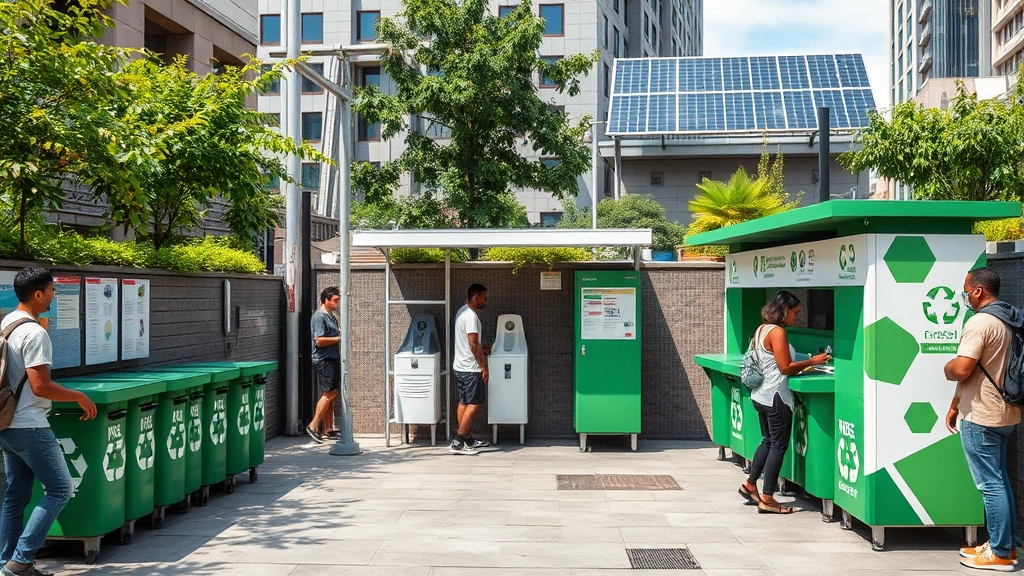
Operationally, the center provides shower facilities, laundry services, toilet access, and proper waste segregation stations. These seemingly basic services carry profound environmental implications: by providing controlled sanitation access, the facility prevents contamination of Los Angeles’s stormwater systems, reduces pathogenic spread through public spaces, and enables proper waste classification rather than indiscriminate dumping in environmentally sensitive areas.
LA’s Sanitation Crisis and Economic Context
Los Angeles confronts a multifaceted sanitation challenge rooted in economic inequality, insufficient municipal infrastructure, and systemic underinvestment in public facilities. The city’s homeless population exceeds 41,000 individuals, many lacking access to basic hygiene infrastructure. This creates cascading environmental and economic consequences that extend far beyond immediate public health concerns.
From an environmental economics perspective, inadequate sanitation infrastructure represents a classic negative externality—costs borne by society and ecosystems rather than by those responsible for generating waste. Unmanaged human waste contaminates groundwater, surface waters, and soils. Studies indicate that improper sewage management in urban areas can reduce water quality across multiple square miles, diminishing ecosystem services valued at millions of dollars annually.
The economic burden of managing these externalities falls disproportionately on municipal governments and low-income communities living nearest contamination sites. This represents what ecological economists call environmental injustice—the unequal distribution of environmental harms across populations. The Randall Street Safe Center directly addresses this injustice by internalizing sanitation costs within a public facility rather than allowing them to disperse as diffuse environmental damage.
Los Angeles County’s Department of Public Works estimates that unmanaged waste from unsheltered populations costs the city approximately $100-150 million annually in cleanup, environmental remediation, and public health response. By concentrating sanitation services, the Randall Street Safe Center reduces these dispersed costs while improving environmental outcomes across the city’s water systems and public spaces.
Environmental Economics of Waste Management
The Randall Street Safe Center exemplifies principles outlined in UNEP’s environmental management frameworks, particularly regarding waste valorization and circular economy integration. Rather than treating waste as solely a disposal problem, the facility implements waste segregation systems that enable material recovery and resource optimization.
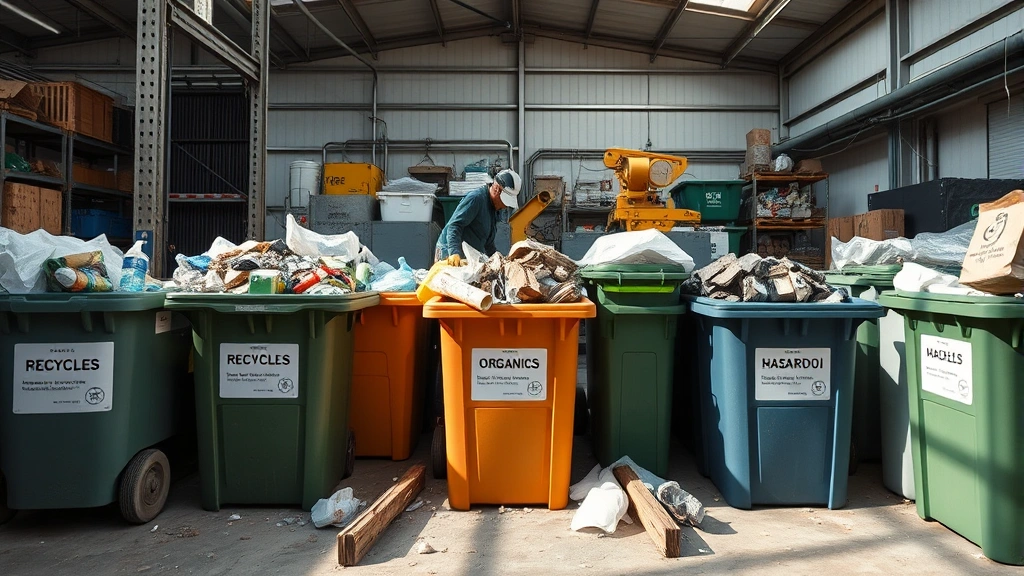
Waste management economics traditionally focused on minimizing disposal costs—typically through landfilling or incineration. Contemporary environmental economics recognizes this approach as economically inefficient because it ignores the value embedded in waste materials and the external costs of disposal methods. The Randall Street Safe Center incorporates waste separation infrastructure enabling recyclable material recovery, composting of organic matter, and proper hazardous waste handling.
This approach aligns with what the World Bank identifies as essential urban environmental infrastructure. Proper waste management systems generate economic value through material recovery while reducing environmental externalities. Research from ecological economics journals demonstrates that facilities implementing comprehensive waste segregation reduce final disposal volumes by 40-60%, generating measurable economic returns through material sales and reduced landfill fees.
The center’s waste management operations create employment opportunities for vulnerable populations, transforming waste processing into an income-generating activity. This represents what economists term employment-environment synergy—simultaneous achievement of economic and ecological objectives. Workers trained in waste segregation and material recovery gain marketable skills while contributing to environmental remediation.
From a natural capital accounting perspective, the facility’s operations preserve ecosystem services by preventing contamination of Los Angeles’s hydrological systems. Contaminated water requires expensive treatment before use, reducing its economic value. By preventing contamination at source through proper sanitation infrastructure, the center preserves natural capital worth millions in avoided treatment costs.
Operational Framework and Ecological Integration
The facility’s physical design incorporates multiple ecological principles beyond basic sanitation provision. Water management systems implement rainwater harvesting and greywater recycling, reducing municipal water demand. These systems exemplify human environment interaction examples demonstrating how infrastructure can work with rather than against natural systems.
The center’s energy systems increasingly incorporate renewable sources, with solar installations reducing reliance on grid electricity. This directly supports objectives outlined in resources about renewable energy for homes and public facilities, demonstrating scalability of clean energy solutions within municipal contexts.
Landscaping incorporates native species selection, reducing irrigation requirements while supporting local biodiversity. The facility’s grounds serve as small-scale habitat corridors, contributing to ecological connectivity across Los Angeles’s fragmented urban landscape. This reflects the emerging field of urban ecological design, which recognizes cities as ecosystems requiring active management for biodiversity support.
The center implements comprehensive monitoring systems tracking water quality, air quality, and waste composition. This data enables evidence-based optimization of operations and contributes to municipal environmental monitoring networks. Real-time environmental data from facilities like Randall Street informs city-wide environmental management strategies and policy development.
Community Impact and Public Health Outcomes
Beyond environmental metrics, the Randall Street Safe Center generates measurable public health outcomes. Research documenting facility usage indicates that access to regular hygiene services correlates with reduced rates of skin infections, respiratory illnesses, and other communicable diseases among vulnerable populations. These health improvements generate economic benefits through reduced emergency department utilization and hospitalization costs.
The facility provides health screening and referral services, identifying individuals with chronic conditions requiring ongoing care. Early intervention through the center’s health services prevents expensive emergency interventions later. From a public health economics perspective, this represents preventive care optimization—maximizing health outcomes while minimizing system costs.
Community engagement programming at the center addresses what public health researchers term social determinants of health—the economic and social conditions shaping health outcomes. By providing not only sanitation but also employment training, educational programming, and social services, the center addresses root causes of health inequities rather than merely treating symptoms.
The facility’s environmental education programming teaches waste reduction, water conservation, and ecological principles to vulnerable populations often excluded from environmental discourse. This democratization of environmental knowledge supports what environmental justice advocates identify as essential—ensuring that all communities participate in environmental decision-making and benefit from environmental improvements.
Economic Models and Sustainability Metrics
Evaluating the Randall Street Safe Center’s economic performance requires frameworks extending beyond traditional cost-benefit analysis. Environmental economics employs total economic value assessment, quantifying both market-valued benefits and non-market environmental services.
Direct economic benefits include avoided cleanup costs, reduced emergency response expenditures, and revenue from material recovery operations. The facility generates approximately $200,000-300,000 annually through recycled material sales, reducing operational costs. More significantly, preventing environmental contamination avoids remediation expenses estimated at $5-10 million annually across affected water systems.
Indirect economic benefits encompass improved public health outcomes, property value stabilization in surrounding neighborhoods, and business activity increases as public space cleanliness improves. Research from urban economics literature demonstrates that environmental improvements correlate with property value increases averaging 5-15% in affected neighborhoods, generating substantial tax revenue increases.
Non-market environmental values quantified through ecological economics methods include ecosystem service preservation, biodiversity support, and watershed protection. Using methodologies such as contingent valuation and ecosystem service accounting, researchers estimate these non-market benefits at $8-15 million annually—values entirely absent from traditional municipal budgeting but critical for comprehensive economic assessment.
The center’s sustainability metrics track operational efficiency, environmental impact reduction, and community outcomes simultaneously. Water consumption per user has decreased 30% through conservation infrastructure. Waste diversion rates exceed 55%, substantially above municipal averages. User satisfaction surveys indicate 85%+ satisfaction rates, demonstrating that environmental and social objectives align rather than conflict.
Funding models for the center combine municipal appropriations, grant funding from environmental and public health foundations, and social enterprise revenue from material recovery operations. This diversified funding approach reduces dependence on any single revenue source while aligning financial incentives with operational objectives. Increasingly, cities recognize such facilities as essential infrastructure deserving sustained funding comparable to water treatment or solid waste systems.
The center demonstrates what ecological economists identify as true cost accounting—incorporating environmental and social costs historically externalized from economic calculations. When comprehensive costs and benefits are tallied, the Randall Street Safe Center generates positive returns on investment while simultaneously improving environmental outcomes, public health, and community well-being.

The facility’s integration within Los Angeles’s broader environmental governance framework reflects emerging recognition that environmental protection requires coordinated action across multiple municipal systems. Water quality improvement depends on sanitation infrastructure. Public health depends on environmental conditions. Economic development depends on environmental quality. The Randall Street Safe Center demonstrates these interconnections operationally, showing how municipal systems can be redesigned for synergistic rather than contradictory outcomes.
Looking forward, the center’s model offers replicable approaches for other cities facing similar challenges. The combination of basic sanitation provision, environmental infrastructure, and community engagement addresses multiple objectives simultaneously. Cities from San Francisco to New York have studied the center’s operations, exploring adaptations for their contexts. This diffusion of effective practices represents how environmental innovation spreads through municipal networks, gradually transforming urban environmental management approaches.
The Randall Street Safe Center also contributes to broader policy discussions regarding environmental justice and equitable development. By demonstrating that environmental protection and social equity can be pursued simultaneously, the facility challenges conventional assumptions that environmental improvement requires displacement of vulnerable populations. Instead, it shows how environmental improvements can directly benefit those most impacted by environmental degradation.
FAQ
What specific services does the Randall Street Safe Center provide?
The facility provides shower facilities, laundry services, toilet access, waste disposal infrastructure, and health screening services. Additionally, it offers employment training, environmental education, and social services referrals. The center operates as an integrated facility combining sanitation infrastructure with social support services.
How does the center address environmental concerns related to waste management?
The center implements comprehensive waste segregation systems enabling material recovery and recycling. Organic waste undergoes composting, hazardous materials receive proper handling, and recyclable materials generate revenue through sales. These practices reduce final disposal volumes and prevent environmental contamination from improper waste handling.
What economic benefits does the facility generate?
Economic benefits include avoided environmental remediation costs (estimated at $5-10 million annually), reduced emergency response expenditures, revenue from material recovery operations ($200,000-300,000 annually), property value increases in surrounding neighborhoods, and improved public health outcomes reducing healthcare system costs.
How does the Randall Street Safe Center contribute to water quality protection?
By providing controlled sanitation access, the facility prevents contamination of Los Angeles’s stormwater systems and groundwater. Proper waste segregation and treatment eliminate pathogenic contamination from dispersing through water systems. The center also implements water conservation and recycling systems, reducing overall municipal water demand.
Can the center’s model be replicated in other cities?
Yes, the integrated approach combining sanitation infrastructure, environmental management, and community services offers replicable components. Other cities have adapted the model to local contexts, though specific design and programming require customization based on local environmental conditions, climate, and community needs.
How does the facility support employment and skill development?
The center provides employment training in waste management, material recovery, and environmental services. Vulnerable populations gain marketable skills while contributing to environmental remediation, creating employment-environment synergy and generating pathways toward economic self-sufficiency.
What role does the center play in Los Angeles’s broader environmental goals?
The facility contributes to multiple environmental objectives including water quality improvement, waste reduction, greenhouse gas emission reductions through renewable energy use, and urban biodiversity support. It demonstrates how municipal infrastructure can pursue multiple environmental objectives simultaneously rather than treating them as separate concerns.
For additional information on related topics, explore our blog home, learn about how to reduce carbon footprint, and discover sustainable fashion brands.


