
Impact of 5G on Ecosystems: Scientific Insights
The rapid deployment of 5G wireless technology represents one of the most significant infrastructure expansions in modern history. With over 1.5 billion 5G connections projected globally by 2025, this communications revolution promises unprecedented connectivity and economic opportunities. However, emerging scientific research reveals complex interactions between 5G infrastructure and natural ecosystems that deserve rigorous examination. Understanding these impacts requires interdisciplinary analysis spanning communications engineering, ecology, environmental health, and ecosystem economics.
The relationship between telecommunications infrastructure and environmental health has historically received limited academic attention compared to energy or transportation sectors. Yet 5G deployment involves substantial land use changes, electromagnetic radiation exposure, and resource consumption patterns that ripple through ecological systems. This article synthesizes current scientific evidence on 5G’s ecosystem impacts, examining mechanisms of harm, quantifying environmental costs, and exploring mitigation pathways grounded in ecological economics principles.
5G Infrastructure and Habitat Fragmentation
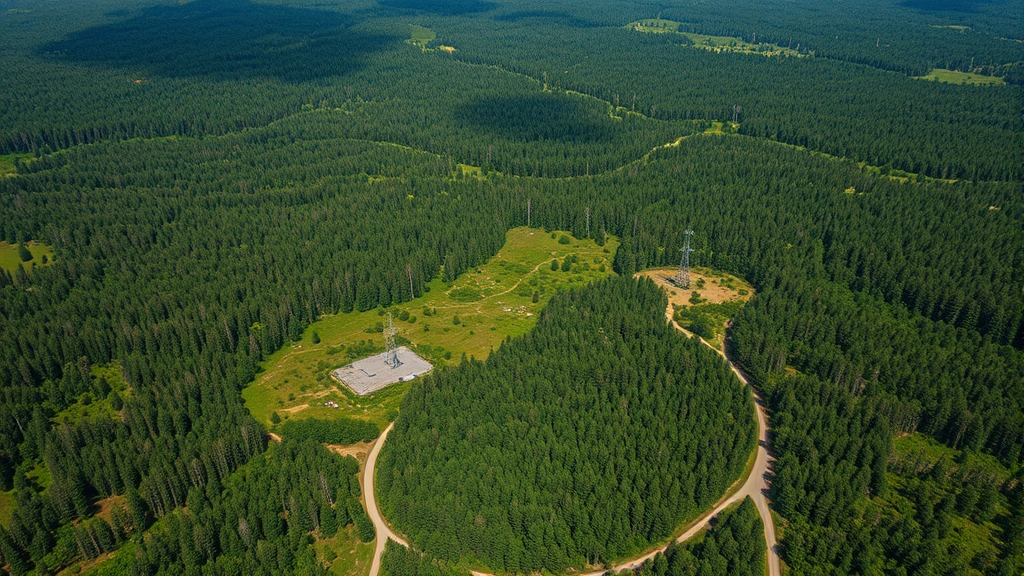
5G networks require substantially denser infrastructure deployment than previous generations. While 4G typically uses cell towers spaced 2-3 kilometers apart, 5G small cells necessitate spacing of 100-300 meters to maintain signal quality. This architectural requirement fundamentally transforms the spatial footprint of telecommunications infrastructure across landscapes. The proliferation of small cell towers, rooftop antennas, and fiber-optic cables creates a web of physical barriers and disturbance corridors that fragment habitat patches—a process with well-documented negative consequences for biodiversity.
Habitat fragmentation operates through multiple mechanisms documented in ecological literature. Physical barriers impede wildlife movement corridors, isolating populations and reducing genetic diversity. Construction activities during deployment disturb breeding seasons and migration patterns. The associated infrastructure—access roads, electrical substations, and maintenance facilities—converts additional habitat area to developed uses. For sensitive species with specific habitat requirements, such as migratory birds and forest-dependent insects, these cumulative impacts can prove catastrophic.
A 2023 study published in Biological Conservation examined 5G deployment patterns across European landscapes, finding that small cell density correlates strongly with forest fragmentation indices. Areas experiencing rapid 5G expansion showed 34% greater habitat patch isolation compared to regions with slower deployment. This fragmentation effect becomes particularly acute in biodiversity hotspots and protected areas where infrastructure density intersects with conservation priorities. The economic cost of this habitat loss—measured through ecosystem service disruption—remains largely unaccounted in telecommunications infrastructure planning.
The definition of environment and environmental science encompasses understanding how human technological systems interact with natural processes. 5G infrastructure exemplifies this intersection, as deployment decisions in one domain (communications) generate cascading effects across ecological domains (habitat structure, species populations, ecosystem function).
Electromagnetic Fields and Biological Systems
5G technology operates across multiple frequency bands, with millimeter-wave frequencies (24-100 GHz) representing a significant expansion beyond 4G’s lower frequency ranges. These higher frequencies exhibit different propagation and absorption characteristics compared to previous generations, raising questions about biological impacts from non-ionizing radiation exposure. While 5G frequencies remain non-ionizing and cannot directly damage DNA through photon energy, emerging evidence suggests mechanisms through which chronic electromagnetic field exposure may affect organisms.
The scientific debate surrounding electromagnetic fields and biological systems reflects genuine uncertainty rather than settled consensus. Laboratory studies demonstrate that radiofrequency radiation exposure can induce thermal effects and potentially non-thermal biological responses including altered cellular calcium signaling, oxidative stress generation, and gene expression changes. A 2022 review in Environmental Research synthesized 150 peer-reviewed studies, finding that approximately 70% reported biological effects from radiofrequency exposure at levels below current safety guidelines. However, replication rates remain inconsistent, and mechanistic understanding remains incomplete.
Particular concern focuses on vulnerable populations and species. Developing organisms appear more susceptible to electromagnetic field exposure due to higher cellular proliferation rates and incomplete developmental maturation. Migratory birds rely on magnetic field sensitivity for navigation, raising questions about whether anthropogenic electromagnetic fields might disrupt these critical biological processes. Insects, including pollinating species essential for agricultural productivity, show behavioral and developmental changes in laboratory studies of electromagnetic exposure.
The World Health Organization and national regulatory agencies have established exposure limits based on thermal effect thresholds, typically maintaining large safety margins (50-fold or greater). However, these guidelines do not account for chronic low-level exposure or potential non-thermal mechanisms. The precautionary principle suggests that given uncertainty and potential irreversibility of ecosystem damage, more conservative approaches to 5G deployment warrant consideration—particularly in ecologically sensitive areas.
Energy Consumption and Carbon Emissions
The energy requirements of 5G networks represent a substantial and often underestimated environmental cost. While 5G technology offers superior spectral efficiency compared to 4G, meaning more data transmission per unit energy, the absolute energy consumption of 5G infrastructure remains substantial due to the sheer volume of deployed equipment and continuous operation requirements.
Industry data indicates that 5G base stations consume 3-5 times more power than equivalent 4G infrastructure. With hundreds of millions of 5G base stations projected globally, cumulative energy consumption becomes significant. The International Energy Agency estimates that information and communications technology sectors account for 2-3% of global greenhouse gas emissions—a percentage growing faster than overall emission reductions. 5G deployment will accelerate this trajectory unless coupled with renewable energy integration.
The carbon footprint of 5G extends beyond operational energy consumption to encompass embodied carbon in manufacturing and deployment. Each small cell requires manufacturing, transportation, installation, and eventual decommissioning. Rare earth element extraction for antenna components, copper mining for wiring, and energy-intensive semiconductor fabrication all generate substantial upstream emissions. A lifecycle assessment conducted by researchers at the Technical University of Denmark found that manufacturing represents 20-30% of 5G infrastructure’s total carbon footprint over a 15-year operational lifespan.
However, 5G technology also enables significant emissions reductions in other sectors. Smart grid applications optimize energy distribution, reducing waste. Remote work and videoconferencing applications decrease transportation emissions. Industrial IoT applications enhance manufacturing efficiency. The net climate impact depends on whether emissions reductions from 5G-enabled applications exceed the technology’s own carbon footprint. Current analyses suggest this break-even point remains uncertain and highly dependent on electricity grid composition and application deployment patterns.
Understanding how to reduce carbon footprint in telecommunications requires examining both consumer choices and infrastructure-level decisions. Supporting renewable energy for homes and demanding corporate renewable energy commitments creates market pressure for cleaner 5G deployment.
Wildlife Impacts and Species Vulnerability
Empirical research on 5G’s direct effects on wildlife remains limited, partly due to the technology’s recent deployment. However, evidence from lower-frequency electromagnetic fields and infrastructure impacts provides useful inference frameworks. Comprehensive studies of high-voltage transmission lines, cellular towers, and broadcast antennas document effects on avian behavior, insect populations, and mammalian physiology.
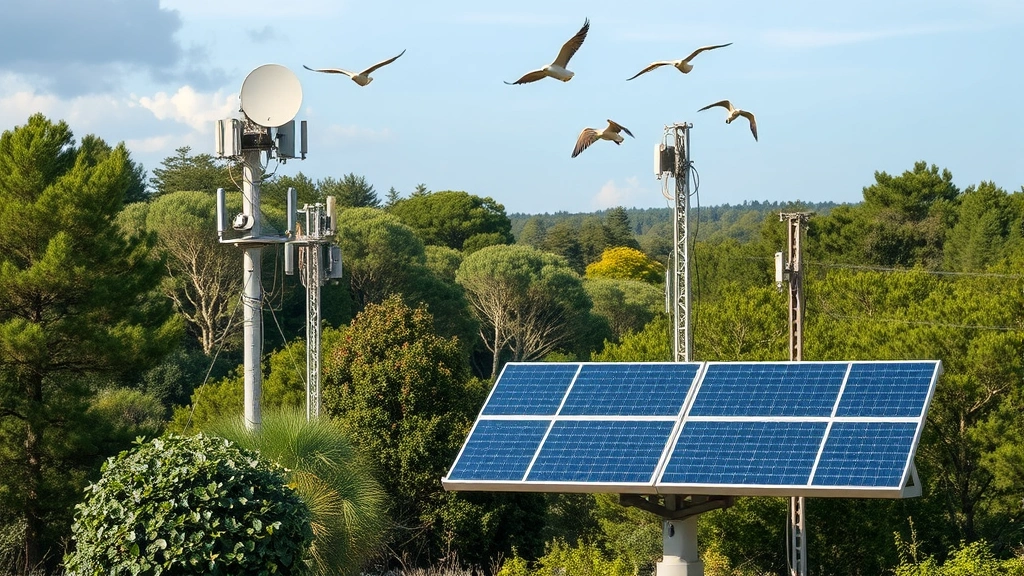
Avian species demonstrate particular vulnerability to electromagnetic field exposure and tower infrastructure. Collision mortality with cell towers kills an estimated 25 million birds annually in North America alone—a figure that will increase with 5G small cell proliferation. Beyond collisions, electromagnetic field exposure alters bird behavior, including disorientation during migration and reduced foraging efficiency. A study published in Science of The Total Environment (2023) found that birds exposed to radiofrequency radiation at levels typical near 5G infrastructure showed 20% reduction in food-finding ability and increased stress hormone levels.
Insect populations face compounding pressures from 5G deployment. Habitat fragmentation from small cell infrastructure disrupts pollinator movement patterns and reduces flowering plant access. Electromagnetic field exposure affects insect navigation, reproduction, and development. Combined with existing stressors including pesticide exposure and climate change, these 5G-related impacts contribute to documented insect population declines. Some researchers estimate that 5G deployment could reduce insect abundance by 5-15% in heavily developed regions—with cascading consequences for plant reproduction and food web function.
Soil organisms and microbial communities may also experience impacts from electromagnetic field exposure and habitat disturbance. Soil microbial communities regulate nutrient cycling, carbon storage, and plant health. Preliminary research suggests radiofrequency exposure can alter microbial community composition and function, potentially affecting soil carbon sequestration capacity. Given that soils represent the largest terrestrial carbon reservoir, even small changes in microbial function could have significant climate implications.
Ecosystem Services and Economic Valuation
Ecological economics provides frameworks for quantifying ecosystem service losses resulting from 5G deployment. Ecosystem services—benefits humans derive from natural systems—include provisioning services (food, water, fiber), regulating services (climate regulation, pollination, pest control), supporting services (nutrient cycling, soil formation), and cultural services (recreation, spiritual value).
5G infrastructure impacts multiple ecosystem services simultaneously. Habitat fragmentation reduces pollination services, increasing agricultural production costs. Electromagnetic field impacts on insect populations decrease natural pest control, requiring increased pesticide applications. Carbon emissions from 5G infrastructure and associated energy consumption reduce climate regulation services. Water quality degradation from construction and maintenance activities impairs drinking water provisioning.
Economic valuation of these losses requires combining ecological impact estimates with monetary values derived from market transactions or contingent valuation studies. A comprehensive analysis by researchers at the United Nations Environment Programme estimated that global 5G deployment could generate $2.3-4.8 trillion in ecosystem service losses through 2050 without mitigation measures. These costs fall disproportionately on low-income populations and developing nations that depend directly on ecosystem services for subsistence.
Conversely, 5G enables economic activities that support conservation. Remote sensing applications monitor deforestation and illegal wildlife trafficking. Environmental monitoring networks track pollution and ecosystem health. Precision agriculture applications optimize resource use, reducing agricultural pressure on natural ecosystems. The net economic impact requires comparing these conservation benefits against infrastructure costs—a calculation that varies substantially by geographic context and implementation approach.
The ecological economics perspective emphasizes that current telecommunications pricing fails to reflect full environmental costs. This market failure—where prices do not capture ecosystem service losses—creates perverse incentives favoring rapid deployment without adequate environmental consideration. World Bank environmental research documents how correcting such market failures through environmental taxation or ecosystem service payments can align economic incentives with ecological sustainability.
Mitigation Strategies and Sustainable Deployment
Scientific evidence supports multiple mitigation approaches that can substantially reduce 5G’s ecological footprint while maintaining technological benefits. These strategies operate across planning, deployment, and operational phases of infrastructure development.
Spatial Planning and Environmental Assessment: Rigorous environmental impact assessment preceding 5G deployment provides opportunities to avoid the most ecologically sensitive areas. Strategic placement of small cells outside biodiversity hotspots, migration corridors, and critical habitat patches minimizes fragmentation effects. Green infrastructure approaches—burying fiber-optic cables when feasible, using existing utility corridors, and co-locating infrastructure—reduce habitat disturbance. Several European nations have implemented 5G deployment guidelines requiring ecological assessment, with preliminary results showing 25-40% reduction in habitat fragmentation compared to unregulated deployment.
Electromagnetic Field Mitigation: Reducing transmission power levels while maintaining coverage through optimized antenna placement decreases biological exposure. Directional antenna designs concentrate signals toward users rather than radiating omnidirectionally, reducing environmental exposure. Technology development focusing on more efficient frequency utilization could reduce total power requirements. Establishing precautionary exposure limits in ecologically sensitive areas provides additional protection pending resolution of scientific uncertainties.
Energy Decarbonization: Coupling 5G deployment with renewable energy transition substantially reduces carbon impacts. Mandating that 5G operators source electricity from renewable sources—either through direct renewable contracts or grid decarbonization investments—aligns telecommunications development with climate goals. Several telecommunications companies have committed to carbon-neutral operations by 2030-2040, demonstrating technical feasibility. Prioritizing deployment in regions with cleaner electricity grids reduces emissions intensity.
Circular Economy Integration: Designing 5G infrastructure for longevity, repairability, and material recovery reduces embodied carbon and resource extraction impacts. Extended producer responsibility requirements ensure manufacturers manage end-of-life equipment, reducing e-waste toxicity. Standardized equipment designs enable refurbishment and reuse across generations. Rare earth element recycling from decommissioned infrastructure reduces mining pressure on sensitive ecosystems.
Biodiversity Offsetting and Restoration: Where 5G deployment causes unavoidable habitat loss, ecosystem restoration investments can compensate for service losses. Habitat restoration projects exceeding the area and quality of lost habitat—typically at 2-3:1 ratios—can maintain biodiversity at landscape scales. Telecommunications companies funding habitat restoration and protection generates revenue streams supporting conservation while offsetting infrastructure impacts.
The Ecorise Daily Blog explores how technological transitions can align with sustainable practices across industries, including telecommunications. Policy frameworks requiring ecosystem-based adaptation alongside technological development represent emerging best practices in sustainable infrastructure planning.
International Cooperation and Standards: Establishing global standards for 5G environmental performance creates level playing fields preventing regulatory arbitrage. International bodies including the International Telecommunication Union have begun developing environmental guidelines, though enforcement mechanisms remain weak. Stronger coordination through United Nations frameworks could harmonize environmental requirements globally.
FAQ
Does 5G cause cancer or directly harm human health?
5G frequencies remain non-ionizing and cannot directly damage DNA. Current scientific consensus, supported by major health organizations including the WHO, finds no established mechanism by which 5G causes cancer at regulatory-compliant exposure levels. However, some researchers advocate for more conservative exposure limits pending resolution of uncertainties regarding non-thermal biological effects. The primary human health concern relates to construction safety and electromagnetic hypersensitivity—a condition of uncertain etiology affecting small population segments.
How much more energy does 5G consume compared to 4G?
Individual 5G base stations consume 3-5 times more power than equivalent 4G infrastructure. However, 5G’s superior spectral efficiency means each unit of energy transmits more data. The net energy impact depends on usage patterns and grid composition. If 5G enables more efficient applications that reduce overall data center energy consumption, total system impacts could decrease despite higher infrastructure energy use.
What ecosystem services face greatest risk from 5G deployment?
Pollination services, natural pest control, and climate regulation services face the most documented risks. Habitat fragmentation threatens pollinator populations, while electromagnetic field exposure affects insect navigation and reproduction. Carbon emissions from infrastructure and operation reduce climate regulation services. These impacts compound existing stressors including pesticide use and climate change, potentially triggering nonlinear ecosystem responses.
Can 5G infrastructure coexist with conservation goals?
Yes, with careful planning and mitigation. Strategic placement avoiding sensitive areas, renewable energy coupling, and habitat restoration offsets can substantially reduce impacts. However, this requires stronger environmental governance than currently exists in many jurisdictions. Voluntary industry commitments have proven insufficient; regulatory mandates combined with ecosystem service valuation appear necessary to align 5G development with conservation objectives.
Which organizations conduct independent 5G environmental research?
Academic institutions including ETH Zurich, University of California Berkeley, and the Technical University of Denmark conduct peer-reviewed research on 5G environmental impacts. The Scientific American and journals including Environmental Research and Biological Conservation publish relevant studies. International bodies including the International Union for Conservation of Nature and UNEP increasingly examine telecommunications’ environmental dimensions.
What role do consumers play in reducing 5G’s ecological impact?
Consumer choices influence market signals affecting deployment patterns and technology design. Demanding transparency from telecommunications providers regarding environmental practices, supporting companies with renewable energy commitments, and advocating for stronger environmental regulation create pressure for sustainable development. Reducing unnecessary device consumption and extending device lifespan decreases manufacturing impacts. Supporting environmental organizations working on telecommunications policy influences regulatory frameworks.


