Is the Circular Economy Profitable? Economist Insights
The circular economy represents a fundamental departure from the linear “take-make-dispose” model that has dominated industrial production for over two centuries. Rather than treating resources as infinite and waste as inevitable, circular systems emphasize material recovery, product longevity, and regenerative practices. But beneath the environmental rhetoric lies a critical business question: can circular economy models actually generate profit? This inquiry sits at the intersection of environmental economics, corporate strategy, and systems thinking—and the evidence increasingly suggests they can.
As global resource scarcity intensifies and regulatory frameworks tighten, companies implementing circular strategies are discovering competitive advantages that translate directly to the bottom line. From reduced material costs to premium market positioning, the financial case for circularity has moved beyond ethical considerations into hard economic territory. Understanding what economists and business leaders have learned about circular profitability requires examining both macro-level economic shifts and micro-level operational realities.
Understanding the Circular Economy Model
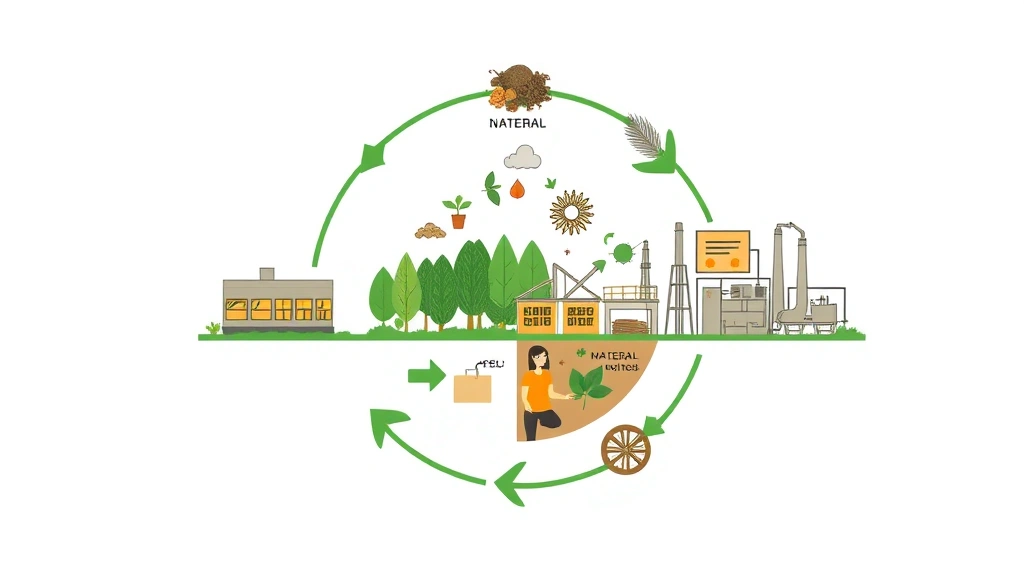
The term “circular economy” describes an economic system designed to eliminate waste and maximize resource utilization through continuous material cycling. Unlike the linear model where products reach end-of-life and enter landfills, circular systems extend product lifecycles, recover materials for remanufacturing, and design waste out of production processes from inception. This represents a fundamental reimagining of how value chains operate.
Economists differentiate between three primary circular strategies: the “reduce” approach (minimizing material input), the “reuse” approach (extending product life), and the “recycle” approach (recovering materials for new production). Each strategy carries distinct profitability implications. The Ellen MacArthur Foundation’s research indicates that the global circular economy could generate economic benefits exceeding $4.5 trillion by 2030, suggesting substantial profit potential across industries.
To properly understand these economic dynamics, one should first define environment and environmental science in contemporary economic terms—not merely as physical space but as capital stock that generates flows of resources and services. This ecological economics perspective reveals that environmental degradation represents a genuine economic loss, making circular approaches economically rational rather than merely virtuous.
The profitability question hinges on whether circular operations can achieve cost structures competitive with linear manufacturing while capturing additional revenue streams. Research from the World Bank and ecological economics institutions demonstrates that when properly implemented, circular models often outperform linear systems economically within 5-10 year timeframes.

Cost Reduction Through Material Recovery
The most immediately quantifiable profit driver in circular economy models is material cost reduction. Raw material expenses typically represent 30-50% of manufacturing costs across most industries. By implementing closed-loop systems where discarded products become input materials, companies dramatically reduce procurement expenses.
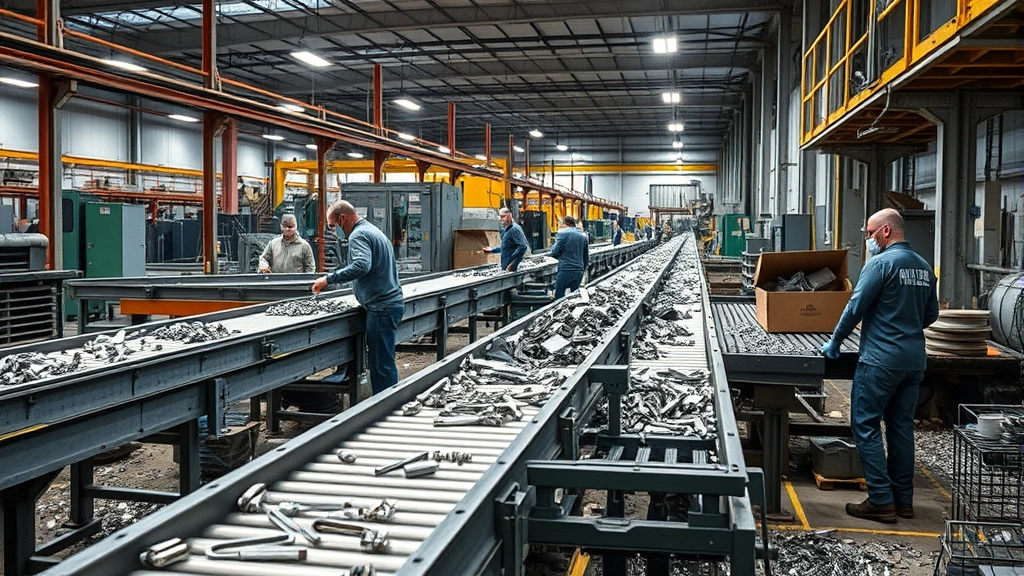
Consider the economics of aluminum recycling: producing aluminum from recycled material requires approximately 95% less energy than primary aluminum smelting. This translates to substantially lower production costs per unit. A company recovering 80% of aluminum from end-of-life products can reduce material costs by 40-50% compared to virgin material sourcing. Over millions of units, these savings compound into significant profit margins.
Textile companies implementing fiber-to-fiber recycling report material cost reductions of 25-35% while simultaneously reducing water consumption by 80% and chemical inputs by 90%. The dual benefit—lower input costs combined with reduced treatment expenses for waste streams—creates multiplicative economic advantages. Patagonia’s recycled fiber programs demonstrate how material recovery can maintain premium pricing while reducing actual production costs.
Beyond direct material expenses, circular systems reduce several categories of hidden costs:
- Waste management expenses: Landfill fees, incineration costs, and hazardous material handling represent substantial line items in linear operations
- Regulatory compliance costs: Circular systems inherently reduce regulatory burden by minimizing waste streams and environmental liabilities
- Supply chain volatility: Companies dependent on virgin material face commodity price fluctuations; closed-loop systems stabilize input costs
- Environmental liability: Circular operations reduce exposure to future environmental remediation costs and litigation risks
A 2023 analysis by environmental economics research institutions found that companies implementing comprehensive circular strategies reduced total operating costs by 15-22% within three years of implementation. These savings flow directly to profitability, providing competitive advantages in price-sensitive markets.
Revenue Generation and Market Opportunities
While cost reduction provides the foundation for circular profitability, revenue generation opportunities often prove equally significant. Circular business models create entirely new revenue streams unavailable in linear systems.
Product-as-Service Models: Rather than selling products, companies increasingly lease functionality. Philips Lighting’s “light-as-a-service” model retains product ownership while customers pay only for illumination. This creates incentives for durability and material recovery while generating recurring revenue streams. Philips’ profitability improved as customers paid premium rates for guaranteed performance, while the company maximized material recovery value.
Secondary Markets: Remanufactured products command 30-50% price premiums over virgin equivalents when marketed as quality-equivalent with warranty backing. Caterpillar’s remanufacturing operations generate $1 billion+ annually with margins exceeding 40%—higher than new equipment sales. BMW’s remanufactured parts business similarly outperforms new parts divisions economically.
Data and Optimization Services: Circular business models with embedded IoT tracking generate valuable usage data. Companies can monetize this through predictive maintenance services, optimization consulting, and performance analytics. A manufacturer might earn more from data services than from physical product sales.
Material Commodity Sales: Recovered materials themselves become revenue sources. High-purity recovered plastics, metals, and fibers command prices approaching virgin material equivalents. A company processing end-of-life electronics might recover precious metals, rare earths, and copper worth $50-150 per unit—meaningful revenue when processing millions of units annually.
The Ellen MacArthur Foundation documents how how to reduce carbon footprint through circular operations simultaneously creates revenue opportunities—carbon reduction becomes a profit center rather than a cost center. This inverts traditional environmental economics where sustainability required accepting lower profitability.
Case Studies: Profitable Circular Implementations
Real-world implementations provide compelling evidence regarding circular economy profitability across diverse sectors.
Interface (Commercial Flooring): The carpet manufacturer implemented “ReEntry,” a take-back and recycling program converting used carpet into new products. Despite industry skepticism about profitability, Interface achieved 35% gross margin improvement within five years. The company now generates $1+ billion annually with better margins than competitors using linear models. Material recovery reduced virgin fiber needs by 40%, while the recycling infrastructure created new profit centers.
Renault (Automotive): The automaker’s remanufacturing operations process end-of-life vehicles, recovering engines, transmissions, and components for resale. These remanufactured parts generate 25-30% higher margins than new parts while commanding strong customer demand. The operation profitably processes 150,000+ vehicles annually, demonstrating how circular automotive strategies outperform linear approaches economically.
Unilever (Consumer Goods): Implementing circular packaging and product formulations reduced material costs by $300+ million annually while improving brand positioning and customer loyalty. Circular operations enabled premium pricing in sustainability-conscious markets while reducing actual production expenses. The company’s profitability improved despite investing heavily in circular infrastructure.
Dell (Electronics): The technology company’s take-back recycling program recovers precious metals, rare earths, and plastics from end-of-life equipment. Dell’s recycling operations generate $2+ billion in recovered material value annually while reducing new material procurement costs. The circular approach improved margins while strengthening customer relationships through convenient recycling options.
Barriers to Circular Profitability
Despite compelling evidence, significant barriers prevent widespread circular economy adoption even where profitability potential exists.
Infrastructure Limitations: Circular systems require collection, sorting, processing, and remanufacturing infrastructure often absent in early implementation phases. Building this infrastructure requires substantial upfront capital investment before profitability materializes. Companies must maintain financial discipline through 3-7 year payback periods before realizing full returns.
Quality Consistency: Recovered materials often exhibit greater variability than virgin inputs, complicating manufacturing processes optimized for material uniformity. Achieving consistent quality while maintaining cost advantages requires process innovation and often higher labor inputs. Companies must invest in sorting, testing, and quality control systems.
Regulatory Uncertainty: Inconsistent regulations across jurisdictions complicate circular strategy implementation. Extended Producer Responsibility (EPR) frameworks vary significantly, creating planning challenges. Companies must navigate complex compliance landscapes where profitability assumptions might shift with regulatory changes.
Consumer Behavior: Circular models often depend on consumer participation in take-back programs. Low return rates undermine economic models. Companies face challenges incentivizing participation without eroding profitability margins.
Incumbent Competition: Established linear manufacturers with optimized supply chains and brand positioning can undercut circular newcomers on price. Breaking into markets requires either significant cost advantages (difficult initially) or premium positioning (limiting addressable markets).
Policy Frameworks and Economic Incentives
Government policy increasingly creates economic incentives favoring circular over linear operations, fundamentally altering profitability calculations.
The European Union’s Circular Economy Action Plan implements Extended Producer Responsibility for multiple product categories, making manufacturers financially responsible for end-of-life management. This shifts waste management costs from municipalities to producers, making circular strategies economically advantageous. Companies like Philips and Unilever now factor EPR compliance costs into their profitability models, making circular operations more cost-effective than linear alternatives.
Carbon pricing mechanisms similarly favor circular operations. A $50-100/ton carbon price makes virgin material production substantially more expensive than recycled alternatives across most industries. renewable energy for homes investments and circular material strategies both benefit from carbon pricing, creating complementary profitability drivers.
The United Nations Environment Programme documents how policy frameworks accelerate circular economy adoption, with economic modeling suggesting that aggressive circular policies could generate $700+ billion in net economic benefits by 2035 across Europe alone.
Tax incentives for circular operations further improve profitability. Some jurisdictions offer accelerated depreciation for recycling infrastructure, R&D tax credits for circular process development, and payroll tax reductions for circular economy jobs. These policy mechanisms directly improve financial returns on circular investments.
The World Bank increasingly emphasizes circular economy profitability in development financing, recognizing that sustainable economic growth requires circular transitions. Development financing mechanisms now favor circular infrastructure investments, improving capital availability and reducing financing costs for circular economy projects.
Economists increasingly recognize that circular economy profitability extends beyond individual companies to macroeconomic levels. A comprehensive review published by the Journal of Ecological Economics documents how circular transitions generate net job creation, reduced resource dependencies, and improved macroeconomic resilience—benefits that extend profitability advantages across entire economies.
The Profitability Verdict: Data-Driven Conclusions
Synthesizing economic research, real-world case studies, and policy analysis reveals a clear conclusion: circular economy models are profitably viable and increasingly outperform linear alternatives economically.
The profitability case rests on several quantifiable factors:
- Material cost reduction of 20-40% through recovered inputs
- Revenue generation from remanufactured products, recovered materials, and service-based models
- Operational efficiency improvements from optimized resource utilization
- Regulatory compliance cost reduction through circular design
- Risk mitigation from supply chain diversification and environmental liability reduction
- Brand value enhancement and customer loyalty premiums in sustainability-conscious markets
For companies willing to invest in circular infrastructure and redesign operations accordingly, profitability improvements of 15-35% within 5-10 years represent realistic expectations based on documented case studies. Early adopters capturing market share and brand positioning advantages often achieve superior returns.
The circular economy profitability question has evolved from theoretical speculation to empirical reality. The question is no longer “Can circular economy be profitable?” but rather “How quickly can companies implement circular strategies to capture profitability advantages before competitors?”
For deeper understanding of how environmental considerations integrate with economic decision-making, explore our blog section for comprehensive analyses. You might also review benefits of eating organic food to understand how circular principles extend through consumer choices and food systems economics.
FAQ
What is the most profitable circular economy strategy?
Product-as-service models and remanufacturing operations demonstrate the highest profitability margins, typically exceeding 30-40% gross margins. These strategies combine cost reduction (through material recovery) with premium pricing (service reliability and quality guarantees). The specific optimal strategy varies by industry—automotive benefits most from remanufacturing, while consumer goods optimize product-as-service models.
How long before circular investments become profitable?
Most companies achieve profitability within 5-10 years, with some experiencing positive returns within 2-3 years if implementing in high-cost material categories. Early profitability depends on existing infrastructure, material costs, and regulatory environment. Companies in jurisdictions with strong Extended Producer Responsibility frameworks or high virgin material costs achieve faster payback periods.
Can small companies profit from circular economy strategies?
Yes, though small companies often participate in circular supply chains rather than building end-to-end systems. Small manufacturers can reduce costs through recovered material sourcing, participate in take-back programs as collection points, or specialize in remanufacturing and repair services. Profitability advantages often exceed those available to large companies due to lower infrastructure requirements and higher material cost sensitivity.
What circular economy sectors show highest profitability?
Electronics recycling, automotive remanufacturing, textile fiber recovery, and metal recycling demonstrate the strongest profitability metrics. These sectors benefit from high material value density, established recovery technologies, and strong market demand for recovered materials. Building materials and plastics recovery show emerging profitability as technologies mature.
How do regulations impact circular economy profitability?
Extended Producer Responsibility regulations significantly improve circular profitability by shifting waste management costs to producers. This makes circular operations more cost-effective than linear alternatives facing EPR compliance expenses. Carbon pricing similarly favors circular operations by increasing virgin material costs. Policy frameworks increasingly enhance circular profitability rather than imposing costs.


