Can Ecosystem Services Boost Economies? Study Insights
Ecosystem services—the invaluable benefits nature provides to humanity—have emerged as critical drivers of economic growth and stability. From pollination and water purification to climate regulation and carbon sequestration, these natural processes generate trillions of dollars annually in economic value. Yet conventional economic models have historically overlooked or undervalued these contributions, treating nature as an infinite resource rather than a finite asset requiring stewardship.
Recent scientific research and economic analyses reveal a compelling narrative: investing in ecosystem protection and restoration yields measurable returns that far exceed preservation costs. This paradigm shift challenges traditional development approaches and opens pathways toward genuinely sustainable prosperity. Understanding the economic mechanisms linking healthy ecosystems to thriving economies requires examining both theoretical frameworks and empirical evidence from diverse global contexts.
Understanding Ecosystem Services Economics
Ecosystem services represent the tangible and intangible contributions that natural systems provide to human economies and wellbeing. The Millennium Ecosystem Assessment categorized these into four primary types: provisioning services (food, water, timber), regulating services (climate control, disease regulation, flood prevention), supporting services (nutrient cycling, soil formation, photosynthesis), and cultural services (recreation, spiritual values, aesthetic benefits).
The economic analysis of ecosystem services emerged as a distinct field during the 1990s, fundamentally challenging how we calculate national wealth and development progress. Traditional GDP measurements ignore natural capital depreciation—when forests are harvested, fisheries depleted, or wetlands drained, economies record only the immediate extraction value while ignoring the permanent loss of productive capacity. This accounting distortion creates perverse incentives favoring short-term exploitation over long-term sustainability.
Ecological economics scholars argue that natural capital and human-made capital are not perfectly substitutable. Unlike manufactured assets, many ecosystem functions cannot be replicated through technology. Pollinator services worth billions annually cannot be replaced by mechanical devices at comparable costs. Wetland water filtration systems function more efficiently and affordably than constructed treatment facilities. This irreplaceability means ecosystem degradation imposes permanent economic losses on future generations.
The integration of ecosystem services into economic frameworks requires adopting more sophisticated measurement approaches. Environmental awareness and understanding ecosystem dynamics form the foundation for sound economic decision-making. When policymakers recognize that ecosystem services generate continuous economic flows, they can justify conservation investments as legitimate economic development strategies rather than environmental luxuries.
Quantifying Natural Capital Value
Assigning monetary values to ecosystem services presents both methodological opportunities and philosophical challenges. Economists employ several valuation techniques: market-based approaches (using actual prices for ecosystem products), revealed preference methods (inferring values from real economic behavior), and stated preference approaches (surveying willingness-to-pay for environmental improvements).
A landmark 1997 study published in Nature estimated global ecosystem services value at approximately $33 trillion annually—nearly double the world’s gross domestic product at that time. More recent analyses suggest this figure substantially underestimates true value, particularly for climate regulation and biodiversity support services. The World Bank has increasingly incorporated natural capital accounting into development assessments, recognizing that nations depleting natural resources while recording economic growth are actually experiencing net wealth decline.
Specific ecosystem services demonstrate compelling economic returns. Coral reefs generate approximately $375 billion annually through tourism, fisheries, and coastal protection. Mangrove forests provide storm surge protection valued at $81 billion yearly while supporting fisheries worth $37 billion. Tropical forests offer carbon sequestration services worth $2-5 per ton of CO2 avoided, creating economic justification for preservation over clearance for agriculture.
Agricultural pollination services illustrate ecosystem economics at the farm level. Approximately 75% of global food crops depend partially on animal pollinators, generating economic value estimated at $15-577 billion annually depending on valuation methodology. Regions experiencing pollinator decline face measurable productivity losses and increased production costs. This direct economic impact makes pollinator conservation a rational economic investment rather than environmental charity.
Water purification services provide another quantifiable ecosystem benefit. Natural wetland treatment systems cost 30-50% less to operate than constructed alternatives while providing superior long-term performance. Tropical forests generate watershed services worth $2,000-5,000 per hectare annually through water provision and purification. When these values are calculated, forest preservation becomes economically competitive with conversion to other land uses.
Economic Benefits of Biodiversity
Biodiversity functions as both an insurance policy and a production asset within ecological and economic systems. Greater species diversity enhances ecosystem resilience—diverse systems recover faster from disturbances and maintain productivity under stress. This resilience has direct economic value: more stable ecosystems provide more reliable services, reducing economic volatility and risk exposure.
Pharmaceutical and agricultural development depend fundamentally on genetic diversity. Approximately 25% of pharmaceutical drugs contain active ingredients derived from plants, yet less than 1% of tropical plant species have been evaluated for medicinal properties. The economic potential of undiscovered biodiversity remains incalculable, but documented cases demonstrate enormous returns. The Madagascar periwinkle yielded cancer treatments generating over $300 million in sales, yet the country received minimal compensation for this genetic resource.
Agricultural biodiversity underpins food security and farm profitability. Crop varieties adapted to local conditions, pest-resistant cultivars, and genetic diversity within crops reduce input costs while increasing yields. Traditional farming systems maintaining high crop diversity typically outperform monocultures when accounting for all costs including pest management, soil health maintenance, and risk reduction. Climate change amplifies this advantage, as diverse agricultural systems adapt more successfully to shifting conditions.
Genetic resources for industrial applications extend beyond pharmaceuticals and agriculture. Enzymes derived from extremophile organisms enable efficient industrial processes worth billions annually. Biomimetic technologies copying natural designs—from adhesives inspired by gecko feet to structural materials copying mollusk shells—generate substantial innovation value. Preserving biodiversity maintains the raw material foundation for these technological advances.
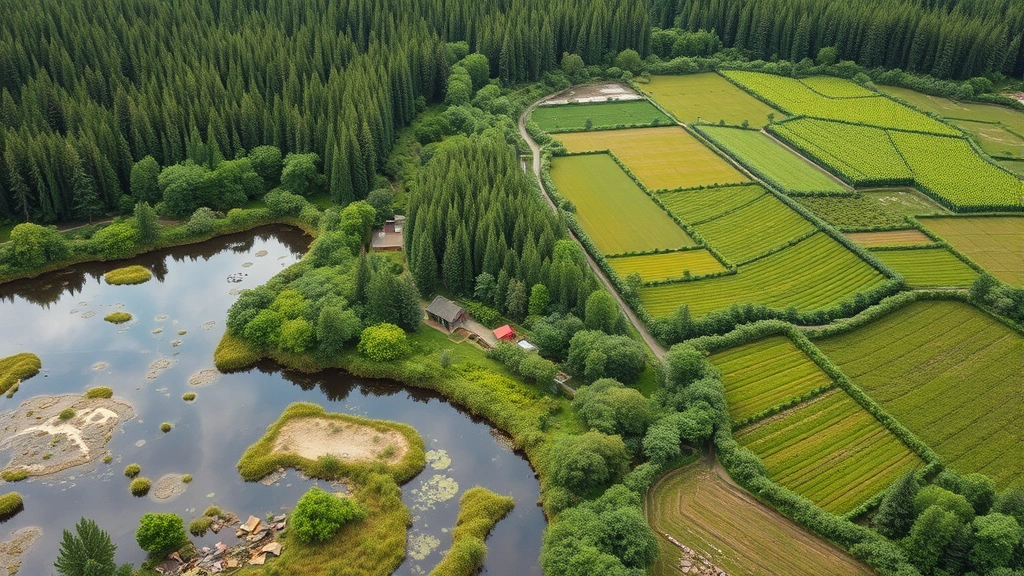
Ecosystem diversity at landscape scales creates economic complementarities. Integrated land-use systems combining forestry, agriculture, and wetland conservation typically generate higher total economic value than specialized monocultures. Agroforestry systems provide timber, food, and environmental services simultaneously. Riparian buffer zones around agricultural fields reduce chemical runoff while providing habitat and crop shelter. These polyculture approaches align ecological and economic optimization.

” alt=”Natural landscape showing diverse ecosystem services: productive agricultural fields adjacent to forest patches and wetland areas with visible wildlife and water features, demonstrating integrated land-use benefits”/>
Case Studies: Real-World Economic Impacts
Costa Rica demonstrates ecosystem services economics at national scale. The country established a Payment for Ecosystem Services (PES) program in 1997, compensating landowners for forest conservation and reforestation. Investment of approximately $50 million annually has generated forest cover recovery from 25% to 52% of national territory. Economic analyses demonstrate that ecosystem services generated—including tourism revenue exceeding $4 billion annually, watershed protection for hydroelectric and agricultural sectors, and carbon sequestration credits—far exceed program costs. Costa Rica’s economy has grown while environmental quality improved, contradicting assumptions that conservation requires economic sacrifice.
Indonesia’s mangrove restoration initiatives illustrate ecosystem services economics in developing contexts. Mangrove destruction for shrimp farming created apparent short-term economic gains but eliminated natural storm surge protection, fishery support, and water purification. Communities rebuilding mangrove ecosystems discovered that restored mangroves generated more sustainable income through fish and crab production than industrial aquaculture while providing essential protective services. Valuation studies demonstrate mangrove ecosystem services worth $2,000-9,000 per hectare annually—far exceeding conversion values.
New York City’s watershed protection strategy exemplifies ecosystem services cost-benefit analysis. Rather than constructing water treatment facilities costing $6-8 billion with $300 million annual operating costs, the city invested $1.5 billion in Catskill watershed ecosystem restoration and agricultural best management practices. This ecosystem-based approach provided superior water quality at one-quarter the cost while generating co-benefits including habitat restoration, agricultural support, and rural economic development. The decision reflected sophisticated economic analysis recognizing ecosystem services value.
The Great Green Wall initiative across the Sahel region demonstrates ecosystem services economics in climate adaptation contexts. Reforestation and grassland restoration projects in Senegal, Mali, Niger, and other nations generate multiple economic benefits: increased agricultural productivity through improved water retention and soil quality, enhanced carbon sequestration contributing to climate mitigation, expanded livestock forage reducing pastoral pressure, and diversified rural incomes through agroforestry products. Economic modeling demonstrates 5:1 return on restoration investments over 20-year periods.
Seychelles’ debt-for-nature swaps illustrate innovative financing mechanisms for ecosystem services. The island nation exchanged $21 million of foreign debt for $21 million in conservation commitments, establishing marine protected areas generating tourism revenue while restoring fisheries productivity. This mechanism converted unsustainable debt burden into ecosystem investment, demonstrating how ecosystem services economics can address development finance challenges.
Integrating Ecosystem Services into Policy
Mainstream economic integration of ecosystem services requires institutional and policy innovations. Natural capital accounting frameworks expand traditional GDP to incorporate ecosystem asset changes. The United Nations Environment Programme promotes System of Environmental-Economic Accounting (SEEA), which tracks natural capital alongside human-made capital. Nations adopting SEEA frameworks—including the Philippines, Mexico, and several European countries—discover that apparent economic growth masks natural capital depletion, requiring policy reorientation toward genuine wealth improvement.
Ongoing environmental and economic analysis reveals that ecosystem service valuation enables more rational policy comparisons. Infrastructure projects require cost-benefit analysis incorporating ecosystem service impacts. Highway construction destroying wetlands must account for water purification, flood control, and habitat services lost. Dam projects must include fishery impacts and carbon storage losses in benefit calculations. When ecosystem services receive proper valuation, many conventional development projects fail cost-benefit tests.
Payment for Ecosystem Services programs create market mechanisms rewarding conservation. Landowners receive direct compensation for maintaining forests, grasslands, or wetlands—converting ecosystem preservation into profitable enterprise. These programs have expanded globally, with over 550 PES schemes operating across 60+ countries. Economic studies demonstrate that well-designed PES programs cost-effectively achieve conservation targets while providing rural income and employment.
Carbon pricing mechanisms represent ecosystem services economics at climate scale. Carbon taxes or cap-and-trade systems assign economic value to forest carbon storage, creating financial incentives for reforestation and avoided deforestation. The voluntary carbon market has grown to billions annually, with forest carbon credits commanding premium prices reflecting ecosystem service value. However, ensuring additionality—confirming that carbon sequestration wouldn’t occur without payments—requires sophisticated monitoring and institutional capacity.
Green infrastructure investment strategies integrate ecosystem services into urban planning. Rather than purely engineered solutions for stormwater management, municipalities invest in rain gardens, restored wetlands, and permeable surfaces providing water infiltration, pollutant removal, and habitat benefits. Life-cycle cost analysis consistently demonstrates that green infrastructure approaches cost less over 30-50 year periods than conventional gray infrastructure while generating superior environmental outcomes and quality-of-life improvements.
Biodiversity offsetting mechanisms attempt to compensate ecosystem losses in one location through restoration or protection elsewhere. While controversial regarding ecological equivalence, offset programs create economic mechanisms valuing biodiversity and incentivizing restoration. Well-designed offset frameworks can fund significant conservation investments, though they require careful implementation to ensure genuine ecological benefit.
Agricultural subsidy reform represents critical policy integration of ecosystem services. Current agricultural subsidies often reward practices degrading soil, water, and biodiversity—the very ecosystem services agriculture depends upon. Redirecting subsidies toward conservation agriculture, organic transitions, and agroforestry practices would align incentives with ecosystem health while reducing long-term production costs. Carbon footprint reduction through sustainable agriculture demonstrates how ecosystem-aligned practices achieve climate mitigation while improving economic efficiency.

” alt=”Modern sustainable farming landscape showing integrated crop production with native vegetation buffers, restored water features, and wildlife corridors demonstrating ecosystem services integration in working agricultural systems”/>
Challenges and Implementation Barriers
Despite compelling economic evidence, ecosystem services integration faces substantial obstacles. Temporal misalignment creates political challenges: ecosystem service benefits often accrue over decades or centuries, while costs concentrate in near-term policy windows. Elected officials face pressure for immediate economic returns, making long-term ecosystem investments politically difficult despite superior cost-benefit ratios. Overcoming this requires institutional mechanisms—sovereign wealth funds, long-term environmental bonds, and constitutional environmental protections—that transcend electoral cycles.
Distributional equity concerns complicate ecosystem services economics. Benefits from conservation often accrue to wealthy consumers and future generations, while costs concentrate on current resource-dependent communities. Tropical forest conservation benefits global climate and biodiversity, but local communities lose timber and agricultural conversion opportunities. Without mechanisms ensuring that conservation beneficiaries compensate affected communities, ecosystem services economics generates political opposition despite aggregate efficiency gains. Successful programs like Costa Rica’s PES address this through direct compensation, but implementation at global scale remains challenging.
Measurement and monitoring limitations constrain ecosystem services valuation. While some services like timber production have clear market prices, others like climate regulation or cultural values resist straightforward quantification. Valuation methodologies remain contested among economists, with different approaches yielding dramatically different results. This uncertainty provides ammunition for critics dismissing ecosystem services economics as subjective environmentalism. Advancing standardized measurement protocols and expanding monitoring capacity would strengthen policy credibility.
Market failure and externality persistence create implementation gaps. Even when ecosystem services receive monetary valuation, market mechanisms may not internalize these values without policy intervention. Pollination services generate enormous value, yet individual farmers lack incentives to maintain pollinator habitat—these benefits accrue to neighboring farms and society broadly. Carbon sequestration in forests benefits global climate, but local landowners cannot capture these values without carbon pricing systems. Policy mechanisms creating property rights or internalizing externalities remain underdeveloped in most jurisdictions.
Substitution assumptions embedded in some ecosystem services valuation create misleading policy implications. If economic models assume that manufactured capital can substitute for natural capital, they may justify ecosystem conversion if alternative production systems appear economically viable. However, many ecosystem services lack substitutes—no technology replicates pollination services, complex wetland treatment functions, or genetic diversity value. Valuation frameworks must explicitly recognize irreplaceability and non-substitutability to avoid underestimating ecosystem value.
Institutional capacity gaps hinder implementation in developing nations. Sophisticated ecosystem services economics requires technical expertise, monitoring infrastructure, and institutional coordination currently unavailable in many countries. International support and capacity building remain inadequate relative to need. Technology transfer and institutional development assistance could accelerate ecosystem services integration globally, but current international financing mechanisms provide insufficient resources.
Corporate greenwashing concerns arise when ecosystem services valuation becomes marketing tool rather than genuine policy driver. Companies may tout ecosystem service contributions without implementing meaningful conservation, or ecosystem services economics may justify minimal environmental protections as economically sufficient. Critical policy scrutiny and independent verification mechanisms remain essential to prevent ecosystem services frameworks from legitimizing inadequate environmental protection.
FAQ
What are the five most valuable ecosystem services economically?
Based on economic valuation studies, the most valuable ecosystem services include: (1) climate regulation through carbon sequestration and albedo effects, valued at trillions annually; (2) water provision and purification from forests and wetlands, worth hundreds of billions; (3) pollination supporting agriculture valued at $15-577 billion annually; (4) nutrient cycling enabling food production; and (5) coastal protection from mangroves and coral reefs worth hundreds of billions. Valuations vary substantially based on methodology, but these services consistently rank highest in economic importance.
How does ecosystem restoration generate economic returns?
Ecosystem restoration generates economic returns through multiple pathways: restored forests provide timber, non-timber forest products, and carbon credits; wetland restoration improves water quality reducing treatment costs; mangrove restoration supports fisheries and provides storm protection; grassland restoration increases livestock productivity and carbon storage. Additionally, restoration creates employment in construction, monitoring, and maintenance while generating ecosystem services that reduce costs in other economic sectors. Time horizons extend 20-50+ years, but aggregate returns typically exceed restoration costs substantially.
Can ecosystem services economics justify conservation in developing countries?
Yes, ecosystem services economics provides economically legitimate justification for conservation in developing contexts. When watershed protection, pollination, fishery support, and climate regulation services receive proper valuation, conservation often generates higher economic returns than alternative land uses. However, success requires ensuring that conservation benefits translate into actual income for local communities through mechanisms like Payment for Ecosystem Services programs, sustainable harvesting enterprises, and tourism revenue sharing. Without direct economic benefit to resource-dependent communities, ecosystem services arguments alone prove politically insufficient.
What role should ecosystem services play in infrastructure project evaluation?
Ecosystem services should receive formal inclusion in infrastructure project cost-benefit analysis alongside conventional economic metrics. Environmental impact assessments should quantify ecosystem service losses from proposed projects and incorporate these into decision frameworks. When ecosystem services receive proper valuation, many conventional development projects fail cost-benefit tests, leading to project modification or rejection in favor of alternatives generating superior net economic benefit. Renewable energy development demonstrates how infrastructure projects can enhance rather than degrade ecosystem services when designed with ecological considerations.
How do carbon markets relate to ecosystem services economics?
Carbon markets represent ecosystem services economics applied to climate mitigation. Carbon pricing assigns economic value to forest carbon storage, wetland carbon sequestration, and other climate regulation services. This creates financial incentives for reforestation, avoided deforestation, and ecosystem restoration—making conservation economically rational. However, carbon markets require careful design to ensure additionality (avoiding payment for conservation that would occur anyway), prevent permanence risks (ensuring carbon remains sequestered), and generate genuine climate benefits. When well-designed, carbon markets mobilize substantial capital for ecosystem conservation.
What policy innovations best integrate ecosystem services into economic decision-making?
Most effective policy innovations include: natural capital accounting incorporating ecosystem assets into national wealth measures; Payment for Ecosystem Services programs directly compensating conservation; carbon pricing mechanisms valuing climate regulation; green infrastructure standards requiring ecosystem service consideration in infrastructure planning; biodiversity offsetting creating market mechanisms for habitat compensation; and subsidy reform redirecting agricultural payments toward conservation practices. Combinations of these approaches, tailored to national contexts and institutional capacities, generate most substantial results. International support and technology transfer accelerate implementation in developing nations.


